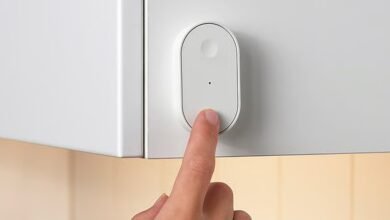
Google Home automations now support smart buttons
▼ Summary
– Google Home now supports smart buttons in automations, allowing them to control other devices.
– The update introduces new automation triggers, including humidity levels, robot vacuum docking, and device battery status.
– Automations can now use binary states (like open/closed or leak/no leak) from supported devices as conditions.
– Users can now set smart lights to a specific color or color temperature directly through automations.
– The update includes a foundational fix for the persistent “video not available” errors affecting Nest Cam owners.
A significant update to Google Home is now rolling out, bringing a much-requested feature to the platform’s automation system. Smart buttons can now be integrated into Google Home automations, allowing for physical controls to trigger a wide range of actions throughout a connected home. This enhancement addresses a notable gap in Google’s smart home ecosystem, especially as these compact, programmable buttons have grown in popularity alongside the Matter smart home standard.
The functionality arrives as part of the Google Home app version 4.8. It enables users to create automations that start with a button press, such as a single tap, double tap, or a long press and release. This opens up new possibilities for convenient, tactile control over lights, scenes, and other smart devices without needing to use a voice command or open an app. While testing is ongoing with various devices, this development marks a pivotal step in making Google Home a more versatile and physically interactive platform.
This button support is just one component of a broader set of new automation capabilities. The update introduces several new “starters” and conditions that can trigger routines. Users can now create automations based on a humidity sensor reaching a specific level, such as turning on a dehumidifier when moisture is too high. Another new starter can activate a routine when a robot vacuum docks or undocks. Furthermore, the battery status of devices can now serve as a condition, allowing for automations that send alerts or change device behavior when a battery is low or charging.
A particularly useful addition is the support for binary states from compatible sensors. This allows automations to react to real-world events like a window being opened, a water leak being detected, or a contact sensor being triggered. Conditions can be set for states like open/closed, leak/no leak, or freeze/no freeze, enabling more responsive and secure smart home environments.
For lighting control, the update provides finer granularity within automations. Users can now command smart lights to turn on to a specific color or a precise color temperature directly from a routine. This means an automation can not only switch lights on at sunset but also set them to a calming blue or a specific warm white tone to match the time of day or activity.
In related news, Google has also deployed what it calls a “foundational fix” for a persistent issue affecting Nest Cam owners. This aims to resolve the frustrating “video not available” errors that have plagued some users, promising more reliable access to camera feeds and recorded history within the Google Home ecosystem.
(Source: 9to5 Google)