Ocean Rift Zone Experienced Sudden Burst of Spreading
▼ Summary
– Mid-ocean ridges form new crust and drive continental spreading, with their discovery key to plate tectonics acceptance, though the detailed process of crust formation remains unclear.
– In 2024, French scientists remotely monitored a major spreading event between the Australian and Antarctic plates two months after installing seafloor equipment.
– The data showed most spreading occurred in a short time window, with some key events happening without detectable seismic activity.
– The monitored site lies on the Amsterdam–Saint Paul Plateau, a remote seafloor rise between Australia and Madagascar, interpreted as a deep ocean hotspot.
– Despite the hotspot, only two volcanic islands—Amsterdam and St. Paul—exist there, with a history of failed colonization and disputed French claims.
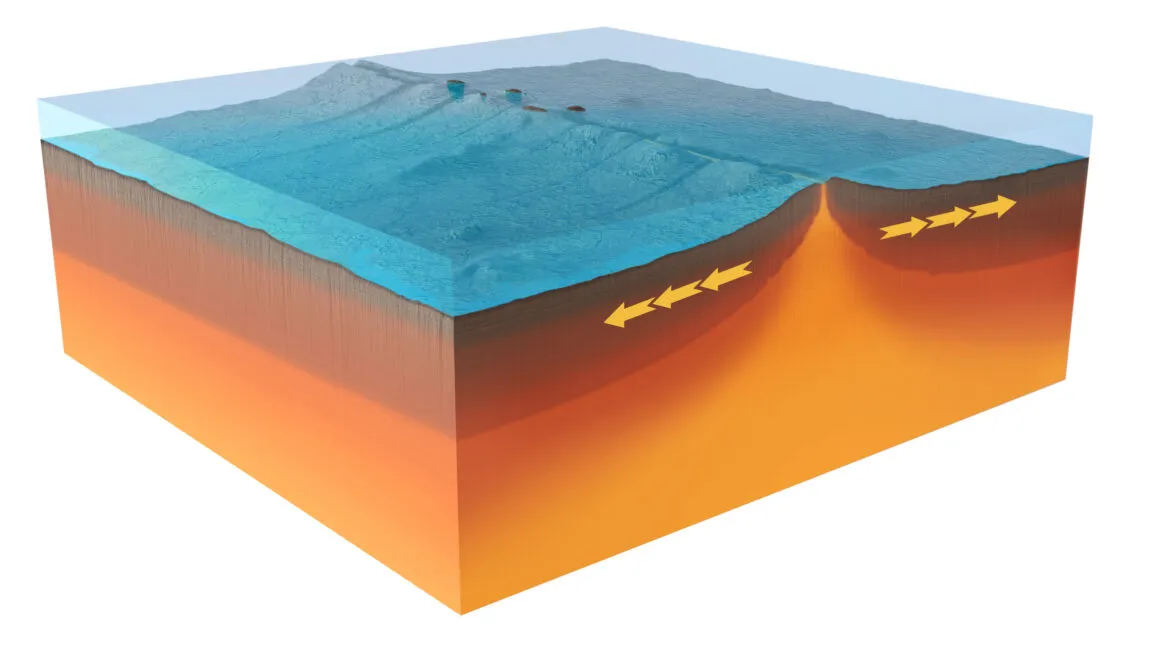
The fundamental engine of plate tectonics relies on the creation of new oceanic crust at mid-ocean ridges. This spreading process, which gradually pushes continents apart, was largely validated by the discovery of these underwater mountain ranges. After decades of mapping and research, scientists have a solid understanding of the crust that emerges from these rifts. However, the precise mechanics of how that crust forms in real time have remained frustratingly elusive.
In short, we know the outcome, but the dynamic process itself has been a black box.
That is finally changing. In 2024, a French research team achieved a remarkable breakthrough. Just two months after installing monitoring equipment on the ocean floor, they remotely captured a major tectonic event along the boundary between the Australian and Antarctic plates. The data reveals a surprising pattern: most of the spreading occurred in a very short burst, and some critical changes took place with no detectable seismic activity at all.
A dramatic shift in the seafloor
The location of this event is staggeringly remote, sitting roughly halfway between Australia and Madagascar and far south of India. Here, a massive underwater feature known as the Amsterdam–Saint Paul Plateau rises from the abyssal plain. Geologists believe this plateau is the result of a deep mantle hotspot pushing the seafloor upward. The rift zone separating the Antarctic and Australian plates cuts directly through the center of this plateau.
Despite the hotspot’s influence, only two small volcanic islands, Amsterdam and St. Paul, break the surface. Their history is as peculiar as their geography. Both islands have seen repeated failed colonization attempts, accidental shipwrecks, and regular visits from fishermen and sealers. France originally claimed the territory, but abandoned the claim just a decade later, finding the islands too useless and remote. Forty years after that, the crew of a French vessel reasserted ownership on behalf of a nation that seemed unsure whether it wanted the responsibility.
(Source: Ars Technica)