Black Hole Mergers Constrain Star-Destroying Supernovae
▼ Summary
– Early exoplanet discoveries confirmed new worlds, but research later shifted to using their frequency to understand planet formation.
– Gravitational wave data suggests a similar shift may occur in studying black hole mergers.
– A new analysis indicates a “mass gap” exists in the population of detected black holes.
– This gap supports the theory that some massive stars die in pair-instability supernovae, leaving no remnant behind.
– Black holes form from stellar core collapse during supernovae, but the upper mass limit for stars and resulting black holes is uncertain.
The initial discovery of exoplanets was thrilling, proving the existence of other worlds. Today, however, the scientific value often lies in statistics, using the prevalence of objects like super-Earths to unravel planetary formation. A similar shift is now emerging in astrophysics. With four gravitational wave detectors accumulating years of observations, data from black hole mergers is beginning to reveal profound insights into stellar life cycles.
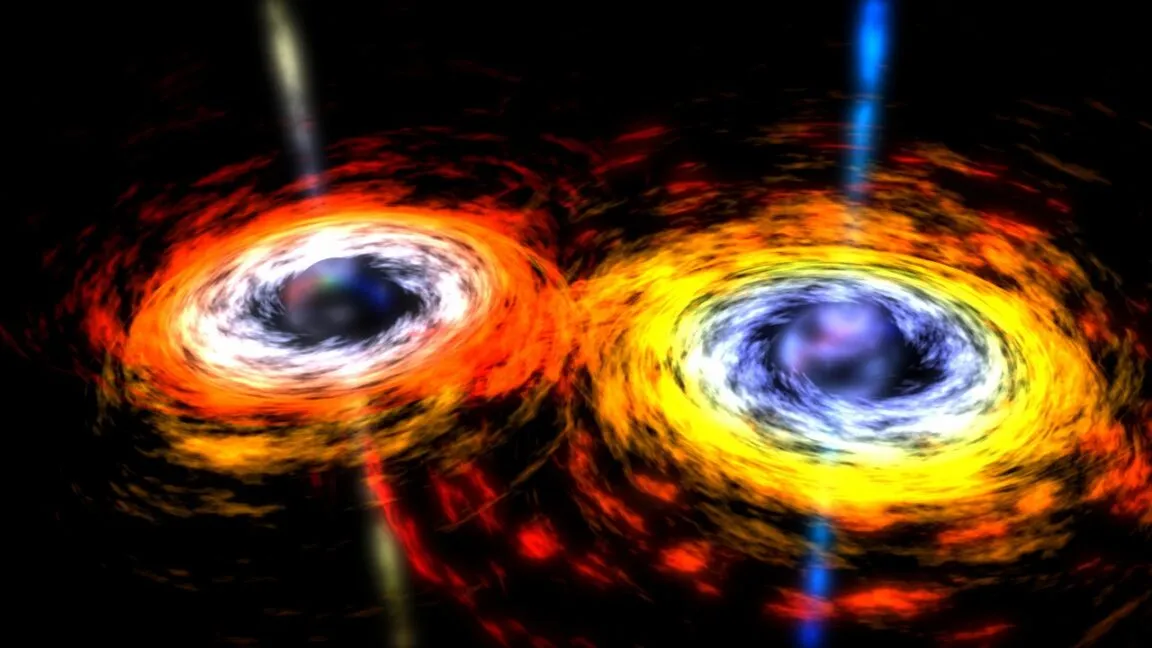
A recent analysis of this data has identified a significant mass gap in the observed population of black holes. This absence of black holes within a specific mass range provides compelling evidence for the existence of pair-instability supernovae. These cataclysmic events are theorized to occur in the most massive stars, generating explosions so utterly complete that they leave no remnant behind, only scattered debris.
These cosmic remnants form when a star’s core collapses during its explosive death. While the outer layers blast into space, the innermost material falls inward, compressing into a black hole or, for less massive stars, a neutron star. The theoretical upper mass limit for stars remains uncertain, which might suggest a gradual decline in black hole sizes. The new gravitational wave data, however, tells a different story, pointing to a clear cutoff caused by these universe-shattering supernovae.
(Source: Ars Technica)