Game Boy Advance V-Rally 3 Outshines DLSS 5
▼ Summary
– The Game Boy Advance’s 25th anniversary highlights how V-Rally 3, a fully 3D racing game, achieved a compelling sense of speed and feel on limited hardware, contrasting with modern pursuits of graphical fidelity.
– V-Rally 3 was a technical marvel, using a custom engine to render real 3D tracks on the GBA, a device designed for 2D sprites, demonstrating the value of clever engineering and art direction over raw power.
– The article criticizes Nvidia’s upcoming DLSS 5 technology, arguing its AI-generated “enhancements” are an expensive, unwanted “slop filter” that vandalizes art direction for questionable photorealism.
– Unlike earlier DLSS technologies, which efficiently enabled features like ray tracing, DLSS 5 is portrayed as astronomically costly and offering no real benefit, instead making games look artificially processed.
– The core argument is that a game’s value and magic come from human creativity and the experience it delivers, not just graphical power, as exemplified by the achievement of V-Rally 3 on the GBA.
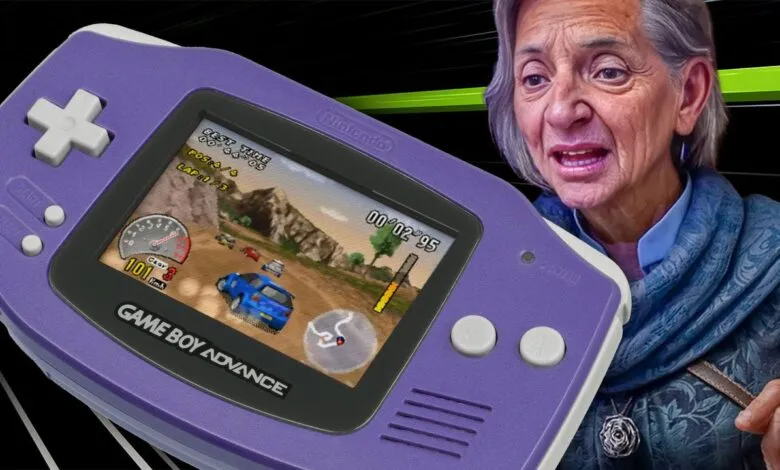
This week marks the 25th anniversary of a classic Nintendo handheld, arriving amid a fierce debate about the future of graphics technology. The milestone serves as a powerful reminder that the relentless pursuit of photorealistic fidelity often rings hollow. All the post-processed path tracing in the world cannot make the driving in a modern blockbuster feel as satisfying as the experience delivered by V-Rally 3 on the Game Boy Advance.
That title represents a staggering feat of software engineering. Developers managed to conjure a fully 3D polygonal racer from a system with a mere 16MHz processor, a device explicitly designed for 2D sprite-based games. Through textured polygons, clever art direction, and sheer ingenuity, they achieved something approaching PS1-quality gaming in the palm of your hand. This was a very early taste of the portable power we take for granted today, long before the line between handheld and home console gaming was erased.
Harsh technical compromises are nothing new. Consider the original Switch port of The Witcher 3, widely considered the worst version yet beloved by many for its sheer portability. For countless players, having a game run on affordable, portable hardware is more valuable than razor-sharp visuals. This reality suggests that those sacrificing artistic direction at the altar of slightly wonky photorealism may be out of touch with what the average player truly values.
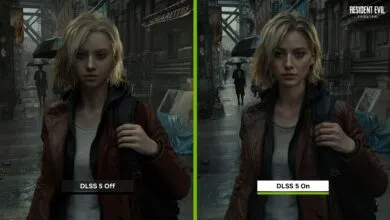
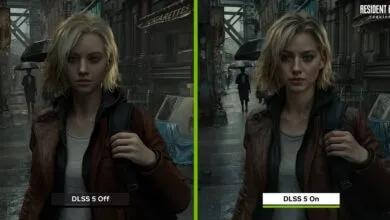
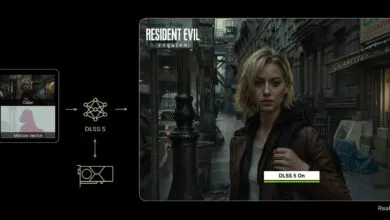
We have a contemporary case study for this disconnect: the widespread rejection of Nvidia’s DLSS 5 technology following its controversial unveiling last week. Beyond the usual early adopters, the response from most quarters has been distinctly unimpressed. For the uninitiated, DLSS 5 aims to enhance graphics by replacing each game frame with an AI-generated image, using technology similar to smartphone filters or the synthetic media used to spread misinformation. It is the same kind of comically unprofitable AI that was recently stripped from major platforms.
The stated goal is to brute-force true photorealism into gaming by navigating the uncanny valley. One can only wonder what its algorithms would make of the primitive, blocky forms of V-Rally 3. The results would be academic at best, as the system is designed to “enhance” graphics that are already of high quality. Yet, to the human player, those basic shapes coalesce into something beautiful: a proper sense of speed, the tension of a downhill rush, the feel of tires on gravel. It transcends its technical limitations to nail a feeling, or in modern terms, the right vibes.
For V-Rally 3, those vibes were achieved through the V3D game engine, created by coders Fernando Velez and Guillaume Dubail. During development, pulling off true 3D on the GBA was considered nearly impossible. While other studios used pseudo-3D tricks, V-Rally 3 delivered real 3D tracks with genuine height and depth, a staggering technical achievement. It was not a direct port of its PS2 counterpart but something approaching its complexity on hardware that had no business running it. This crowning achievement is a thrilling arcade racer with clean presentation and simple controls, proving that art direction and feel matter more than raw graphical power.
In contrast, the vibes from DLSS 5 are distinctly off. Even its faint praise is damning, with supporters noting its “remarkable consistency between frames.” It is morbidly impressive that it processes a live frame buffer locally, but the system reportedly requires two of the most expensive GPUs running simultaneously, adding thousands to the cost of a PC. This is for a feature that makes a game look like it has path-tracing while consuming more power than actual path-tracing would. It is a stark example of diminishing returns, a digital folly branded as a performance tool.
This stands in direct opposition to the original promise of DLSS and its counterparts like AMD’s FSR. Those technologies are marvellous, making cutting-edge techniques like real-time ray tracing achievable by trading small amounts of image quality for massive performance gains. In a post-Moore’s Law world, intelligent upscaling is a clever solution. DLSS 5 is its antithesis. The cost is astronomical for no discernible benefit, often applying a garish, over-processed filter that makes epic landscapes look like drone footage and characters appear perpetually Instagram-ready.
There is a broader concern that reliance on such upscaling has jeopardised the art of game optimisation, providing a shortcut for performance that developers once had to engineer meticulously. That gamers care so deeply about this dry topic speaks to how much we value the handcrafted nature of the medium. Video games are a deeply human magic, where experiences are conjured from machines to be shared. Few things capture that magic better than the story of two dedicated developers coaxing a fully-realised 3D rally game onto a humble cartridge, proving that technical wizardry in service of a great experience will always outshine brute-force processing in search of an empty visual ideal.
(Source: IGN)