NASA’s Jupiter mission yields science despite cancellation threat

▼ Summary
– Jupiter’s storms produce lightning flashes at least 100 times more powerful than Earth’s, based on Juno spacecraft data.
– NASA’s Juno mission, extended after its initial campaign, faces an uncertain future due to budget constraints.
– The Trump administration previously requested closeout plans for over a dozen missions, including Juno, proposing deep NASA science cuts.
– Congress later approved a planetary science budget for 2026 far above the White House request but still lower than the prior year.
– NASA’s planetary science director stated the reduced budget forces tough decisions, as the agency cannot afford to support all past activities.
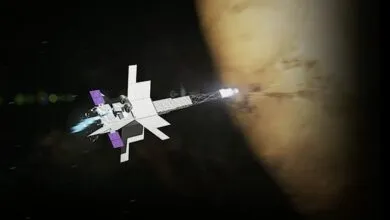
New data from NASA’s Juno spacecraft reveals that lightning on Jupiter is a phenomenon of staggering scale, with bolts at least a hundred times more powerful than the most intense lightning found on Earth. This discovery, published in the journal AGU Advances, comes from observations made during an extended mission phase, highlighting the continued scientific value of the probe even as its long-term funding remains uncertain.
The research utilized measurements collected in 2021 and 2022, following NASA’s decision to extend Juno’s operations after its initial five-year prime mission. The spacecraft continues to function well, but its future hinges on budgetary decisions. Nearly a year ago, mission leaders for Juno and over a dozen other robotic science missions were asked to prepare plans for shutting down their spacecraft. This directive followed a White House budget request that proposed cutting NASA’s science budget by nearly half.
While Congress ultimately rejected most of those proposed cuts, the final budget allocation still presents challenges. Lawmakers approved $2.54 billion for NASA’s planetary science division for fiscal year 2026, a figure significantly higher than the administration’s request but approximately $220 million less than the previous year’s funding. This shortfall forces difficult prioritization.
“We can’t quite afford to support everything that we have done in the past,” stated Louise Prockter, director of NASA’s planetary science division, during a recent meeting. She emphasized that the reduced budget necessitates making “tough decisions” about which missions to continue.
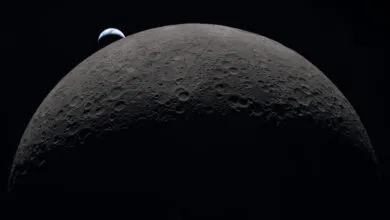
Amid this financial pressure, some missions have secured their near-term futures. The OSIRIS-APEX mission, which successfully returned asteroid samples to Earth, will use its remaining fuel to rendezvous with another asteroid in 2029. NASA has also committed to funding the Lunar Reconnaissance Orbiter, its only active spacecraft at the Moon, for at least three more years. The fate of Juno, however, along with other missions, awaits a final determination as the agency balances groundbreaking science with fiscal reality.
(Source: Ars Technica)