LG’s Micro RGB evo TV Arrives in 2026
▼ Summary
– LG has confirmed it will release its first flagship Micro RGB evo TV in 2026, available in 100-, 86-, and 75-inch sizes.
– The TV will use an upgraded Alpha 11 processor and has been certified for 100% coverage of major color gamuts like BT.2020 and DCI-P3.
– CES 2026 is expected to be a major year for RGB TV technology, with more companies like Samsung, Sony, and TCL releasing competing models.
– Micro RGB technology differs from microLED, using clusters of tiny red, green, and blue LEDs to light multiple pixels through a color filter.
– While current RGB TVs from brands like Hisense and Samsung are impressive but prohibitively expensive, new smaller models may help lower prices.
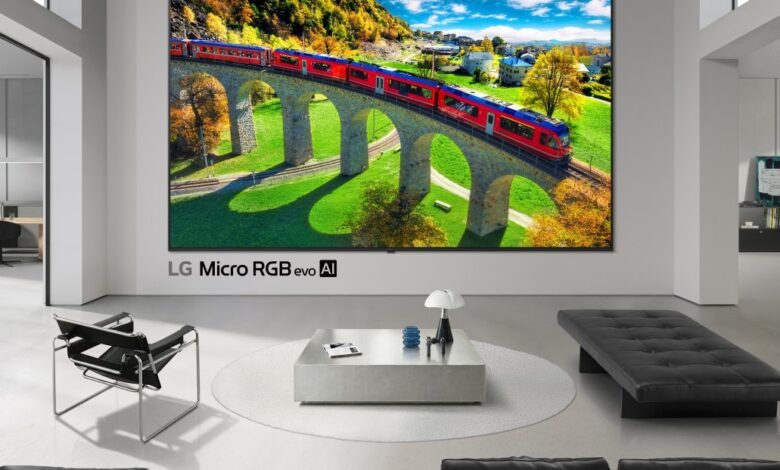
LG has officially confirmed the launch of its first flagship Micro RGB evo TV, set to arrive in 2026. This announcement follows the television winning a CES 2026 Innovation Award last November. The new model will be available in three screen sizes: 100, 86, and 75 inches. Pricing for the US market will be revealed closer to the release date.
Powering this display will be an enhanced iteration of LG’s Alpha 11 processor, a chip typically found in the brand’s premium OLED televisions like the G5 series. According to certification from Intertek, the TV achieves full 100% gamut coverage across the BT.2020, DCI-P3, and Adobe RGB color standards. While exact brightness specifications remain undisclosed, industry expectations suggest peak highlights could significantly surpass 5,000 nits.
The year 2026 is shaping up to be a pivotal moment for RGB television technology, with several major manufacturers preparing their own flagship entries. This trend began with Hisense’s 116-inch 116UX at CES 2025 and Samsung’s commercial release of a 115-inch Micro RGB TV in August. Industry insiders anticipate a wave of new models, including more compact sizes, to be unveiled at the upcoming January tech shows, directly competing with LG’s offering. TCL has already previewed two RGB models for China, and Sony has confirmed its TrueRGB TV for an early 2026 launch.
It is crucial to distinguish this Micro RGB technology from microLED displays. While microLED uses individual microscopic red, green, and blue LEDs for each pixel, the emerging RGB approach utilizes clusters of these colored LEDs to provide light for multiple pixels simultaneously. These clusters are still exceptionally small, enabling superior color gamut and purity. However, unlike self-emissive microLED, these TVs still require a color filter layer to manage light for each pixel, differing from conventional LED/LCD TVs that rely on a uniform blue or white backlight.
Early demonstrations of RGB LED technology from brands like Hisense and Samsung have delivered stunning, vibrant picture quality that arguably surpasses current market leaders. The primary barrier has been their enormous size and prohibitive cost, often reaching tens of thousands of dollars, placing them out of reach for most consumers. The industry-wide push towards this technology, coupled with the introduction of smaller screen sizes, offers hope that prices will eventually fall to more accessible levels for home theaters.
(Source: The Verge)


