Top Portable Power Stations for 2025: Capacity & Camping Picks
▼ Summary
– Portable power stations are often expensive, but waiting for sales can secure them below the manufacturer’s suggested retail price.
– Determining the required capacity involves calculating the watt-hours needed based on your specific devices and their usage duration.
– True portability is limited by weight, with larger-capacity models being heavy and often requiring wheels, which may necessitate a trade-off with capacity.
– These stations can charge small gadgets and run small appliances, but powering high-wattage devices requires checking the maximum output and surge capabilities.
– Battery life typically ranges from 3 to 10 years, influenced by usage and maintenance, with lithium iron phosphate (LFP) batteries offering greater safety and longevity than other lithium-ion types.
Choosing the right portable power station requires balancing your energy needs with practical considerations like portability and cost. These versatile units can power everything from phones to small appliances, but their price tags vary widely. Savvy shoppers can often find significant discounts by waiting for sales or special promotions, making a premium model more accessible. The first step is always to calculate your actual power requirements to avoid buying more, or less, capacity than you truly need.
Determining the necessary capacity hinges on understanding your devices’ wattage and desired runtime. Capacity is measured in watt-hours (Wh). While manufacturers may advertise runtimes for common items like a television, these estimates can be misleading because power consumption varies between models. You must check the actual wattage of your specific gadgets, like your mini-fridge or laptop, and multiply that by the number of hours you need them to run. This simple calculation provides a clear target for the Wh rating you should look for.
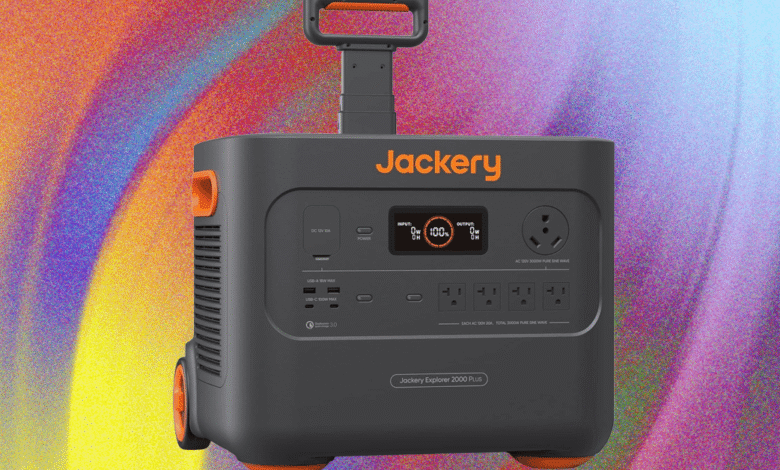
The idea of “portability” deserves careful thought. Larger, high-capacity units are invariably heavy, often requiring built-in wheels and telescoping handles just to move them short distances. If your plan involves carrying the station on a hiking trip or storing it in a vehicle with limited space, you will likely need to compromise on battery size. A truly carry-friendly model will have a lower Wh rating, so prioritize weight and dimensions if mobility is a key factor.
These stations are incredibly versatile, but their capabilities have limits. Every model can charge phones and power LED lights. Most can handle small appliances such as portable coolers or a campsite television. However, running high-wattage devices like power tools, space heaters, or electric kettles demands a unit with a high continuous output rating, often exceeding 2000 watts. Pay close attention to the maximum AC output. Many models also feature a surge or boost function for briefly handling startup power spikes, sometimes marketed under proprietary names like “X-Boost.” Ensure both the continuous and surge ratings meet your needs.
Recharging a power station is straightforward but timing varies. All units include a cable for AC wall charging. Many also offer the flexibility of charging via a car’s 12V port or through compatible solar panels, which is ideal for extended off-grid use. It is essential to verify which ports are included and whether the necessary cables come in the box. Charging times, especially for large capacities, can be lengthy. Some advanced models support dual-input fast charging, significantly reducing the time needed to replenish the battery from a wall outlet.
The selection of ports is a critical specification. While AC outlets and USB-A ports are standard, their power delivery is not. You must check the supported charging standards and maximum output for each port. A USB-C port might support fast charging for a laptop, or it might only be suitable for a phone. Other valuable connections can include DC barrel ports, dedicated 12V car outlets, and solar charging inputs. Never assume functionality; always review the technical specifications before purchasing.
Lifespan depends heavily on usage and battery chemistry. A well-maintained power station can last between three and ten years. Key to longevity is avoiding frequent full discharges and not storing the unit with a completely empty battery. Manufacturers usually provide an estimated number of charge cycles, often 500 to over 3000, before the battery’s capacity noticeably diminishes. Warranties typically offer coverage for two to five years, so keep your receipt and registration documents safe.
Most modern portable power stations use lithium-ion technology, primarily in two forms. Lithium Iron Phosphate (LiFePO4 or LFP) batteries are increasingly favored for their safety, longer lifespan, and better thermal stability. They are less prone to overheating and can endure more charge cycles. Traditional Lithium Nickel Manganese Cobalt Oxide (Li-NMC) batteries offer a higher energy density, meaning more capacity in a smaller package, but they degrade faster and are more sensitive to heat. Some cutting-edge models are beginning to use semi-solid-state batteries, which promise even greater energy density and safety.
For home backup, the ability to function as an Uninterruptible Power Supply (UPS) is valuable. A true UPS switches to battery power almost instantaneously during an outage, typically within 10 milliseconds, preventing computers and other sensitive electronics from shutting down. Some power stations are classified as Emergency Power Supplies (EPS), which may take slightly longer, around 30 milliseconds, to switch over. If you need seamless backup for critical devices, confirm the unit’s specified switching time.
Finally, it’s important to distinguish a power station from a simple power bank. The fundamental difference is scale and capability. Power banks are compact, low-capacity devices designed almost exclusively for charging smartphones, tablets, and similar small electronics. Portable power stations have substantially larger batteries, feature multiple output types including AC outlets, and are built to power actual appliances, making them suitable for camping, tailgating, and emergency home backup.
(Source: Wired)