NASA Loses Contact With Mars Orbiter, Another Soon to Follow
▼ Summary
– NASA has lost contact with the MAVEN spacecraft orbiting Mars after it failed to signal following a pass behind the planet.
– A second Mars orbiter is critically low on fuel, and the third is operating well beyond its intended design life.
– MAVEN’s mission has significantly exceeded its original lifespan and recently served as a crucial communications relay for surface rovers.
– During its operational period, MAVEN discovered how solar wind erosion transformed Mars from a habitable world into an inhospitable planet.
– NASA is investigating the communication loss and has two other orbiters available to maintain the relay network if MAVEN cannot be recovered.
NASA has confirmed a loss of communication with one of its key Mars orbiters, raising concerns about the long-term health of the agency’s robotic fleet at the red planet. Ground controllers last received a signal from the Mars Atmosphere and Volatile Evolution (MAVEN) spacecraft on December 6. The orbiter was functioning normally before passing behind Mars, but it failed to re-establish contact after its scheduled reappearance. Mission teams are now actively investigating the cause of the communications failure.
This incident highlights the aging infrastructure supporting Martian exploration. MAVEN is not the only spacecraft facing challenges. Another orbiter, the 2001 Mars Odyssey, is reportedly running critically low on fuel. A third mission, the Mars Reconnaissance Orbiter, continues to operate but is far beyond its original design lifetime. The situation underscores the reality that these robotic pioneers, while robust, are not immune to the harsh environment of space and the inevitable wear of time.
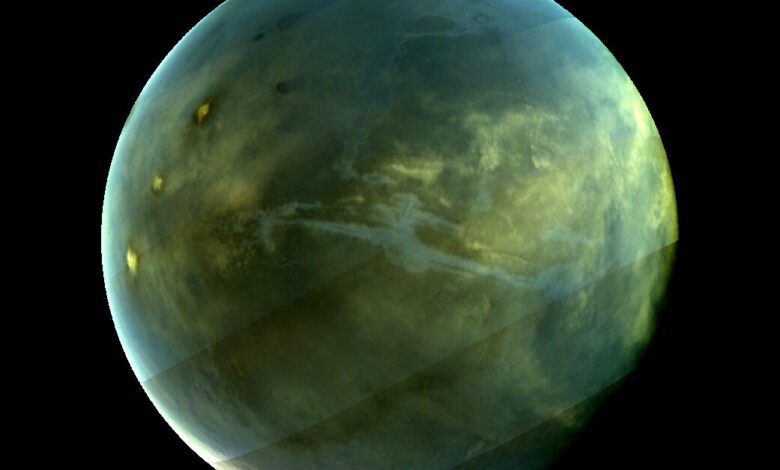
The MAVEN mission has been a resounding success since its arrival in September 2014. Its primary goal was to investigate how the Martian atmosphere interacts with solar radiation. The spacecraft’s findings were groundbreaking, providing crucial evidence for how the solar wind stripped away the planet’s once-thicker atmosphere. This process, over billions of years, transformed Mars from a potentially habitable world with liquid water into the cold, arid desert we observe today.
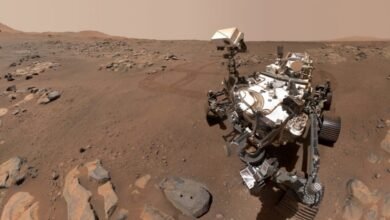
By measuring isotopes in the Martian atmosphere, MAVEN helped scientists quantify the atmospheric loss through a mechanism called sputtering. The mission also conducted detailed studies of space plasma around Mars and captured observations of Martian auroras. Beyond its core science objectives, MAVEN took on a vital operational role in recent years. It served as a primary communications relay, transmitting data between Earth and surface assets like the Perseverance and Curiosity rovers.
Constructed by Lockheed Martin, MAVEN has operated for nearly a decade, far exceeding its initial two-year science mission. If the spacecraft cannot be recovered, NASA will rely on its two other orbiters, Odyssey and the Mars Reconnaissance Orbiter, to maintain the critical relay network for the rovers. The loss, however, would represent a significant reduction in bandwidth and redundancy for data return from the Martian surface, potentially impacting the pace of scientific discovery.
(Source: Ars Technica)