2025 Subaru Forester Hybrid: Infotainment Flaws Disappoint
▼ Summary
– Subaru has shifted its focus from performance cars to practical, all-wheel-drive vehicles, and the Forester Hybrid addresses the brand’s historical weakness in fuel efficiency.
– The hybrid powertrain combines a 2.5L Atkinson-cycle engine with an electric motor, delivering a total of 194 hp through a CVT and all-wheel drive.
– The Forester Hybrid achieves a combined EPA rating of 35 mpg, a meaningful improvement over the non-hybrid model’s 29 mpg, though real-world efficiency can be lower in cold weather.
– The driving experience can feel disconcerting due to the CVT and the hybrid system’s sometimes unpredictable switching between electric and gasoline power.
– Apart from some engine and wind noise, the Forester Hybrid is generally refined, with a comfortable ride, good ground clearance, and pleasant handling for its class.
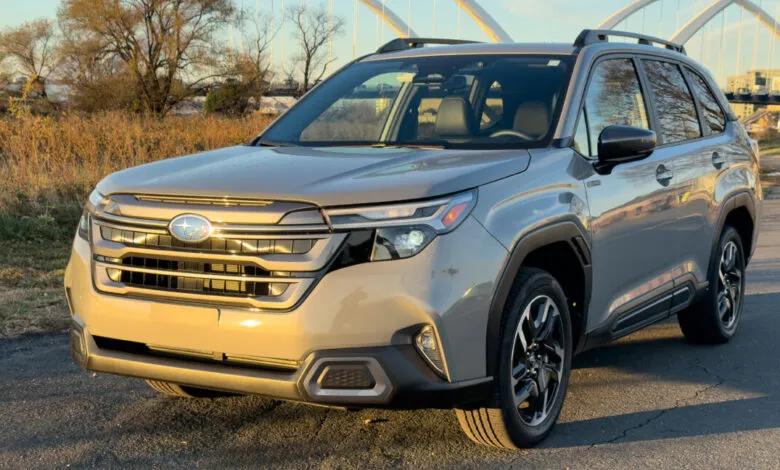
Subaru has built a formidable reputation on rugged, all-wheel-drive vehicles powered by distinctive boxer engines, a legacy that continues with the 2025 Subaru Forester Hybrid. This model aims to address a traditional brand weakness, fuel efficiency, by integrating electrification into its proven formula. While the powertrain delivers meaningful economy gains, the driving experience remains familiar, though it is significantly hampered by an outdated and frustrating infotainment system.
The hybrid system pairs a 2.5-liter Atkinson-cycle boxer engine, generating 162 horsepower, with an electric traction motor rated at 118 horsepower. Together, they send a combined 194 horsepower to all four wheels through a continuously variable transmission and Subaru’s symmetrical all-wheel-drive system. This is the same powertrain found in the smaller Crosstrek Hybrid. The performance bump over the standard Forester is minimal, but the official EPA combined rating of 35 mpg represents a solid improvement over the non-hybrid’s 29 mpg. Real-world driving in colder conditions yielded around 31 mpg, a figure still better than the gasoline-only model.
On the road, the hybrid’s behavior is typical for this type of powertrain. Acceleration can feel disjointed, as the system arbitrates between electric and gasoline power, sometimes resulting in engine revs that don’t linearly match the power delivered to the wheels. The Atkinson-cycle engine also becomes vocal when pushed hard. Beyond that, the Forester Hybrid delivers a comfortable and capable driving experience. It rides smoothly on its tall-sidewall tires, benefits from 8.7 inches of generous ground clearance, and handles daily duties with predictable composure, remaining refined aside from some wind and engine noise.
Where this vehicle stumbles badly is inside the cabin. The central flaw is the embarrassingly outdated infotainment system. The touchscreen is laggy and unresponsive, often requiring multiple prods to register a command. The software feels ancient, the graphics are poor, and the menu logic is needlessly complicated. For a new vehicle in 2025, this system is unacceptable and sours the entire ownership experience. It stands in stark contrast to the otherwise practical and spacious interior, which offers excellent visibility and the utility Subaru owners expect.
Ultimately, the Forester Hybrid succeeds in its core mission: it adds a layer of fuel efficiency to a dependable, all-weather package. The mechanical upgrades are competent, but the severely lacking infotainment technology is a major disappointment. It makes an otherwise sensible vehicle feel dated the moment you interact with the dashboard, a critical flaw in today’s competitive market.
(Source: Ars Technica)