Scientists Make Case for Sending Astronauts to Mars

▼ Summary
– A new scientific report identifies the search for life on Mars as the primary scientific justification for human missions to the planet.
– The report, titled “A Science Strategy for the Human Exploration of Mars,” was published by the National Academies of Sciences, Engineering, and Medicine.
– It outlines 11 top-priority science objectives for the first human missions, with finding evidence of life being the foremost goal.
– The report’s publication coincides with growing momentum for Mars exploration, driven by private companies and new space transportation technologies.
– The goal is to ensure that meaningful scientific research is conducted alongside the human exploration of Mars.
The scientific imperative for sending humans to Mars is compelling and clear: to definitively answer the profound question of whether life has ever existed beyond our own planet. While robotic missions have provided invaluable data, only astronauts on the surface can conduct the sophisticated, adaptive fieldwork needed to search for signs of past or present Martian life with the necessary depth and precision. This quest represents a fundamental driver for a human mission, transforming a monumental engineering challenge into a historic scientific endeavor.
A comprehensive new strategy document, developed over two years by a committee of the National Academies of Sciences, Engineering, and Medicine, lays out this vision. The report, titled “A Science Strategy for the Human Exploration of Mars,” identifies the highest-priority scientific goals for the first crewed missions. Committee co-chair Dava Newman, a professor at MIT, emphasizes the core motivation: the search for life. She notes that the answer to whether we are alone in the universe will remain “maybe” until evidence is found, making Mars the most accessible and promising place to seek a definitive “yes.”
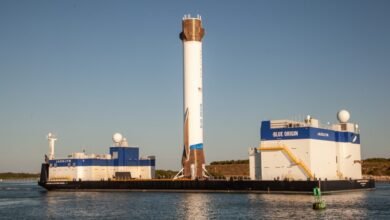
The timing of the report aligns with a shifting landscape in space exploration. As private companies like SpaceX and Blue Origin advance reusable spacecraft technology capable of reaching Mars within decades, and with a new NASA administrator focused on deep-space goals, the prospect of human missions is gaining tangible momentum. Newman describes a sense of inevitability and inspiration, stating that the necessary technologies are now within reach, moving the concept from a theoretical study to an achievable reality.
The committee’s primary aim is to ensure that human exploration is coupled with rigorous, meaningful science. To that end, the report establishes a detailed roadmap of eleven top-priority scientific objectives. These goals are designed to maximize the unique advantages of having skilled scientists on site, who can make real-time decisions, handle complex samples, and investigate geological contexts in ways robots simply cannot. The strategy ensures that the enormous investment in sending people to Mars yields a correspondingly high scientific return, fundamentally advancing our understanding of the planet’s history, its potential for life, and the processes that shape rocky worlds.
(Source: Ars Technica)