Enter the Age of Wellness Surveillance
▼ Summary
– The author is personally testing numerous invasive wellness tech devices, including a home urinalysis kit, hormone testers, and glucose monitors, turning herself into a “living, breathing wellness tech science experiment.”
– While theoretically beneficial for someone with her health profile, this maximalist data tracking is laborious, requires strict conditions for accuracy, and is fragmented across different apps and devices.
– The article uses Oura Ring’s evolution from a sleep tracker to a comprehensive wellness data hub as a prime example of the industry’s push towards constant, expansive health surveillance.
– A major concern is data privacy and trust, highlighted by backlash against companies like Oura for partnerships that raise fears about sharing sensitive health data with third parties or governments.
– The author argues that more data does not inherently lead to better health, as most users lack medical training to interpret it, doctors are often unsure how to use it, and there is a lack of regulatory guardrails for this consumer data.
The modern pursuit of optimal health has ushered in an era of intense personal surveillance, where gadgets promise profound insights from our most intimate bodily functions. This landscape moves far beyond counting steps, inviting users to analyze sweat, blood, and even urine in the name of wellness optimization. The sheer volume of biometric data now available to the average consumer is unprecedented, creating both potential for personalized health and a significant burden of interpretation. For many, the line between empowered self-care and overwhelming data obsession is becoming dangerously thin.
My own descent into this world involved installing a device I nicknamed the Pee Shell into my toilet. Its official name is the Withings U-Scan, a $500 urinalysis gadget that promised to decode my nutritional and metabolic state. Around the same time, a smart hormone testing kit arrived, along with reminders for my continuous glucose monitors, now fashionably termed glucose biosensors. My inbox brimmed with pitches for blood tests whose results could be fed into proprietary algorithms. The moment of clarity arrived as my cat nearly sent my ceramic Oura Ring for a swim, revealing the absurd truth: I had become a walking wellness tech experiment.
On paper, I am the perfect candidate for this barrage of monitoring. With a genetic predisposition to diabetes and existing metabolic conditions, tracking this data could theoretically bridge the gaps between doctor visits. Combining long-term sleep, heart rate, and fitness metrics with these new biomarkers might paint a comprehensive picture of my health, empowering me to manage chronic issues more proactively.
The reality, however, is a labor-intensive process fraught with complexity. Each device demands specific conditions for accurate readings. Instructions for one smartwatch’s body composition feature, for instance, required testing at the same time each morning on an empty stomach, after using the bathroom, with moisturized hands, and preferably not during a menstrual cycle. The fragmentation of the digital health ecosystem means compiling data from various sources into a coherent whole is a frustrating, time-consuming task that can consume hours each week.
What begins as simple step-tracking can spiral into an anxiety-inducing ritual. Probing saliva, sweat, blood, and urine amplifies that feeling, making health management feel less like empowerment and more like a dystopian chore. Yet, driven by a decade of reporting on wearables and a personal health history, I feel a peculiar obligation to test these limits. If there is genuine value to be found, I am willing to serve as the guinea pig.
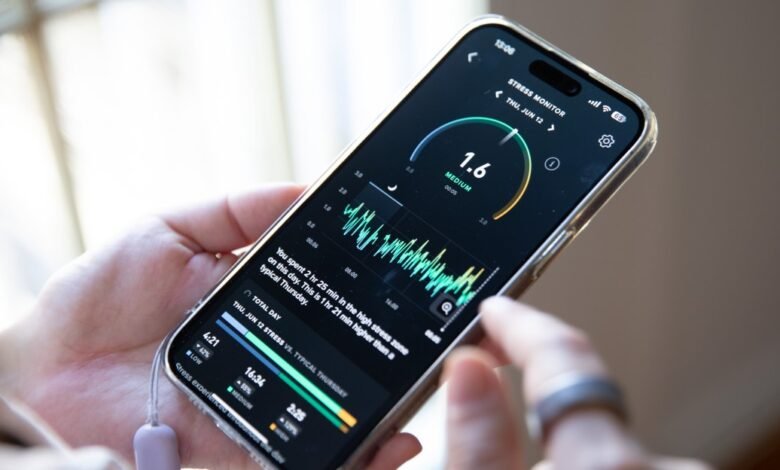
Companies like Oura exemplify this rapid evolution from simple trackers to comprehensive wellness hubs. My six-year journey with their rings began with basic sleep and activity metrics. The latest model, however, can integrate data from a glucose biosensor, display results from privately ordered blood tests for dozens of biomarkers, and centralize sleep, stress, nutrition, and illness prediction metrics all in one app. The convenience for dedicated biohackers is obvious, though it raises profound questions about data stewardship, as evidenced by recent controversies over the company’s partnerships and privacy policies.
This incident highlights a core issue: the assumption that more data automatically equates to better health is fundamentally flawed. While wearable data has undoubtedly helped many, the average person lacks the medical training to interpret complex biomarker readings meaningfully. I certainly don’t, despite my professional experience. My own path to effective diagnosis involved over a decade and multiple specialists, a journey owed more to persistent advocacy within a flawed healthcare system than to any data stream.
Critical questions remain largely unanswered. For whom is this data truly being collected? Consumer health data from wearables enjoys little to no protection under laws like HIPAA. Should corporations be entrusted with the most intimate details of our internal chemistry simply because they market it as “self-education”? The burden of parsing this information increasingly falls on users, and sometimes on unregulated AI chatbots, without sufficient regulatory safeguards. Pushing toward constant, invasive, and expansive self-tracking seems a colossally risky proposition.
As I continue this experiment, measuring ketones and cortisol from the comfort of my bathroom, the ultimate question persists: is any part of this wellness surveillance state actually worth the cost, both in effort and in privacy? The search for that answer continues.
(Source: The Verge)