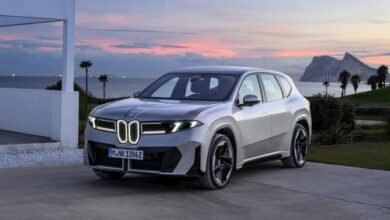
2026 BMW iX3 Review: Pricing, Specs & Release Date
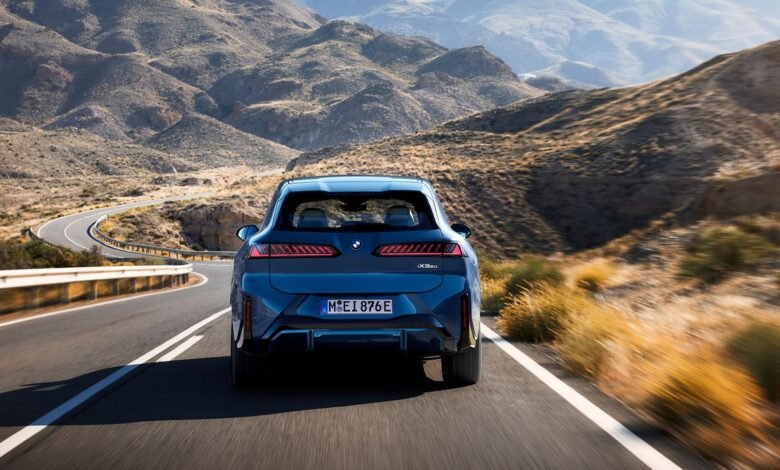
▼ Summary
– The new “Neue Klasse” digital system aims to give electric vehicles a more traditional, analog driving feel by incorporating traits associated with internal combustion engine cars.
– A single, powerful processor integrates sensor data and sends instant instructions to the steering and electric motors, which react faster than a traditional powertrain.
– This system, called the “heart of joy” (HoJ), can predictively and instantly adjust torque, steering weight, and braking for individual wheels to maintain stability, such as during cornering.
– The result for the driver is a responsive and intuitive drive where the heavy iX3 feels significantly lighter and more stable than its actual weight.
– The driving experience is clever and relaxed, with the car managing power distribution and steering adjustments seamlessly, even without optional features like active anti-roll bars.
Understanding the driving experience of the 2026 BMW iX3 requires a fundamental shift in perspective. The vehicle’s core advancement lies in its sophisticated digital architecture, designed to replicate the intuitive and engaging handling characteristics often associated with traditional internal combustion engine cars. This system aims to bridge a perceived gap in current electric vehicles by integrating a sense of mechanical connection and driver feedback.
Central to this experience is a powerful, unified processor. This single unit operates with near-instantaneous speed, gathering data from an array of sensors and sending precise commands to the steering and electric motors. Because electric motors respond far more quickly than any combustion engine, the entire vehicle can react to changing conditions with exceptional alacrity.
The practical result of this technology is a car that feels remarkably composed and intuitive. When navigating a corner, for instance, the system can detect a potential loss of grip. It then proactively adjusts torque distribution between the front and rear axles, modifies steering weight, and can apply braking to an individual wheel if needed. This predictive capability, managed by what BMW calls the “heart of joy” (HoJ) controller, happens seamlessly and continuously without the driver’s awareness.
From behind the wheel, the effect is transformative. The driver perceives a stable, responsive, and engaging vehicle that feels significantly lighter than its actual 2,300-kilogram curb weight. This sensation is the core achievement of the HoJ technology, effectively masking the substantial mass typical of an electric crossover.
This leads directly to the overall driving character of the Neue Klasse-based iX3. The vehicle operates with impressive intelligence, a direct result of its underlying technology. The HoJ system succeeds in creating an illusion, convincing the driver they are piloting something far more agile and connected than a conventional electric SUV. The demeanor is smooth and communicative, making it a genuinely pleasant car to drive.
While the iX3 excels in relaxed, everyday scenarios, it remains composed when pushed. It handles demanding situations with notable poise, showing little tendency to understeer despite its weight. A focused driver can detect the subtle shifts in power across the axles and the continuous, real-time adjustments to the steering. Remarkably, this dynamic capability is achieved without relying on active anti-roll bars or adaptive dampers, though those features can be added due to the platform’s modular design.
(Source: Wired)