Sony A7 V’s Partially Stacked Sensor Enables Silent Shooting
▼ Summary
– Sony is announcing the A7 V, a versatile full-frame camera with a new partially stacked sensor, priced at $2,899 for the body and launching in late December.
– The camera’s key upgrade is its sensor, enabling features like totally silent electronic shutter use and blackout-free 30fps continuous bursts.
– It includes several borrowed high-end features like an AI chip for autofocus, an improved tilt screen, better image stabilization, and enhanced video capabilities without a severe crop.
– The reviewer notes significant practical improvements, such as faster switching between the LCD and viewfinder and the benefits of silent shooting in quiet environments.
– While praised as a refined “greatest hits” update, the article notes the camera’s higher launch price and questions whether Sony’s future innovations will match its earlier rapid pace.
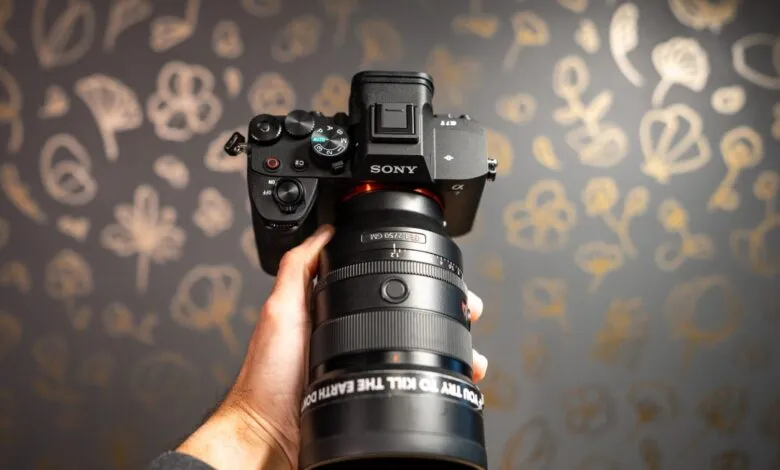
Sony’s latest addition to its full-frame lineup, the A7 V, arrives with a significant internal upgrade that enhances its performance for both photographers and videographers. Positioned as a versatile hybrid camera, it incorporates technology from higher-end models while maintaining a more accessible price point than flagship options. Available body-only in late December for $2,899, it represents a refined evolution in the popular A7 series.
The most notable advancement is the new partially stacked sensor. While it retains the 33-megapixel resolution of its predecessor, the A7 IV, this sensor design enables two major improvements: completely silent shooting using the electronic shutter and blackout-free continuous bursts at up to 30 frames per second. Sony asserts this sensor maintains an impressive 16 stops of dynamic range, addressing concerns that have accompanied similar sensor designs in other cameras. This allows enthusiasts and professionals to shoot discreetly in sensitive environments without sacrificing speed.
Powering these features is an updated Bionz XR2 processor, which includes a dedicated AI chip for enhanced subject recognition and autofocus tracking. Borrowing from the A7R V, this system improves the camera’s ability to lock onto and follow moving subjects. The physical design sees the welcome inclusion of Sony’s excellent multi-directional tilt screen, previously reserved for more expensive models, improving flexibility for both stills and video composition. Ergonomics see subtle refinements, though the overall grip feel remains a familiar Sony experience.
Performance upgrades extend throughout the system. The in-body image stabilization is now rated for up to 7.5 stops of compensation. A new speed boost button, inspired by the A9 III, allows for instant adjustments to shooting pace. The electronic viewfinder, while the same in resolution, now supports a 120fps refresh rate and switches more swiftly from the rear LCD when you bring the camera to your eye. Battery life also sees a welcome bump, with the same NP-FZ100 battery now rated for approximately 630 shots using the viewfinder.
For videographers, the A7 V corrects one of the A7 IV’s most notable shortcomings. It now records oversampled 7K video to produce high-quality 4K 60p footage without a crop on the full-frame sensor. This is a substantial improvement over the previous model’s 1.5x crop at that frame rate. For slow-motion work, a crop is applied to achieve 4K 120p recording. These enhancements solidify its role as a capable hybrid tool.
In practical use, the benefits of these internal updates are immediately tangible. The ability to shoot silently in quiet settings, like during a ceremony, is liberating. The nearly instantaneous switch from the LCD to the electronic viewfinder eliminates a slight but perceptible lag, bringing the responsiveness closer to that of Sony’s professional-tier bodies. The new articulating screen is a standout feature, offering unparalleled flexibility for creative angles.
Ultimately, the A7 V feels like a polished compilation of Sony’s recent innovations, a “greatest hits” model that refines core functionality rather than reinventing it. The incorporation of the partially stacked sensor is the key differentiator, enabling professional-grade shooting features in a more mainstream body. While the entry price has increased compared to the previous generation, the value lies in this concentrated package of performance enhancements, making it a compelling option for creators seeking a capable and refined full-frame camera.
(Source: The Verge)