Best Drones of 2025: Top Flying Cameras for Every Budget
▼ Summary
– TechRadar’s drone recommendations are based on extensive testing by a certified team with over a decade of experience and hundreds of flight hours.
– The DJI Mini 5 Pro is highlighted as the best overall drone, featuring a 1-inch sensor, obstacle avoidance, and a sub-250g weight for ease of use.
– Different drones cater to specific needs, such as the DJI Avata 2 for FPV flight and the DJI Mavic 4 Pro for professional camera versatility.
– The testing process evaluates cameras, flight performance, safety features, battery life, and image quality in various conditions to ensure reliable recommendations.
– DJI dominates the market, but alternatives like the Potensic Atom 2 and HoverAir X1 Pro offer good value for beginners and specific use cases like selfies.
Finding the perfect drone in 2025 means matching advanced flying cameras to your specific needs and budget. Our team of certified pilots has spent hundreds of hours testing the latest models, from featherweight beginners’ drones to professional filmmaking rigs. We evaluate everything from camera performance and flight stability to real-world battery life and intelligent safety systems, ensuring our recommendations are based on rigorous, hands-on experience.
The DJI Mini 5 Pro stands out as the best drone for most people. This compact, folding marvel weighs under 250 grams, making it largely regulation-free. It boasts a powerful 1-inch sensor for superior image quality, a rotating camera for both horizontal and vertical shooting, and robust omnidirectional obstacle avoidance. With features like 4K video at 120fps and an impressive battery life, it delivers professional results in an incredibly user-friendly package.
For those seeking different experiences, other models excel in their niches. The DJI Avata 2 provides an exhilarating and safe entry into first-person view (FPV) flight, while the DJI Mavic 4 Pro offers unparalleled camera versatility with its triple-camera system for serious aerial photographers. We’ve selected eight standout models that cover a wide range of uses and budgets.
Our testing process is exhaustive. We fly each drone in various conditions, assessing flight stability, wind resistance, and the practical effectiveness of features like Return to Home and subject tracking. Camera evaluation is a major focus; we shoot videos and photos in multiple resolutions and color profiles, then analyze the results on calibrated monitors. We examine detail, dynamic range, and low-light performance to understand the true capabilities of each flying camera.
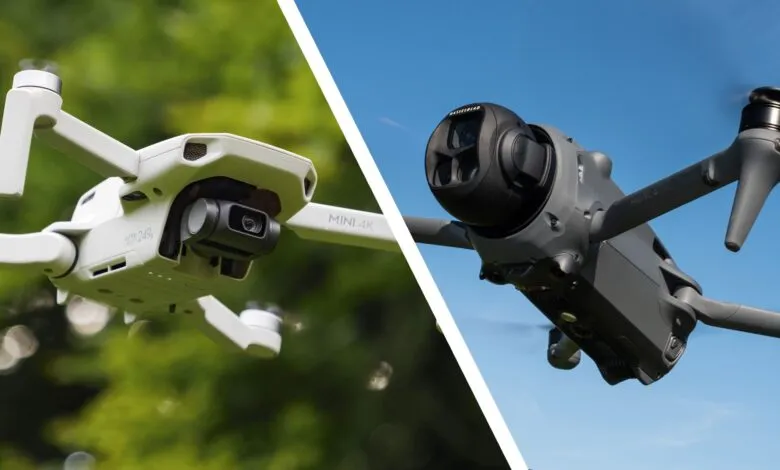
For beginners, the DJI Mini 4K offers an incredible starting point. Priced under $300, it delivers stable 4K video and a 3-axis gimbal in a lightweight, easy-to-fly design. While it lacks the obstacle avoidance of its more expensive siblings, its flight performance and robust build make it an excellent value.
If your primary goal is cinematic image quality, the DJI Mavic 4 Pro is in a class of its own. Its triple-camera array, featuring a main 25MP Micro Four Thirds sensor, is complemented by what DJI calls an ‘Infinity Gimbal,’ providing an unmatched range of motion. This drone is built for creators who need the ultimate in versatility and image quality from the sky.
Enthusiast aerial photographers often find the sweet spot with the DJI Air 3S. It bridges the gap between the Mini and Mavic series, offering a dual-camera system with a 3x telephoto lens and a larger 1-inch sensor than its predecessor. Its increased size provides better wind resistance and flight times, making it a sturdy and capable tool for more demanding shoots.
The HoverAir X1 Pro redefines the selfie drone category. This palm-sized drone takes off and lands from your hand, using intelligent tracking to keep you perfectly framed. It’s designed for absolute beginners, requiring no piloting skill to capture smooth, dynamic 4K footage of your adventures.
On a tight budget, the Ryze Tello remains a fantastic learning tool. For around $100, you get a responsive, tiny drone that teaches the fundamentals of flight. While its 720p video quality is basic, its flight controls are rewarding, making it a fun and affordable first step into the hobby.
FPV flying is best experienced with the DJI Avata 2. It combines the adrenaline rush of immersive flight with DJI’s renowned safety features like Return to Home. An updated motion controller makes acrobatic maneuvers accessible, while the improved camera sensor captures high-quality 4K/60p footage with 10-bit color.
For those seeking a compelling alternative to DJI, the Potensic Atom 2 is a top contender. This sub-250g drone challenges the DJI Mini 4K with a similar price tag but includes features like subject tracking and a 3-axis gimbal for stabilized 4K video, representing excellent value.
When choosing your drone, consider your budget, desired features, and local regulations. Drones under 250g typically face fewer restrictions. Key features for beginners include obstacle avoidance and automated flight modes, while experienced users might prioritize camera sensor size, video codecs, and manual control options. Always check your country’s specific drone laws regarding registration and flight zones before you fly.
(Source: TechRadar)