Stoke Space Bets Big on the Only Launch Problem That Matters
▼ Summary
– Andy Lapsa, founder of Stoke Space, views the launch site from a tower overlooking Cape Canaveral, which is both impressive and intimidating.
– Established competitors like SpaceX and Blue Origin dominate the area with reusable rockets and massive financial backing.
– Nearby launch complexes show the struggles of startups, including ABL Space’s pivot after failures and Relativity Space’s near-bankruptcy despite billions in investment.
– Lapsa is a rocket scientist without billionaire resources, making his venture riskier in a crowded field.
– He questioned the need for another rocket company but systematically analyzed the market and competitors before founding Stoke Space.
Standing atop the massive steel structure at Launch Complex 14 in Cape Canaveral, Andy Lapsa surveyed a landscape that perfectly captured the high-stakes reality of modern spaceflight. To one side stood the tangible proof of SpaceX’s dominance, a recently landed Falcon 9 booster representing hundreds of successful recoveries. Nearby sprawled Blue Origin’s facilities, backed by Jeff Bezos’ billions and developing the powerful New Glenn rocket. The opposite direction told a different story, a virtual graveyard of commercial space ambitions where promising startups like ABL Space had faltered after failed launches and where Relativity Space narrowly avoided bankruptcy despite burning through enormous funding.
What separates Stoke Space from this crowded field isn’t just another rocket design but a fundamentally different approach to reusability. Lapsa, who co-founded the company with fellow aerospace engineer Tom Feldman after both spent years at Blue Origin, acknowledges the seeming insanity of entering such a competitive market. “When we started this venture more than five years ago,” he reflects, “the obvious question haunted me: does the world genuinely need another rocket company among the 150 already trying?” The decision required methodical analysis of every competitor, careful consideration of launch economics, and realistic assessment of business trajectories in the spacecraft industry.
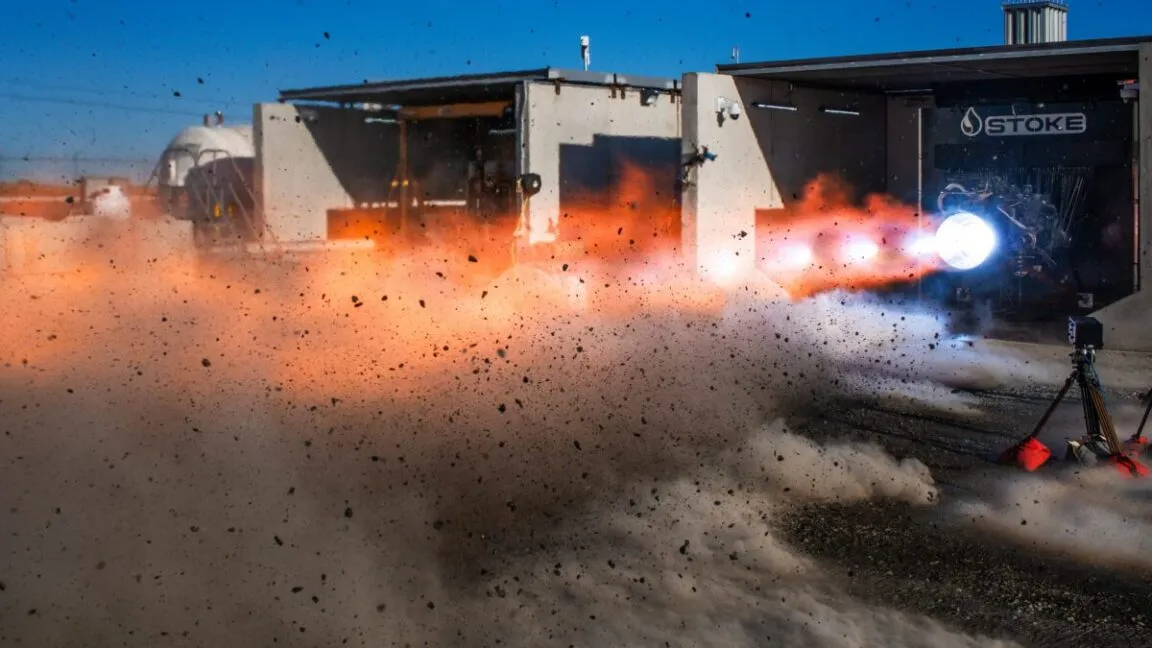
Their solution emerged from recognizing that true reusability demands more than recovering first stages, it requires bringing back the most valuable part of the vehicle, the upper stage that actually delivers payloads to orbit. While other companies focus on first-stage recovery, Stoke Space concentrates on what Lapsa calls “the only launch problem that really matters”, developing a fully reusable system that can dramatically reduce costs and increase launch frequency. This strategic focus represents their bet on solving the fundamental economic challenge of space access rather than simply joining the race to orbit.
(Source: Ars Technica)