Google’s NameDrop for Android: First Look Revealed

▼ Summary
– Google is developing an Android feature similar to iOS’s NameDrop, internally called “Gesture Exchange” and “Contact Exchange.”
– The feature uses NFC technology and a gesture to share contact information between Android devices.
– Users can choose to share their photo, phone number, and email or opt to only receive the other person’s details.
– Early screenshots show the Android version allows saving received contacts and initiating calls or texts directly from the interface.
– The final technical implementation and public branding for the feature are still undetermined, as it is based on work-in-progress code.
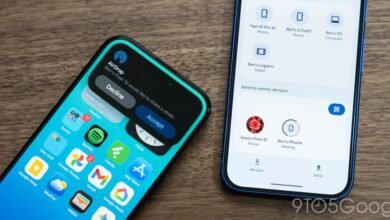
Google is reportedly developing a new feature for Android that closely mirrors Apple’s NameDrop functionality, allowing users to share contact information seamlessly between devices. This development, uncovered through an APK teardown of Google Play Services, points to an internal project known as “Gesture Exchange” or “Contact Exchange.” The system appears to rely on NFC technology to facilitate the transfer of personal details, enabling Android users to exchange phone numbers, email addresses, and profile photos with a simple gesture.
Much like its iOS counterpart, the Android version will give individuals control over what they share. You can choose to transmit your own contact card, receive the other person’s information, or select the “Receive only” option to collect details without providing any of your own. This approach maintains privacy while making the exchange of contact data quick and straightforward.
The feature was discovered in recent beta versions of Google Play Services, where code strings and activity labels related to Gesture Exchange and Contact Exchange were identified. One notable reference to “ndef” strongly suggests the use of NFC Data Exchange Format, pointing toward near-field communication as the underlying mechanism. Early screenshots reveal a user interface where individuals select which details, photo, phone number, or email, they wish to share before initiating the transfer.
On the receiving end, the interface displays the shared contact information and provides options to save it as a new contact, start a video call, or send a text message. While the latter functions may seem redundant when someone is physically present, they offer immediate ways to connect after saving the details.
It remains unclear whether NFC will handle the entire data transfer or simply serve as a handshake to establish a connection before switching to Bluetooth or Wi-Fi for the actual exchange. Since contact cards are generally small in size, NFC alone could be sufficient, though profile photos might require a bit more bandwidth. Google has not yet confirmed the final technical implementation or the public-facing name for the feature, Gesture Exchange and Contact Exchange are internal designations that could change before release.
This move continues the trend of cross-platform inspiration between Android and iOS. Apple has integrated ideas from Android in the past, such as home screen widgets and customizable app icons, while Google has previously introduced Android features reminiscent of iOS capabilities, like the Calling Cards function that resembles Contact Posters. As both operating systems mature, it’s common to see useful functionalities adapted to fit each platform’s ecosystem.
As with any pre-release feature discovered through APK analysis, there is no guarantee that Gesture Exchange will make it to the public version of Android. Development roadmaps can shift, and Google may alter or abandon the project before an official launch. Still, the evidence uncovered so far provides a compelling glimpse into what could become a handy tool for Android users looking for fast, gesture-based contact sharing.
(Source: Android Authority)