Nintendo Blocks Third-Party Switch 2 Docks in Silent Update

▼ Summary
– Nintendo’s Switch 2 update 21.0.0 has caused some third-party docks to stop working, while making minor changes.
– Nintendo claims it did not intentionally block legal third-party docks but implies some were made illegally.
– Some third-party docks, like Viture’s Pro mobile dock, continue to function normally with the update.
– The situation raises questions about Nintendo’s future approach, including potential certification programs or proprietary changes.
– Nintendo likely aims to promote its own expensive dock and discourage cheaper third-party alternatives.
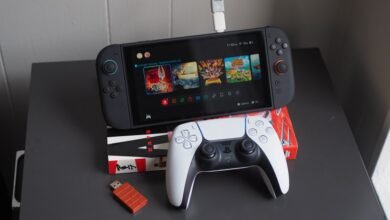
A recent firmware update for the Nintendo Switch 2 has unexpectedly disrupted functionality for numerous third-party docking stations. While the official patch notes for version 21.0.0 highlighted only minor adjustments, the practical outcome has been that several unofficial docks have ceased to operate correctly. This development has left accessory manufacturers scrambling to understand the new technical requirements, as they must now decode the updated communication protocol and power specifications to regain compatibility.
Nintendo has officially stated that it has “no intention to hinder or invalidate legal third-party dock compatibility.” This carefully worded declaration can be interpreted in multiple ways. On one hand, it suggests the compatibility issues were an unintended consequence of the system update. On the other, it implies Nintendo has defined a clear boundary between legally and illegally engineered docks, with many current products falling into the latter category.
The situation is complicated by the fact that not all unofficial docks have been affected. For instance, the Viture Pro mobile dock, an early adapter that supports the Switch 2 for use with its XR glasses, continues to function perfectly with the latest console firmware. This selective incompatibility makes it difficult for consumers to know which accessories will remain reliable.
The core question remains: what is Nintendo’s long-term strategy? The company could be tightening its proprietary “handshake” protocol, forcing accessory makers into a perpetual game of catch-up with each new console update. Another possibility is the introduction of a certified licensing program, similar to Apple’s MFi, where manufacturers pay a fee to guarantee out-of-the-box compatibility.
Ultimately, Nintendo has a vested interest in steering consumers toward its own first-party accessories, which are typically sold at a premium. This move effectively creates a higher barrier for third-party companies trying to offer similar functionality at a lower cost. The coming months will be critical for accessory brands like Genki and JSAUX, which have advertised upcoming compact docks with Switch 2 support. Whether that promised compatibility holds firm by the time these products launch remains to be seen.
(Source: The Verge)