Amazon Rebrands Starlink Rival as ‘Project Kuiper’

▼ Summary
– Project Kuiper has been officially renamed Amazon Leo, referencing its Low-Earth Orbit positioning at altitudes of 1,200 miles or less.
– Amazon’s constellation consists of 153 satellites in orbit, with plans to launch over 80 missions carrying approximately 3,000 spacecraft.
– The project has completed six launches so far, including three using SpaceX Falcon 9 rockets that deployed 72 satellites.
– Amazon Leo aims to provide fast, reliable internet to underserved areas, competing with SpaceX’s Starlink, which has launched 10,000 satellites.
– Potential risks of launching thousands of satellites include increased orbital debris, collision risks, and heightened dangers for manned missions.
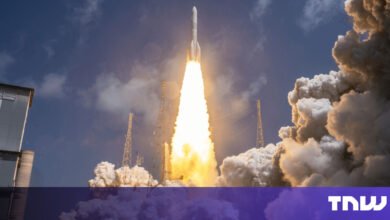
Amazon has officially rebranded its ambitious satellite internet venture, previously known as Project Kuiper, to Amazon Leo. This new name directly references Low-Earth Orbit (LEO), the orbital region where the company’s constellation of 153 satellites currently operates. The original codename, Project Kuiper, was inspired by the distant Kuiper Belt located beyond Neptune in our solar system.
The company has outlined an extensive deployment strategy, planning more than 80 separate missions to place approximately 3,000 satellites into space. To date, Amazon Leo has completed six successful launches. Three of these missions utilized SpaceX Falcon 9 rockets, successfully deploying a combined total of 72 satellites into their designated orbits. This positions Amazon Leo as a direct competitor to SpaceX’s established Starlink network, which recently celebrated the milestone of launching its 10,000th satellite.
Amazon states that the primary objective of the Leo project is to deliver high-speed, dependable broadband internet to underserved and remote communities across the globe. This mission mirrors the goal that Starlink has been pursuing for several years. While providing connectivity to areas with poor infrastructure is a commendable aim, the rapid deployment of tens of thousands of new satellites raises significant concerns within the space industry. Experts point to the potential for a substantial increase in orbital debris, a greater risk of in-space collisions, and new hazards for crewed spaceflight missions as the primary challenges associated with such large-scale constellations.
(Source: The Verge)