Who’s Actually Buying VR and XR Headsets?

▼ Summary
– Despite recent headset launches, VR/MR technology remains far from mass-market adoption with smartphone shipments vastly outnumbering headset sales.
– Major tech companies view current headsets as transitional products toward the ultimate goal of sleek smart glasses that blend digital and real worlds.
– Enterprise users and developers constitute the primary market for premium headsets, using them for specialized applications like medical training and workspace expansion.
– Current headsets face significant adoption barriers including high prices, comfort issues, and uncertainty about long-term company commitment to the technology.
– Even enthusiasts acknowledge headsets serve niche purposes rather than mainstream use, with many valuing them as experimental technology rather than practical investments.
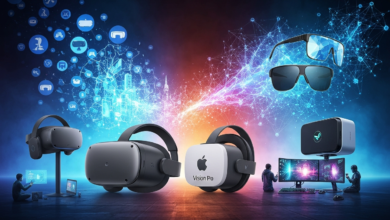
The market for virtual and mixed reality headsets is generating significant buzz with recent launches from major players, yet the actual adoption rates reveal a more specialized audience than a mass consumer movement. While Apple, Samsung, and Valve have introduced new devices like the Vision Pro, Galaxy XR, and Steam Frame, industry experts point out that widespread consumer uptake remains limited. According to market analysis, the primary buyers are not everyday users but developers, businesses, and dedicated tech enthusiasts who see potential in these devices for specific professional applications.
Analyst Tuong Huy Nguyen from Gartner summarizes the situation by noting that most individuals interested in owning a VR headset have already made their purchase. Sales figures support this view: Apple shipped approximately 400,000 Vision Pro units in 2024, while Meta moved about 5.6 million of its more affordable Quest headsets. When compared to the 1.2 billion smartphones shipped globally in the same period, it becomes clear that VR and XR devices occupy a niche segment.
High-end headsets priced above $1,000, including Apple’s offering, are projected to make up just over 6% of total VR shipments. Despite these modest numbers, technology giants continue investing heavily. Meta’s Reality Labs division, for instance, reported a multi-billion dollar operating loss, signaling a long-term bet on the potential of immersive technologies rather than immediate profitability.
So who is driving these purchases? Enterprise users and developers form the core customer base for premium headsets, leveraging them to create new software and streamline professional workflows. Jitesh Ubrani of IDC explains that devices like the Vision Pro are often too expensive for the average consumer, leaving businesses and innovators as the main adopters. These buyers are less concerned with all-in-one functionality and more focused on specialized capabilities that justify the cost within a corporate budget.
Many industry observers see current headsets as interim products on the path to more advanced wearable technology. The ultimate goal for companies like Meta, Google, and Apple is to develop sleek, unobtrusive smart glasses that seamlessly blend digital content with the physical world. Until that vision becomes technically and commercially feasible, headsets serve as a necessary platform for building the underlying software and user experiences.
In practical terms, headset owners frequently cite professional use cases. Jacob Fiset, a programmer and XR enthusiast, uses his Vision Pro to create expansive virtual workspaces, reducing his reliance on multiple physical monitors. Similarly, David Larose, a chief information officer in France, is experimenting with the device to provide secure, private CCTV monitoring for law enforcement agencies without requiring additional hardware.
Healthcare represents another promising area. Dr. Tommy Korn of Sharp HealthCare highlights how headsets could replace expensive medical monitors, which can cost tens of thousands of dollars each. By using mixed reality, radiologists could examine 3D reconstructions of scans, and surgeons might view augmented overlays during procedures. While these applications are still in testing phases due to strict regulatory requirements, their potential has led some institutions to invest in multiple devices.
Even among early adopters, challenges persist. Comfort, pricing, and uncertainty about long-term manufacturer support are frequent concerns. Some users modify their headsets for better wearability, while developers like Tom Krikorian express caution about whether companies will sustain their commitment to the platform. Google’s track record of discontinuing projects gives some pause regarding the future of Android XR.
For a segment of buyers, however, practical shortcomings are secondary to the appeal of pioneering new technology. XR enthusiast Ruby Voigt acknowledges that her Vision Pro may not offer strong financial value, but she values it as a tangible piece of tech history. This sentiment captures the current state of the VR and XR market: a field driven by specialized interest and future potential rather than broad consumer demand.
(Source: The Verge)