How Corals Survived Past Climate Change in the Deep
▼ Summary
– The 2023 marine heat wave caused functional extinction of two Acropora coral species in the Florida Reef due to extremely low population numbers.
– Scientists believe natural recovery is unlikely because the corals’ numbers are too low for successful reproduction to occur.
– Marine heat waves kill corals by disrupting their symbiotic algae, leading to toxic reactions, starvation, and bleaching when water temperatures rise.
– The 2023 heat wave was the ninth recorded but was 2.2 to four times more severe than any previous heat wave in the region.
– The affected species were staghorn and elkhorn corals, which are branching types that create complex three-dimensional reef structures.
The devastating marine heat wave of 2023 pushed two crucial reef-building coral species in the Florida Reef to the brink of functional extinction, according to recent scientific findings. This event has raised serious concerns about the future of these vital marine ecosystems, which stretch from the Dry Tortugas National Park to Miami. Coral biologist Ross Cunning from the John G. Shedd Aquarium expressed deep pessimism about natural recovery, noting that the drastically reduced population numbers make successful reproduction highly improbable at this stage.
This is not the first instance in Earth’s long history that corals have faced existential threats. Over the past 460 million years, these resilient organisms have repeatedly confronted near-extinction events, managing each time to eventually rebound and recolonize habitats lost during periods of severe climate disruption. The current challenge lies in the accelerated pace of modern climate change, unfolding far too quickly for human observers to witness the potential recovery process.
The mechanism behind coral mortality during marine heat waves involves the breakdown of their symbiotic relationship with microscopic algae. These algae reside within coral tissues and typically provide essential nutrients through photosynthesis. When water temperatures climb beyond tolerable limits, the algae begin producing toxic reactive oxygen species instead of beneficial sugars. To protect themselves, corals expel these algae, eliminating the immediate toxicity but losing their primary food source in the process. This expulsion results in the characteristic bleaching appearance, as the colorful algae provide the corals’ distinctive pigmentation.
The Florida Reef has endured multiple marine heat waves in recent history, with eight recorded events preceding the 2023 catastrophe. Each previous episode caused significant coral mortality and damage to reef structures. However, Cunning emphasized that last year’s thermal event dwarfed all prior incidents, measuring between 2.2 and four times more severe than anything previously documented in the region.
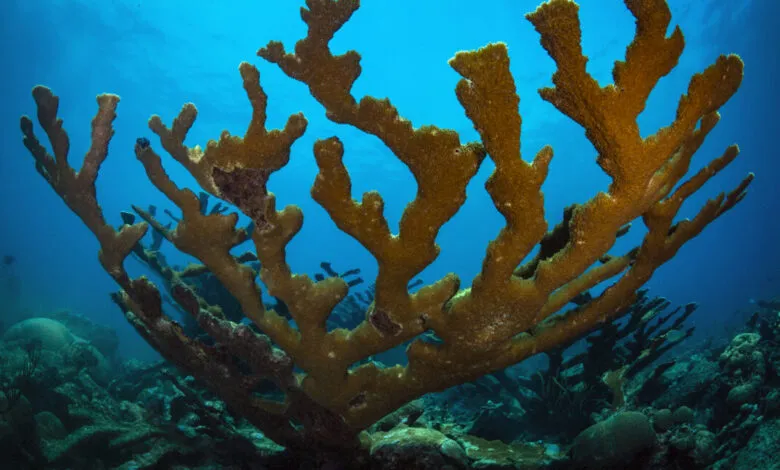
Researchers focused particularly on two Acropora species: staghorn and elkhorn corals. Both are branching varieties that create essential three-dimensional habitats. Staghorn corals develop pointed branches that form dense underwater thickets, while elkhorn corals produce broad, flattened branches that grow upward toward the water’s surface. These structural formations create complex canopy-like environments similar to terrestrial forests, providing crucial shelter and feeding grounds for numerous marine species.
(Source: Ars Technica)