Valve Unveils New Steam Machine and Controller Hardware
▼ Summary
– Valve is releasing SteamOS-powered Steam Machine and Steam Controller hardware in early 2026, designed for TV or desktop PC gaming.
– The Steam Machine features a six-core AMD Zen 4 CPU, RDNA3 GPU, 16GB DDR5 RAM, 8GB VRAM, and SSD storage options of 512GB or 2TB.
– Valve claims the Steam Machine is over 6x more powerful than the Steam Deck and supports ray-tracing and 4K 60fps gaming with FSR upscaling.
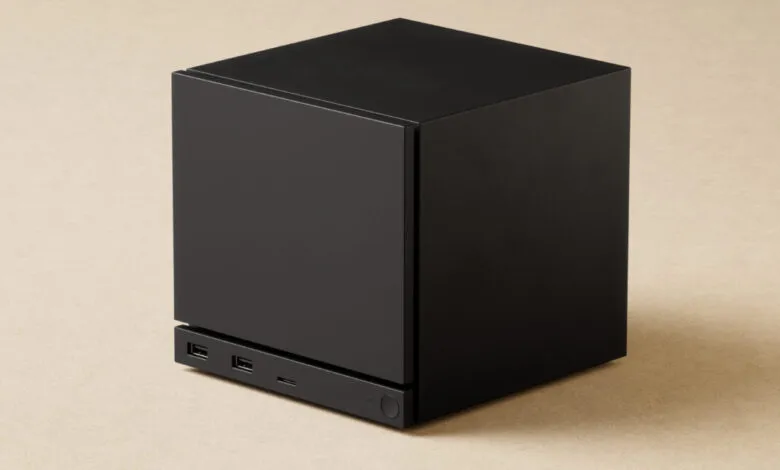
– The hardware is housed in a 160mm black cube with front USB-A ports, an SD card slot, a power button, and a customizable LED status bar.
– The rear includes a large fan vent, three additional USB ports (including USB-C), and HDMI 2.0 and DisplayPort 1.4 outputs.
Following the transformative success of the Steam Deck in the handheld gaming market, Valve is preparing to launch new SteamOS-powered hardware aimed at the living room and desktop gaming spaces. The upcoming Steam Machine and Steam Controller, scheduled to begin shipping in early 2026, are engineered to enhance the Steam gaming experience and maximize the value of players’ existing Steam libraries.
Valve has shared preliminary specifications for the Steam Machine, revealing a semi-custom six-core AMD Zen 4 CPU capable of reaching speeds up to 4.8 GHz. This processor is paired with an AMD RDNA3 graphics unit featuring 28 compute units. The system will be equipped with 16GB of DDR5 RAM and an additional 8GB of dedicated DDR6 VRAM for the GPU. Two storage configurations will be available, 512GB and 2TB SSD options, though specific pricing details have not yet been announced.
Based on these components, the Steam Machine is expected to deliver performance comparable to a mid-range desktop gaming PC from recent years. Valve claims the system is over six times more powerful than the Steam Deck, providing enough capability to support ray-tracing and 4K gaming at 60 frames per second, utilizing FSR upscaling technology.
The external design of the Steam Machine features a minimalist black cube measuring 160 millimeters on each side, making it slightly larger than the original Nintendo GameCube. The front panel includes two USB-A ports, an SD card slot for storage expansion, a power button, and a customizable LED strip. This LED bar provides visual feedback for system status, such as boot-up sequences or ongoing downloads. The rear of the unit is dominated by a large cooling fan vent, alongside three additional USB ports, one of which is USB-C, as well as HDMI 2.0 and DisplayPort 1.4 outputs.
(Source: Ars Technica)