Steam Deck 2: No Updates From Valve Yet
▼ Summary
– Valve explicitly avoided discussing the Steam Deck 2 during their briefing, focusing instead on how the original Steam Deck’s learnings influenced their new products.
– The company would not confirm if its new drift-resistant TMR joysticks will be included in a future Steam Deck and has no plans to offer them as a module for the original model.
– Valve has consistently stated it is waiting for a significant generational leap in performance and efficiency without sacrificing battery life before releasing a Steam Deck sequel.
– Valve is exploring Arm processors for future handhelds, noting their potential, as demonstrated by their use in the new Steam Frame VR headset.
– The Steam Deck 2 could potentially use an advanced Arm chip from companies like Qualcomm or a future AMD processor, but an Arm-based version is not guaranteed yet.
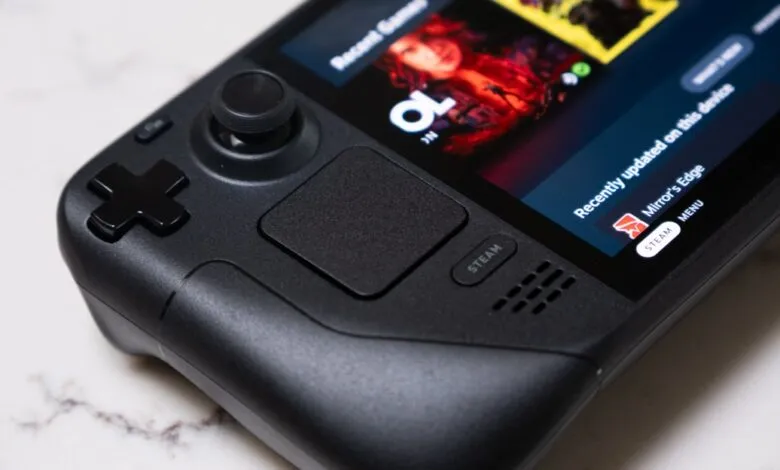
For gamers eagerly awaiting news about a potential Steam Deck 2, Valve remains completely silent about any official updates or announcements regarding its next-generation handheld. During a recent product briefing, Valve software engineer Pierre-Loup Griffais explicitly stated that the current Steam Deck was not the focus of discussion, emphasizing instead how the original device’s development has influenced their latest hardware releases.
The company also declined to confirm whether its newly introduced drift-resistant TMR joysticks, featured in the Steam Controller and Steam Frame’s wands, will appear in a future Steam Deck model. Valve hardware engineer Steve Cardinali noted that the team is constantly exploring ways to enhance the Steam Deck moving forward, though there are currently no plans to offer these upgraded joysticks as a standalone module for existing Deck owners.
Valve has consistently acknowledged that sequels to the Steam Deck are inevitable, but the timeline remains deliberately unhurried. Since 2022, Griffais has repeatedly emphasized that the company is waiting for a substantial generational leap in performance and power efficiency before committing to a true successor. Lawrence Yang echoed this position in 2024, stating that Valve will only move forward with a Steam Deck 2 when there is a meaningful improvement in computing capability without compromising battery life.
A key question now is whether this necessary performance boost will come from x86 architecture or if Valve might pivot to Arm-based processors. The company recently unveiled its Steam Frame VR headset with an Arm chip, utilizing emulation to run select Windows games directly on the device. Griffais mentioned that Arm holds “a lot of potential” for future handhelds, though the Frame operates at a lower performance target than the nearly four-year-old Steam Deck. A more powerful Arm chip would be required to drive a handheld gaming device, and companies like Qualcomm are actively developing such solutions. One of Qualcomm’s clients has even expressed interest in collaborating with Valve on a potential SteamOS handheld.
Alternatively, Valve may have already identified its ideal chip for the next Steam Deck within AMD’s future roadmaps, similar to the approach taken with the original model, and could simply be waiting for that hardware to become available. Despite these possibilities, there is no indication that an Arm-based Steam Deck 2 is imminent, leaving enthusiasts to continue speculating while Valve holds its cards close.
(Source: The Verge)