My Mobile Office & Adventure Van Build

▼ Summary
– The author chose a diesel Sprinter van over an EV due to inadequate charging infrastructure in remote areas and lack of suitable plug-in hybrids.
– A hybrid power system was developed using portable solar generators (SoGens) that plug into custom wiring for integrated lighting, outlets, and appliances.
– This setup allows the SoGen to be removed for home use during blackouts or to offset energy costs, maximizing the investment’s value.
– Key SoGen specifications include at least 30A 12V DC output, 3500W sustained AC output, and 8kWh capacity for off-grid work weeks.
– The system supports flexible charging from solar panels, the van’s alternator, shore power, and EV stations, costing $7,000-$8,000 fully installed.
For anyone dreaming of a mobile office or an adventure vehicle, creating a reliable off-grid power system is the cornerstone of the entire project. After two decades as a tech journalist, I finally realized my decade-long ambition of building a custom van, serving both as a remote workstation and a base for outdoor pursuits. The single most critical requirement was substantial battery capacity to run everything from computing gear to domestic appliances far from the nearest power outlet.
My initial plan involved using an electric vehicle as a massive, rolling power source for all the gadgets I test and review. However, the reality of traveling to remote locations meant that EV charging infrastructure was not yet dependable enough. I also couldn’t find a suitable plug-in hybrid in my preferred vehicle category. This led me to choose a Sprinter cargo van with a ubiquitous diesel engine, which I can refuel and repair almost anywhere. I even had an oversized fuel tank installed to also supply my cabin heater.
Since I don’t live in the van full-time, investing in a permanently installed, expensive power system didn’t make financial sense. I wanted the flexibility to use those costly batteries elsewhere, like at home during a blackout or to reduce my daily energy consumption. This approach maximizes the return on a significant investment.
The solution was a hybrid setup. I designed a system where portable power stations plug directly into the van’s custom electrical system. This powers integrated lighting, a fan, a water pump, and strategically placed USB-C ports, AC outlets, and 12V sockets. Recharging is versatile; it can happen via solar power at a campsite, at an EV charging station, or even by carrying the large battery into a café if absolutely necessary.
After numerous iterations, over 10,000 miles, and months of testing, I’m confident sharing this setup. The vanlife community, much like our readers at The Verge, thrives on shared knowledge, and I hope this provides a useful template for others to adapt.
A typical selection of components from Victron Energy, a popular choice for custom van builds. Professional installation is usually recommended for such systems. This image shows what a fully wired, bespoke installation looks like before it’s concealed within cabinetry.
My wife, our dog, and I often venture far from civilization for weeks. We need a system that recharges quickly and easily, whether we’re parked at a vineyard, a farm, or a remote beach. Our weekday nine-to-five jobs require a reliable internet connection, and our kitchen runs entirely on electricity, not propane.
Many van builds with high power demands opt for a custom system built around components from Victron Energy. If you’ve browsed the #vanlife hashtag, you’ve likely seen their signature blue modules. These systems are complex, incredibly robust, and considered top-tier, but they typically require professional design and installation.
My builder initially steered me away from a Victron system, pointing to the rapid advancements in all-in-one power stations. He was right. We developed a cost-effective and simpler design where a power station slots into a pre-wired electrical system within the living area.
The first step was selecting the right type of power station.
A solar generator, combined with custom wiring, allows me to position USB-C charging outlets in ideal locations, such as near the bed. Here, an AC outlet and two USB-C jacks are installed for cooking or working at an outside table. An all-in-one unit like this EcoFlow model replaces multiple individual components and can be repurposed for home use.
Solar generators, or SoGens, represent a significant investment, often costing thousands of dollars. The key advantage over a fixed system is their portability, which unlocks a multitude of uses beyond the van.
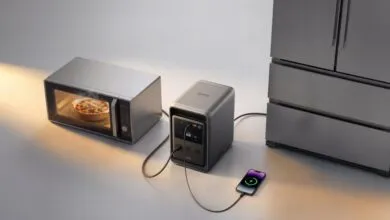
Imagine this scenario: Instead of sitting idle, your power station is connected to a simple DIY solar setup on your balcony, feeding stored energy back into your home during peak rate hours to save money. During a power outage, it keeps your refrigerator and essential devices running. You can also take it to a beach house or a workshop. And when you’re ready to hit the road, you simply load it back into the van.
This is precisely how I utilize power stations. However, not every unit will work; you need a specific type known as a “solar generator” that can efficiently manage energy from solar panels.
A SoGen consolidates everything you’d otherwise install separately: the battery, a solar charge controller, an inverter, a battery management system, and various inputs and outputs. Think of it as an all-in-one iMac compared to a custom-built desktop PC.
Some vanlifers use just a SoGen without any custom wiring, making do with its built-in ports and moving the heavy unit as needed. In a custom Victron setup, all components are permanently wired and hidden, with outlets placed for convenience and safety. My hybrid approach merges these concepts: a plug-and-play system for the SoGen that is relatively easy to install and makes all power outlets readily accessible. Because it’s brand-agnostic, I can easily swap in the latest model from companies like EcoFlow, Anker, or Bluetti by connecting just four cables.
Viewing the van from the rear doors, the electrical cabinet is on the left. You can see the MC4 solar connector and the shore power AC inlet that plug into the SoGen. Grommets were later added for more cabling flexibility. Inside the cabinet, a yellow Anderson connector links to the SoGen’s high-amperage DC output to power the 12V lighting and USB-C jacks. The black cable below is the AC input that powers all the van’s AC outlets.
In my hybrid system, the large SoGen remains stationary, supplying power to all the strategically placed outlets throughout the interior. Recharging is seamless, without needing to run cables through doors or windows. It charges from the van’s alternator while driving, from fixed rooftop solar panels, from portable ground panels, from standard wall outlets, or from RV park shore power. Many manufacturers even offer adapters for charging at EV stations in a pinch.
The simplicity of this hybrid configuration becomes clear when compared to a comparable Victron system. My wiring diagram is straightforward, centered on the SoGen, whereas a Victron setup involves numerous separate components and more complex interconnections.
A particularly useful customization involves the solar wiring. It allows me to combine power from rooftop panels with portable panels on the ground to maximize charging while off-grid. When driving, solar input can be combined with the alternator charger for a rapid recharge, provided the SoGen has the right specifications.
Bluetti uses an optional Hub D1 box to house all the USB-C and 12V sockets, keeping the main Apex 300 unit compact. The 12V/50A Anderson output here powers all my 12V devices. In contrast, EcoFlow integrates a 12V/30A Anderson output directly onto the larger Delta Pro 3, which can limit placement options. My system is designed to be compatible with any SoGen, requiring only four cable connections.
My van is built to work with SoGens from any brand, as long as they meet common specifications for portable units with a 3kWh to 4kWh capacity. Here’s what to look for if you’re considering a similar hybrid setup.
A critical feature is a 12V DC output of at least 30 amps. Most high-end SoGens offer this, and it’s essential for efficiently powering laptops, phones, drones, a Starlink terminal, a fridge, and an air compressor, as well as integrated 12V devices like LED lighting and a water pump. In my setup, these all connect to a fused distribution panel inside a cabinet for easy access.
For power-hungry AC appliances, the SoGen needs a sustained AC output of around 3500W to supply the traditional wall outlets I’ve installed. I prefer using DC appliances to conserve energy, but sometimes I need AC for a water boiler, coffee machine, induction cooktop, or to charge an e-bike. I need enough capacity to run several of these items at the same time.
My average daily consumption is about 1.6kWh, and I like to stay off-grid for a full work week. This requires a SoGen with at least 8kWh of capacity, achieved by using a main unit with one or two expansion batteries. A modular approach makes it easier to handle the size and weight of each component.
Matching solar panels to your SoGen requires careful planning. My three 140W rooftop panels are wired in series, requiring the SoGen to support at least 420W at 72V. I can add a 400W portable panel via an MC4 connector, bringing the total to over 800W at 120V on a single input, a voltage that some SoGens cannot handle. Thorough research during planning is crucial to avoid disappointment.
Finally, an alternator charger capable of delivering over 500W is important. Buying a charger from the same brand as your SoGen often simplifies installation and can provide a faster, proprietary charge. The SoGen should be able to accept simultaneous charging from both solar panels and the alternator for the quickest recharge while driving. On a sunny day, I can generate nearly 1200W, banking almost a full day’s power for every hour on the road.
I’ve been testing flagship SoGens from EcoFlow and Bluetti. Each has pros and cons regarding size, solar capacity, and how they manage 12V DC outputs.
With the EcoFlow Delta Pro 3 and one external battery, I achieve 8kWh of capacity. The main unit’s height limits its placement under a new shelf, but the slim expansion battery can fit almost anywhere. Cables can be routed to allow stacking, which also provides extra USB-C and AC jacks in the living area.
The Bluetti Apex 300 is much smaller, fitting neatly under my shelf. However, this means I need two expansion batteries to reach my 8kWh target. Bluetti offers a long cable for flexible battery placement. A separate Hub D1 box is required to deliver the necessary 50A of 12V DC output to the van.
Even though the SoGen is wired into the van, its built-in AC, USB, and other ports remain accessible for powering nearby devices. All inputs and outputs can be monitored and controlled via the unit’s display or a smartphone app over Bluetooth. Most high-end models also connect to Wi-Fi for remote monitoring. Companies like EcoFlow offer a dedicated wired display for central mounting in the van, which is more convenient than using an app for basic controls.
SoGens suitable for this hybrid setup start around $3,000, not including expansion batteries, solar panels, an alternator charger, and custom electrical components. A complete system, as described, will likely cost between $7,000 and $8,000, plus labor if you aren’t doing the installation yourself.
This price point is comparable to a bespoke Victron system with similar capabilities. However, a Victron system is typically dormant when not in the van, whereas a SoGen can provide year-round value at home by lowering electricity bills and serving as a backup power source.
My approach to van power using a SoGen does have some drawbacks, though I consider them minor trade-offs.
First, the main units and expansion batteries are heavy, ranging from 70 to 120 pounds. Transporting them up several flights of stairs at my Amsterdam home requires two people. While balcony solar systems are gaining popularity in Europe, they are largely prohibited in the United States, outside of Utah.
The heavy-duty cables connecting the SoGen to its external batteries are thick and can limit placement options. Some vendors offer different cable lengths for more flexibility. In contrast, Victron systems use smaller, distributed components that can be tucked into various spaces.
Portable SoGens and their batteries must be securely tied down to prevent them from becoming hazardous projectiles in a sudden stop or accident. Your vehicle may not have anchoring points where you need them.
The all-in-one nature of a SoGen means a single component failure could require sending the entire unit for repair. Custom installations allow for swapping out individual failed modules. This modularity also makes future upgrades easier with a Victron system.
The Victron ecosystem offers centralized control over additional systems like water pumps and tank levels. SoGen manufacturers are improving in this area but still have progress to make.
A final consideration for those who, like me, swap SoGens from different brands is the need for various adapters. Connector types for solar and high-amperage DC outputs can vary between manufacturers.
The best advice my van builder gave me was to “go slow.” Despite years of research through videos and social media, I didn’t know exactly what I needed. I heeded his advice, starting with off-the-shelf components and a basic hybrid power system. I tested everything on the road, then returned to refine the setup after numerous trips covering over 16,000 km. My electrical system has evolved alongside the van’s interior and exterior into the reliable setup described here.
This hybrid solution isn’t for everyone, but it serves as an excellent baseline for those with serious off-grid power needs who want maximum capability and value without extreme complexity. I hope it helps you live and work from places that bring you joy, in the ongoing pursuit of a fulfilling work-life balance.
(Source: The Verge)