Speedrunning’s Newest Craze: Coin Flip Challenges
▼ Summary
– Unfair Flips is a coin-flipping game with a speedrunning community racing to achieve 10 heads as quickly as possible, despite relying heavily on random chance.
– Players can earn money from heads to purchase upgrades like coin value, combo multipliers, faster flips, and increased heads chance, which starts at 20% and caps at 60%.
– Speedrunners use strategies like multi-instancing and community-developed upgrade tactics to gain an edge, though a perfect run of 10 consecutive heads has odds of about 1 in 20 million.
– The game explores human interaction with probability and is designed as a minimalistic take on gambling games, emphasizing the compulsion to play despite inherent randomness.
– Additional speedrunning categories exist, such as achieving all five endings, which can be mentally taxing and require thousands of flips, fostering a community that connects through events like Flippin’ Fridays.
The world of speedrunning has embraced a new obsession with coin flip challenges, where players compete in games like Unfair Flips to achieve the fastest time landing ten consecutive heads. This simple premise has captivated a dedicated community, blending pure chance with strategic upgrades to shave precious seconds off each attempt. Despite relying heavily on luck, runners have developed clever methods to tilt the odds in their favor, creating a surprisingly deep and engaging competitive scene.
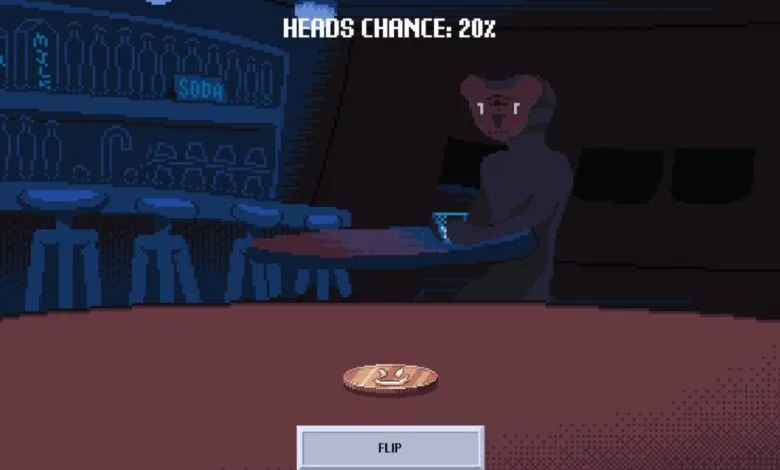
Unfair Flips presents a straightforward objective: earn money with each heads result and spend it on upgrades like a more valuable coin, combo multipliers, faster flipping speed, or increased heads probability, which starts at 20% and caps at 60%. The current world record stands at two minutes and fifty-two seconds, achieved by speedrunner ravspect over ninety-six flips. He describes his achievement as “nearly complete luck,” acknowledging the slim possibility of an instant perfect run, ten heads in a row, which carries odds of roughly one in twenty million. Given enough attempts, probability suggests someone will eventually hit that jackpot.
In the meantime, players focus on optimizing their upgrade paths. A Discord community, originally centered on developer Heather Flowers’ earlier projects, now hosts channels dedicated to dissecting the game’s mechanics. Ravspect credits these discussions as a “massive help,” noting that exploring the nuances of coin flipping might sound absurd but yields tangible benefits. Community member Laika developed a detailed spreadsheet analyzing income based on combo multipliers and coin values. Her work revealed that purchasing a second combo multiplier before upgrading the coin twice is inefficient, confirming that Unfair Flips remains an unsolved puzzle.
Some players have taken more extreme measures to conquer randomness. A runner known as Four dedicated twenty hours one weekend to crack the game’s random number generator, identifying seeds that guarantee ten heads. Another theoretical approach involves timing flips to coincide with an on-screen character sipping milk, a subtle, randomized animation, though this could take days or weeks to align. Since the speedrun timer starts at the first flip, a manipulated run could finish in under twenty seconds.
A more practical tactic involves multi-instancing, where players open several game copies after an initial heads result. If subsequent flips fail, they reset their progress by muting and unmuting the game, a process taking three to four minutes for skilled players. These runs are categorized separately, with the current record at two minutes and fifty-one seconds, one second faster than the standard luck-based record.
Heather Flowers designed Unfair Flips to comment on human interactions with probability and the gaming industry’s use of compulsion. She aimed to create the “smallest, most absurd version” of a gambling game, questioning how minimal a design can be while still driving engagement. Initially, she believed the odds were unbeatable, stating, “There is no way to beat these odds. There is only time.” However, the speedrunning community’s ingenuity proved her wrong.
Flowers never anticipated speedruns gaining popularity but appreciates how runners grasp her design philosophy. She notes that participants recognize the humor in “rawdogging random chance,” a sentiment echoed by many in the community. Laika adds that the inherent silliness of speedrunning coin flips brings joy, remarking, “without some silliness life would be very boring.”
Beyond the main category, Unfair Flips features five different endings, triggered randomly after nine heads based on the player’s current heads probability. The “All Endings” leaderboard lists a single entry: a seven-hour marathon by enbyzee, who described the experience as mentally exhausting. After five hours and four unique endings, she nearly quit but persevered on stream, finally securing the last ending ninety minutes later. She recalls wanting to “scream and cry” from relief, having pressed the spacebar over twenty thousand times.
Ravspect observes that the thrill of hitting ten heads remains electrifying, whether on a first try or a hundredth. This shared excitement fuels Flippin’ Fridays, biweekly events where the community gathers to stream attempts, share strategies, and welcome newcomers. Laika emphasizes the game’s accessibility, noting that it requires no complex tricks or glitch mastery, just flipping. Recent participant MsTruffles set an early world record of eight minutes and twenty seconds in her debut session but has yet to surpass it despite numerous tries, illustrating how luck and persistence intertwine in this unique speedrunning niche.
(Source: The Verge)