Antarctica’s Alarming Transformation Mirrors Greenland’s Melt
▼ Summary
– In the 1990s, Antarctica’s ice cap appeared stable despite Arctic thawing, but this is no longer the case.
– Antarctica’s ice is now recognized as vulnerable to global warming, with melting expected at both poles due to physical laws.
– Satellite and field data show signs of a Greenland-like meltdown in Antarctica, including surface melting and faster glaciers.
– The Antarctic ice sheet holds 61% of Earth’s fresh water and could raise sea levels by 190 feet if fully melted, with the western portion alone capable of a 10-foot rise.
– Recent research confirms accelerated ice melt in Antarctica, challenging past assumptions of stability and highlighting similarities to Greenland’s changes.
Antarctica is now exhibiting a rapid transformation that closely mirrors the dramatic ice loss previously observed in Greenland, signaling a profound shift in the stability of the planet’s polar regions. Back in the 1990s, while Greenland and the broader Arctic were already experiencing significant thawing due to human-induced global warming, the immense Antarctic ice cap appeared largely secure and resistant to change. That sense of security has since evaporated.
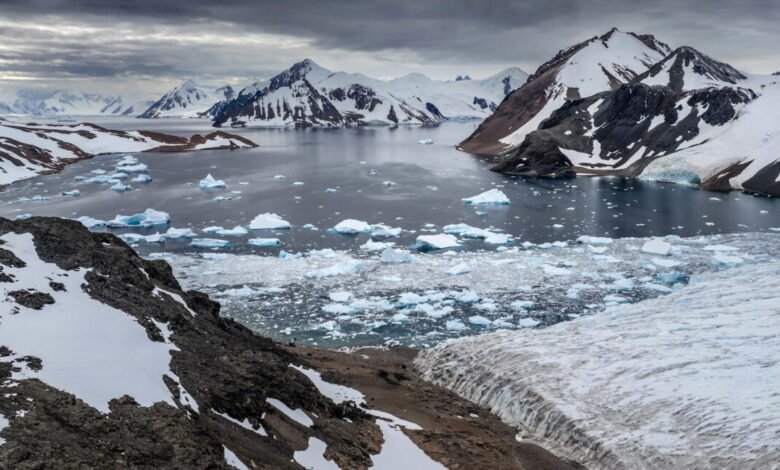
The fundamental laws of physics dictate that as global temperatures climb, polar ice will inevitably melt. Recent scientific investigations confirm that Antarctica’s expansive ice sheets, glaciers, floating ice shelves, and sea ice are proving to be just as susceptible to warming as their northern counterparts. Both satellite observations and on-the-ground studies reveal troubling indicators of a melt pattern reminiscent of Greenland’s, including extensive surface melting across ice fields, glaciers that are flowing into the ocean at an accelerated pace, and a marked reduction in sea ice extent.
Researchers are raising urgent concerns about this emerging “Greenlandification” of the southern continent. They warn that the swift changes underway will have severe global repercussions, chief among them a faster rate of sea level rise and significant disruptions to established patterns of rainfall and drought. The Antarctic ice sheet is a colossal feature, spanning over 5.4 million square miles, an area greater than the entire continent of Europe. With an average thickness exceeding one mile, it stores a staggering 61 percent of the world’s fresh water. Should it melt entirely, it contains enough ice to elevate global sea levels by approximately 190 feet. The West Antarctic Ice Sheet is considered particularly unstable, holding sufficient ice to contribute over 10 feet to sea level rise on its own.
The scientific understanding of Antarctica’s stability has undergone a dramatic reversal. Just three decades ago, university students were taught that the Antarctic ice sheets were essentially permanent and posed little threat of melting. This outdated view underscores how rapidly our comprehension of polar dynamics is evolving in the face of new evidence.
(Source: Ars Technica)
