Top 3 Smart Displays of 2025: Expert Tested & Reviewed
▼ Summary
– Google Nest Hub offers sleep tracking and gesture controls but has a small screen and no camera, making it ideal for bedside use.
– Echo Show 5 is compact and affordable, best suited for desks or bedside tables rather than larger rooms like kitchens.
– Echo Hub functions as a dedicated smart home dashboard with Alexa but lacks a camera and quality speakers for media.
– Echo Show 10 features a rotating screen for video calls but may not fit in tight spaces and is currently unavailable.
– Third-party Google smart displays are no longer recommended due to discontinued software updates, which may reduce functionality over time.
Finding the perfect smart display for your home involves balancing features, price, and intended use. Our expert testing reveals which models deliver genuine value and which ones you’re better off avoiding. While many options exist, focusing on devices that excel in specific roles, whether as a kitchen assistant, a smart home dashboard, or a bedside companion, ensures you get the most for your money.
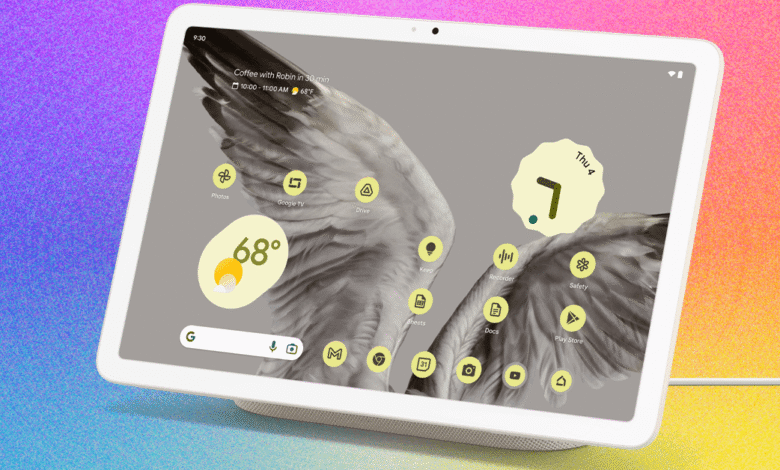
Among the displays we recommend, the Google Nest Hub stands out at its $100 price point. This second-generation model features a compact 7-inch screen and lacks a camera, making it a solid choice for privacy-conscious users. Its unique sunrise-simulating alarm gently wakes you, and built-in sleep tracking monitors your rest patterns, though the accuracy isn’t always perfect. A particularly innovative feature is its gesture control, enabled by radar technology, letting you pause videos or silence alarms with a simple hand wave.
For those seeking an even more affordable option, the Echo Show 5 (3rd Gen) costs just $90. Its 5.5-inch display fits perfectly on a nightstand or desk, but feels too confined for larger spaces like a kitchen counter. If your primary need is a centralized smart home controller, consider the Echo Hub at $180. It strips away the speaker and camera to focus entirely on being a command center for your connected devices, complete with Alexa, customizable widgets, and a photo frame mode. Just be aware you’ll need separate speakers for audio.
Not every smart display earns our approval. The Echo Show 10 (3rd Gen), priced around $250, sits atop a sizable speaker for impressive sound. Its motorized base swivels the screen to keep you in view during video calls or while following workout routines. However, this movement requires ample space, making it awkward for tight corners. Although currently out of stock, we’re monitoring its availability.
The Echo Show 15 is a massive 15.6-inch smart display intended for wall mounting. It supports personalized widgets for smart home controls and calendars, and works with a Fire TV remote for streaming. Unfortunately, its voice commands for media are unreliable, leaving it stuck between a capable smart display and a fully functional television without excelling at either. The even larger Echo Show 21 offers a similar experience for $400.
We also advise steering clear of third-party Google smart displays. Google has ceased software updates for many of these devices, meaning functionality will gradually degrade over time. For long-term reliability, it’s wiser to select first-party models.
Frequently Asked Questions
Do you actually need a smart display? These devices serve as convenient hubs for controlling smart home gadgets, providing guided cooking instructions, and enabling hands-free video calls. However, the category’s future is somewhat uncertain. Meta has discontinued its Portal line, Google has shifted attention toward its Pixel Tablet, and Amazon continues developing new displays despite significant financial losses related to Alexa. Apple has not released a dedicated smart display, instead introducing a StandBy Mode for iPhones that offers limited clock and notification features while charging. If you decide to purchase one, we recommend sticking with a model from the company whose voice assistant you use most often.
Has Apple entered the smart display market? Apple has not launched a standalone smart display. The iPhone’s StandBy Mode activates when the phone is charging sideways, displaying clocks, photos, and notifications in large format. While useful, it doesn’t replicate the full range of features found in dedicated smart displays and functions more like an enhanced bedside clock.
What is Alexa+ and how does it change things? Amazon is preparing to launch Alexa+, a next-generation voice assistant powered by generative AI. Promising more natural conversations and the ability to handle complicated requests, Alexa+ will process all voice recordings through Amazon’s servers. A previous privacy setting that prevented recordings from being sent was removed earlier this year. The service will cost $20 monthly or be included with Amazon Prime. Early access in the U.S. begins next month, starting with Echo Show models. This privacy update will impact all Echo device owners.
Are digital calendars a good alternative to smart displays? A new category of dedicated digital calendars has emerged, featuring shared family scheduling on always-on screens. Options like the Skylight Calendar (starting at $170), Hearth Display ($699), and Cozyla Calendar+ offer various screen sizes. However, each encourages subscription plans for advanced features like meal planning or family routine management. Getting the most from these often requires training the whole household to use them consistently. For many families, simply sharing a Google Calendar may be a more straightforward and cost-effective solution.
(Source: Wired)