Million-Year-Old Skull Mystery: Is It a Denisovan?
▼ Summary
– A fossil skull from China called Yunxian 2 may be closely related to Denisovans rather than Homo erectus as originally thought.
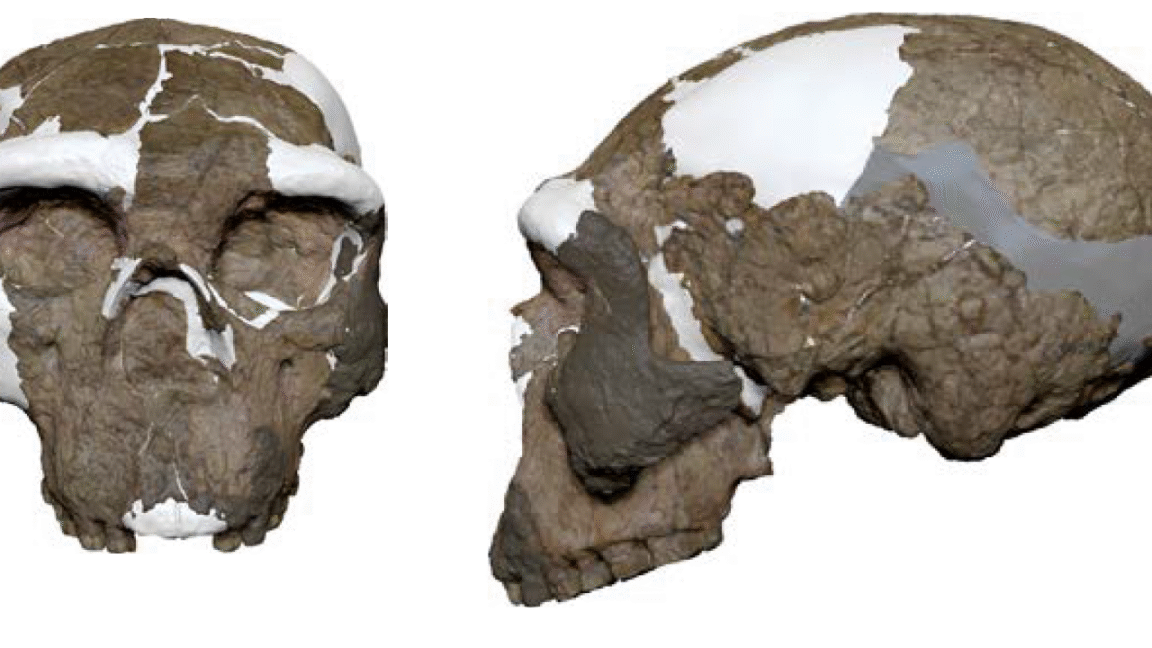
– The skull was found in river sediment dated between 600,000 and 1 million years old and was digitally reconstructed using CT scans.
– Researchers suggest Yunxian 2 resembles a 146,000-year-old Denisovan skull, which some scientists classify as a separate species called Homo longi.
– The identification of the skull as Denisovan or Homo longi is debated due to shared features with other suspected Denisovan fossils.
– A third skull from the same site remains unpublished and could be crucial to resolving the debate about these hominin relationships.
A recent fossil discovery in China, known as the Yunxian 2 skull, is generating intense discussion among paleoanthropologists regarding its possible connection to the enigmatic Denisovans. Found in river sediments along the Han River, this ancient cranium dates to a period between 600,000 and one million years ago. Initially classified as Homo erectus, the specimen has now been digitally reconstructed, revealing features that align more closely with Denisovans or the proposed species Homo longi. This reinterpretation could reshape our understanding of human evolution in Asia.
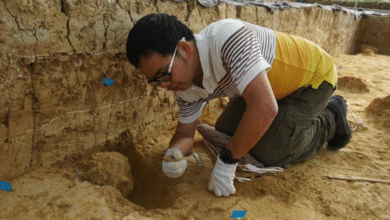
The Yunxian 2 skull was discovered alongside two others in central China, all buried under layers of river mud that caused significant fracturing and distortion. Researchers led by Xiaobo Feng of Hanjiang Normal University employed CT scanning technology to reassemble the fragments virtually. Using intact sections from the nearby Yunxian 1 skull as a reference, they reconstructed Yunxian 2’s original form. The resulting model displayed a remarkable similarity to a 146,000-year-old Denisovan skull uncovered earlier in Harbin, northeast China.
That Harbin skull made waves in 2021 when some scientists declared it represented a completely new human species, naming it Homo longi. Proponents argued it was distinct from modern humans, Neanderthals, and Denisovans. However, other experts pointed to overlapping traits with known Denisovan remains, fueling an ongoing debate. The Yunxian 2 reconstruction adds a compelling new dimension to this discussion, suggesting these ancient East Asian hominins may belong to the Denisovan lineage rather than a separate species.
A critical element yet to be revealed is a third skull from the same excavation site, which remains unpublished. This additional fossil could provide the missing evidence needed to clarify the taxonomic identity of the Yunxian hominins. Depending on its features, it might strengthen the case for classifying them as Denisovans or support the Homo longi hypothesis. Until this third specimen is thoroughly analyzed, the full story of these ancient humans will remain incomplete.
The ongoing research highlights how advanced imaging techniques are revolutionizing paleoanthropology, allowing scientists to revisit and reinterpret fragile fossils without causing further damage. As more data emerges from sites like the Han River terrace, each discovery brings us closer to understanding the complex tapestry of human ancestry and the diverse hominin groups that once inhabited Eurasia.
(Source: Ars Technica)