Fire Emblem: Shadows Review – A Flawed Masterpiece
▼ Summary
– Nintendo surprised fans by releasing Fire Emblem Shadows on mobile with little fanfare, which was unusual for a franchise game.
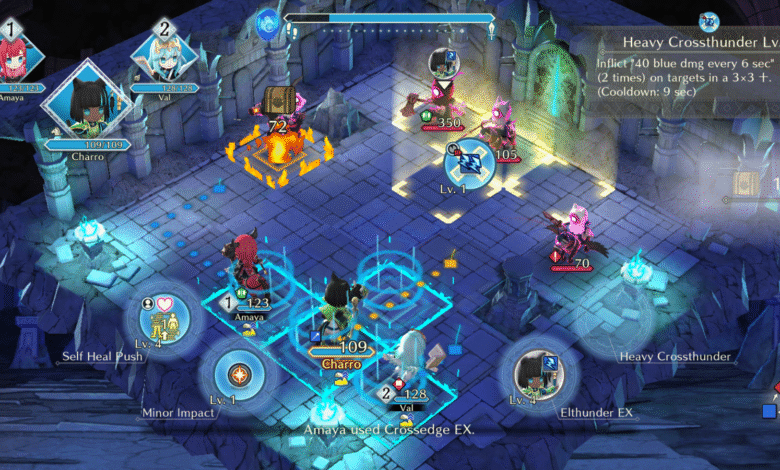
– The game combines Fire Emblem’s grid-based battles with social deduction, but it is an auto-battler where players manage spells instead of direct combat.
– The social deduction element is flawed, as rounds are too short and the three-player teams make accusations a simple 50/50 guess with no communication.
– Fire Emblem Shadows is heavily pay-to-win, allowing players to spend money to level up characters and skip grinds, making strategy largely irrelevant.
– The reviewer found the game fundamentally baffling and poorly designed, with rewards like story chapters and character conversations offering minimal depth.
The sudden arrival of Fire Emblem: Shadows on mobile platforms caught many fans off guard. Nintendo’s decision to release the game with minimal promotion stands in stark contrast to the typical fanfare surrounding its popular franchises. This new entry attempts to blend the series’ signature tactical combat with a social deduction twist, creating an experience that is both intriguing and deeply problematic upon closer inspection.
On paper, the concept sounds genuinely inventive. Players form a team of three to tackle grid-based battles against CPU monsters, but with a crucial twist: one player is secretly a saboteur, or “Shadow,” working to undermine the group. The idea of integrating social deduction mechanics into a Fire Emblem framework promised a fresh, experimental direction. Unfortunately, the execution fails to deliver on this potential in almost every way.
A fundamental shift from the series’ roots is the move to auto-battler gameplay. Characters navigate the grid and engage enemies automatically, leaving players to manage cooldowns and deploy spells. This hands-off approach could have worked for quick mobile sessions, but it strips away the strategic depth that defines the franchise. The real focus is meant to be the social gameplay, which unfolds in two rounds. The first round involves fighting monsters while observing teammates for suspicious behavior, followed by a vote to identify the Shadow. The second round pits the remaining players against the accused.
The core problem is immediately obvious. With only three players, the deduction element becomes a simple coin flip. There is rarely enough time to observe meaningful patterns, and the complete lack of communication tools, no voice chat or even basic emotes, makes forming suspicions nearly impossible. If a teammate falls to a mysterious spell and you know it wasn’t you, the culprit is almost always the other player. This lack of nuance reduces what should be a psychological game to a shallow guessing exercise.
Playing as the Shadow reveals a sliver of strategic possibility. You can heal allies to build trust while secretly damaging them, or even orchestrate situations to frame the innocent. However, these clever deceptions feel pointless in the face of the game’s overwhelming pay-to-win structure. Progression is tied to leveling heroes and acquiring better gear using in-game currency, which can be painfully grinded or instantly purchased with real money. Players who invest financially enter matches with significant statistical advantages, rendering the social deduction aspect almost irrelevant. Victory often comes down to who spent more, not who played smarter.
Rewards for winning matches include currency and access to brief visual novel-style story segments. These unlock basic support conversations with characters, though the writing is disappointingly shallow. The current roster features an entirely new cast of animal-eared heroes, a departure from the familiar faces of the main series. While the character designs are charming, they do little to elevate the experience.
Ultimately, Fire Emblem: Shadows feels like a confused and poorly realized experiment. Its promising mechanics are undermined by simplistic design and an aggressive monetization system that prioritizes spending over skill. Searching for a community that appreciated the game yielded little beyond automated spam accounts praising a title that had just launched. This bizarre project stands as a flawed, and frankly baffling, addition to the beloved strategy series.
(Source: Polygon)