Skate Early Access: Our Verdict on the Return
▼ Summary
– EA describes the new Skate as an evolution, not a sequel, but the author finds it a sanitized, monetized reinvention that bears little resemblance to the beloved originals.
– The game excels in its authentic skateboarding sound effects and retains the series’ signature, deep, and approachable control feel when actually skating.
– It has been transformed into an exclusively online, free-to-play live service, which the author criticizes for server issues and a focus on selling microtransactions.
– The game’s personality is criticized as infantile, featuring an annoying AI filmer, cringeworthy dialogue, and an invincibility mechanic that removes the series’ classic injury system.
– The art style is considered sterile and cartoony, the city feels like a designed skatepark rather than a real place, and the progression loop is built around opening loot boxes.
The highly anticipated return of Skate through its Early Access phase marks a significant evolution for the franchise, though not necessarily the one longtime fans might have hoped for. EA explicitly states this new iteration is not a sequel, remake, or remaster, but rather the next step in the series’ development. While the core skating mechanics retain their signature feel, the overall experience has been fundamentally reshaped by its free-to-play, live-service model, resulting in a game that feels sanitized and heavily monetized compared to its beloved predecessors.
A few standout qualities manage to shine through. The sound design is exceptional, capturing the subtle symphony of skateboarding with remarkable fidelity. The hiss of wheels, the scrape of trucks on concrete, and the clatter of a board hitting the ground create an almost meditative rhythm that is genuinely satisfying. More importantly, the actual feel of controlling your skater remains superb. The intuitive control scheme, using the right stick for tricks and the left for movement, offers an approachable yet deeply rewarding system that stands apart from both arcade-style and hardcore simulation skateboarding games.
However, the new Skate doesn’t feel identical to the classics. The turning can feel slightly stiffer, and the default grind assist is overly generous, making certain maneuvers less challenging. While these are adjustments players can potentially tweak, they contribute to a sense that the raw, organic feel has been polished down. Despite this, the fundamental, buttery sensation of street skating from the original games is successfully reconstructed, providing a crucial link to the past.
That connection is where the positives largely end. The decision to make Skate an exclusively online experience feels like a fundamental error. Server disconnections and login queues plagued the early access launch, interrupting gameplay and highlighting a dependency that the older, offline-capable games never had. This always-online requirement seems to serve a new priority: operating as a storefront. The presence of premium clothing bundles priced at $25 underscores a shift in focus that many will find jarring.
The game’s soul has been stripped away and replaced with a corporatized, infantilized version of skate culture. Gone are the authentic human filmers and pro skaters who gave the original games their personality. In their place is an AI app named Vee, arguably one of the most irritating characters ever conceived for a video game. Vee’s dialogue is a nauseating stream of algorithm-approved slang and cringe-inducing attempts at humor, delivered in a faux-robotic tone that grates immediately. The human characters are no better, suffering from overwritten, inauthentic scripts filled with baffling invented slang like the incessantly repeated “Skater Eyes.”
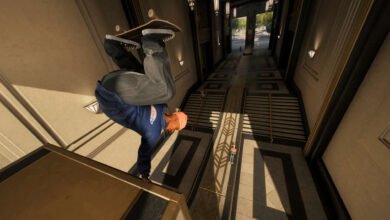
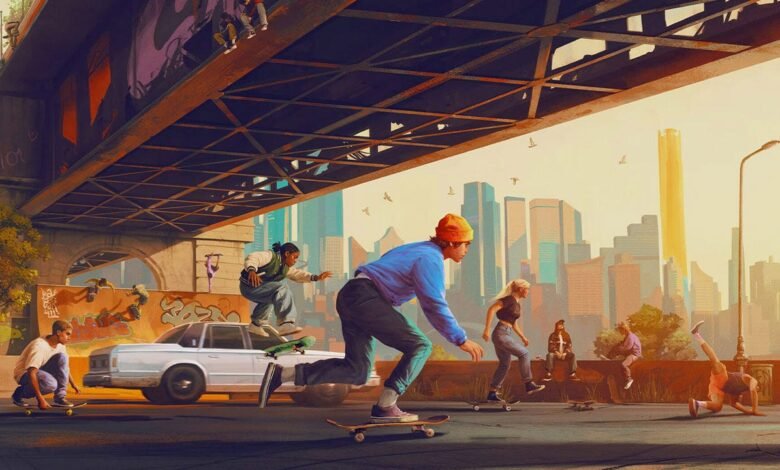
This sanitization extends to the game world itself. The new city, San Vansterdam, feels sterile and fake, more like a themed skatepark than a living, breathing city. The stylized, cartoonish art direction lacks the gritty realism of the earlier titles, and the map itself is relatively small and flat, missing the iconic, sprawling landmarks like dam drops or massive hill descents. Everything is designed to be skated, which paradoxically makes it feel less authentic. The environment is plagued by technical issues, with other players stuttering, clipping through objects, and teleporting, breaking any sense of immersion.
Perhaps the most telling change is the complete removal of any sense of danger. An in-universe explanation called “ImpervaTEK” renders skaters invincible, eliminating the classic, gruesome x-ray shots and bone-breaking sound effects that were a hallmark of the series. This feels like a decision made by committee to avoid any potential controversy, resulting in a experience that feels toothless and safe. The progression system is equally disappointing, built around a tedious loop of completing daily challenges to earn currency for loot boxes. The entire progression loop is simply geared around collecting enough in-game currency to open loot boxes, and the unskippable animations for each box opening feel designed with the psychological pull of a slot machine in mind.
The presence of a cash shop with deliberately awkward pricing tiers, forcing players to buy more virtual currency than they need, feels predatory. While the core act of skating can still be enjoyable in short bursts, the surrounding framework makes Skate feel like a service and a store first, and a game a distant second. It has evolved, but into a form that longtime fans of the series may find impossible to love.
(Source: IGN)