Nothing Super Mic: A Small But Mighty Upgrade for Earbud Audio
▼ Summary
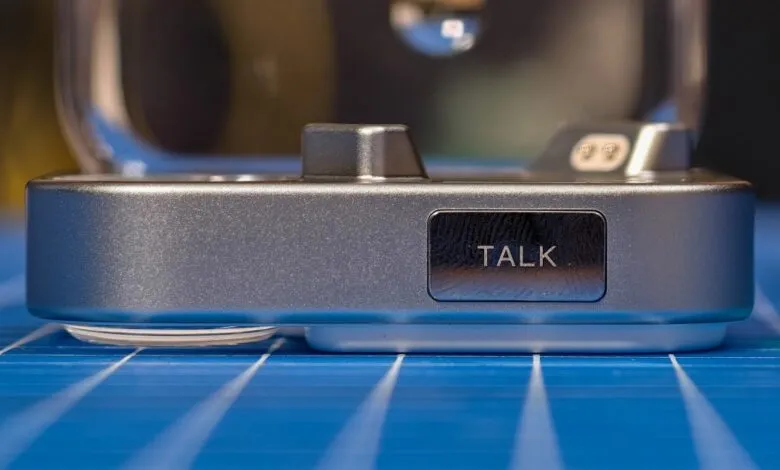
– Nothing’s Ear 3 earbuds feature “Super Mic” microphones built into the charging case instead of the buds themselves.
– The case microphones provide clearer audio by allowing users to hold the case near their mouth, though the improvement can be subtle in some situations.
– Both the earbud and case microphones suffer from aggressive noise cancellation that chops up voice audio in noisy environments.
– Super Mic introduces noticeable audio latency during video recording, causing sync issues between speech and lip movements.
– The feature has limited compatibility with certain apps and Android camera functions, as many default to phone microphones instead.
Let’s face it: the microphones packed into most wireless earbuds leave a lot to be desired. Nothing’s Ear 3 introduces an innovative solution called Super Mic, which relocates the primary microphone array from the earbuds themselves directly into the charging case. This clever design allows users to hold the case like a traditional microphone, positioning it closer to the mouth for potentially clearer audio capture.
To activate Super Mic, users simply press a dedicated button on the case while at least one earbud remains connected to their device. The idea is straightforward, by bringing the microphone nearer to the sound source, voice quality should see a noticeable improvement. In quieter settings, this holds true. During testing, recordings made with Super Mic demonstrated richer tone and less of the hollow, tinny quality often associated with in-ear microphones.
However, the difference isn’t always dramatic. In casual voice calls, some listeners struggled to distinguish between the standard buds and the enhanced case microphone. Where Super Mic truly shines, and occasionally stumbles, is in challenging acoustic environments.
Nothing has integrated aggressive noise cancellation into both the earbud and case microphones. This feature excels at suppressing background clamor; standing near a roaring jackhammer resulted in a surprisingly clean recording. But this comes at a cost. The noise suppression can be so forceful that it intermittently mutes the speaker’s voice, leading to choppy, inconsistent audio. This issue affected both the standard and Super Mic modes equally.
Another significant limitation arises when using Super Mic for video. While audio quality improves, a noticeable latency, or delay, emerges between the visual and audio tracks. This makes the technology poorly suited for video calls or content creation where lip-sync is critical. For audio-only applications, it’s less of an issue, but creators hoping to use Super Mic for platforms like TikTok may find the lag unacceptable.
Practicality is another consideration. Using Super Mic requires physically holding the case up to your mouth throughout a conversation, eliminating the hands-free convenience that makes earbuds appealing in the first place. Proper positioning is crucial; angling the case incorrectly or holding it too far away can quickly degrade audio quality.
Compatibility presents further complications. Super Mic works in any app that supports the earbuds’ built-in microphones, since the switching happens at the hardware level. This includes popular platforms like Zoom, WhatsApp, and iOS Voice Memos. However, many Android camera apps and certain voice-messaging features, like those in WhatsApp or Snapchat, default to the phone’s internal mic and don’t allow external selection. iPhone users have a slight advantage since iOS recently added support for external microphone input in video recording.
According to Nothing, these limitations stem from operating system and app-level restrictions rather than hardware design. The company has expressed a desire for broader software support to make Super Mic more universally functional.
Overall, Super Mic is a creative, if niche, upgrade. It offers clearer audio in optimal conditions but introduces trade-offs in convenience, compatibility, and real-time performance. For those prioritizing voice clarity in controlled environments, it’s a compelling option. For everyone else, it may remain a specialized tool rather than a daily driver.
(Source: The Verge)