Debunking the Nintendo Pokémon Patent Myth

▼ Summary
– Nintendo and The Pokémon Company were granted a US patent for a specific system involving summoning characters and determining battle types, not a broad concept of summoning and battling.
– The patent describes a process where a summoned sub-character can initiate a player-controlled battle, an automatic battle, or automatic movement based on proximity to wild Pokémon, similar to auto-battling in Pokémon Scarlet and Violet.
– Legal expert Charles Duan suggests the patent could be invalidated through arguments of anticipation or obviousness, citing similarities to older games like StarCraft, or by subject matter eligibility if deemed an abstract idea.
– The patent is part of Nintendo’s history of using patents defensively, as seen in a 2024 lawsuit against Palworld developer Pocketpair and a past patent on the sanity system from Eternal Darkness.
– While concerns exist about the patent’s potential impact on other developers, its enforceability in court remains uncertain and may be less threatening than initial headlines suggest.
Recent headlines have sparked concern over a new patent granted to Nintendo and The Pokémon Company, suggesting they now hold exclusive rights to common game mechanics like summoning characters and initiating battles. However, a closer look reveals the situation is far more nuanced than initial reports implied.
The patent in question, US Patent No. 12,403,397, focuses on a very specific system of interactions rather than broad concepts. It describes a process where, after a player summons a character, the game software determines whether to trigger a player-controlled battle, an automatic battle, or autonomous movement by that character. This closely mirrors the auto-battle feature seen in Pokémon Scarlet and Violet, where Pokémon can be sent into the overworld to engage wild creatures without entering a traditional turn-based encounter.
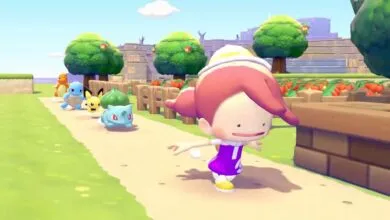
What sets this patent apart is its attention to contextual decision-making. If a player throws a Poké Ball directly at a wild Pokémon, a standard battle begins. If thrown nearby, an auto-battle starts. If thrown farther away, the Pokémon may simply emerge and wander. This interconnected web of conditional responses forms the core of the patent’s claims, not the isolated act of summoning or auto-battling.
Legal experts point out that the patent may face challenges if tested in court. Charles Duan, a law professor specializing in intellectual property, highlights two potential avenues for invalidation: anticipation or obviousness, and subject matter eligibility. He draws a comparison to older games like StarCraft, where units could be given “attack-move” orders to engage enemies automatically. If prior art demonstrates similar mechanics, the patent could be deemed unoriginal.
Subject matter eligibility presents another hurdle. Duan explains that patents cannot protect abstract ideas, only specific, inventive implementations. The mechanics described in the patent, such as automated combat based on proximity or orders, resemble basic military command structures. This similarity could support an argument that the patent covers an abstract concept rather than a novel invention.
Nintendo’s history of patent enforcement adds weight to these concerns. The company is currently engaged in a lawsuit in Japan against Palworld developer Pocketpair, alleging infringement of patents related to creature capture and riding mechanics. It also previously held a patent on the “sanity system” from Eternal Darkness, though that has since expired.
Still, predicting how courts will interpret patent language remains challenging. While the patent appears narrowly tailored, its real-world impact will depend on legal interpretation and potential challenges. For now, developers and publishers should monitor the situation but may find the patent less restrictive than feared.
(Source: The Verge)