SpaceX Aims for Orbital Starship Flight With Next-Gen Vehicle by 2026
▼ Summary
– SpaceX engineers have diagnosed issues with Starship’s heat shield and developed a preliminary plan for the next test flight after the August 26 mission.
– The August 26 test flight was the 10th full-scale test of the Super Heavy booster and Starship upper stage, forming the world’s largest rocket.
– Objectives included overcoming propulsion and propellant system issues from previous flights and gathering data on the heat shield during reentry.
– The Starship achieved a controlled splashdown within 10 feet of its target in the Indian Ocean, though it showed visible damage and discoloration.
– Metal heat shield tiles tested during the flight were found inadequate for heat control compared to ceramic tiles, according to SpaceX executives.
SpaceX is pushing forward with ambitious plans for an orbital Starship flight using its next-generation vehicle, targeting a launch as early as 2026. Following the company’s most recent test flight two weeks ago, engineers have already identified critical improvements, particularly concerning the heat shield, and are mapping out the next steps for the spacecraft’s journey into space.
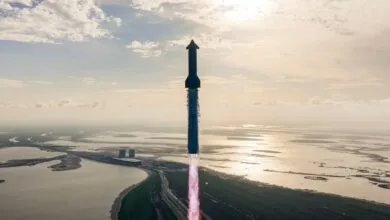
During a presentation at the American Astronautical Society’s Glenn Space Technology Symposium in Cleveland, Bill Gerstenmaier, SpaceX’s vice president of build and flight reliability, shared insights from the August 26 mission. That flight marked the tenth full-scale test of the Super Heavy booster and Starship upper stage, which together form the most powerful rocket ever built.
Lifting off from Starbase, Texas, the mission aimed to resolve persistent issues with propulsion and propellant systems that had affected earlier flights. Engineers were especially eager to gather data on the performance of Starship’s heat shield, a complex mosaic of thousands of tiles designed to protect the vehicle during atmospheric reentry.
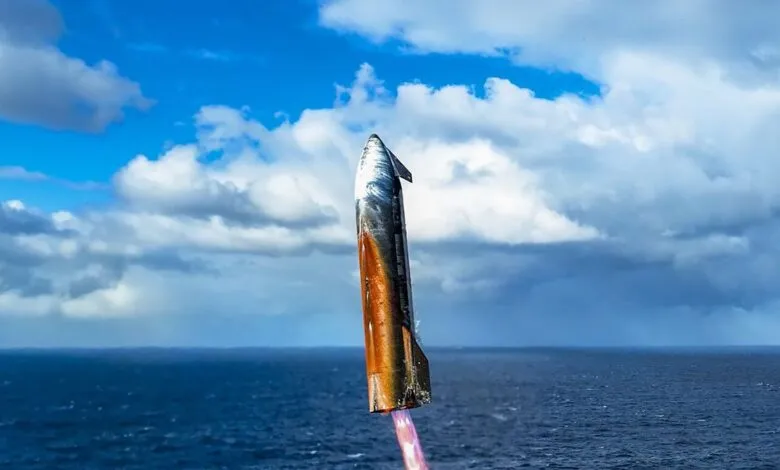
Gerstenmaier described the flight as “extremely well” executed. More than an hour after launch, the spacecraft executed a controlled splashdown in the Indian Ocean, landing within just 10 feet of its intended target near an observation buoy. Drone footage captured the vehicle’s dramatic final moments: it descended belly-first before igniting three of its six Raptor engines to pivot upright just before touching the water.
Despite the precision landing, the vehicle showed signs of wear. Visible damage appeared on the aft section and control surfaces, and a distinct rusty-orange discoloration streaked along the side of the 171-foot-tall spacecraft. Elon Musk later explained that the discoloration resulted from oxidation on experimental metallic heat shield tiles, which were tested alongside the standard ceramic ones. Notably, nearly all the tiles remained intact from launch to splashdown, a significant improvement over earlier missions.
During his presentation, Gerstenmaier elaborated on the experimental approach. “We were essentially testing whether non-ceramic tiles could provide sufficient thermal protection,” he said. “We installed three metal tiles to evaluate their performance, durability, and manufacturability compared to ceramics. It turns out they’re not suitable.” This hands-on testing provides invaluable data as SpaceX refines the design for future orbital attempts.
(Source: Wired)