6 Science Breakthroughs You Might Have Missed
▼ Summary
– The article introduces a monthly collection of interesting science stories, including a 3D digital reconstruction of the Shroud of Turin and other August highlights.
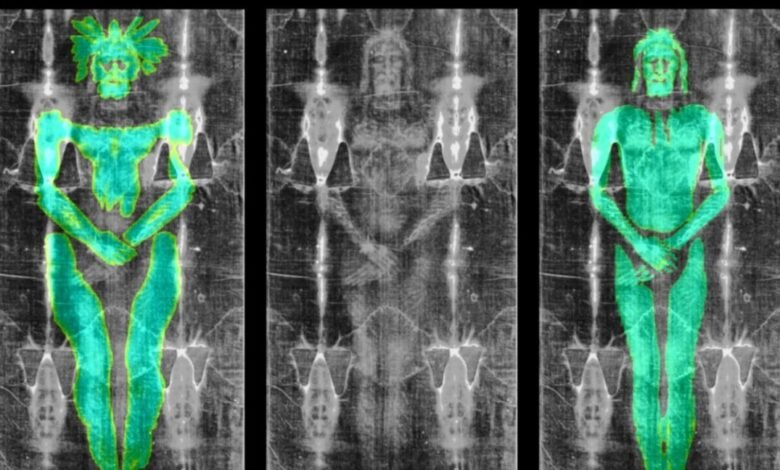
– A 3D designer created a digital reconstruction of the Shroud of Turin, concluding it was likely a medieval forgery based on draping simulations.
– The reconstruction showed the shroud’s figure matched a bas-relief carving better than a human form, indicating it was an artistic representation.
– Modern scientific dating places the shroud between 1260 and 1390 CE, contradicting the legend that it dates to Jesus’s death around 30 CE.
– A newly discovered 1370s treatise by Nicole Oresme provides the oldest known written evidence of skepticism about the shroud’s authenticity.
Keeping up with every fascinating development in science can feel like an impossible task, with groundbreaking discoveries emerging faster than most of us can track. To help you stay informed, we’ve gathered some of the most intriguing, and overlooked, advancements from recent research. From botanical innovations to historical revelations, these findings showcase the remarkable breadth of modern scientific inquiry.
A detailed digital reconstruction of the Shroud of Turin offers new insight into one of history’s most debated artifacts. Created by 3D designer Cícero Moraes, this model supports the view that the shroud is a medieval creation rather than an ancient relic. By comparing how fabric would drape over a human form versus a carved surface, Moraes found that the shroud’s image aligns more closely with a bas-relief, pointing toward an artistic origin rather than a supernatural one. Notably absent was the “Agamemnon mask effect,” a distortion typical of cloth pressed against a face, further undermining claims that the shroud ever wrapped a real body.
This digital analysis echoes skepticism that has surrounded the shroud for centuries. A recently uncovered treatise from the 1370s, written by scholar Nicole Oresme, describes the shroud as a forgery, making it the oldest known written record doubting its authenticity. This predates the account of Pierre d’Arcis, the bishop of Troyes, who similarly denounced the shroud in 1389. Together, these historical and technical findings reinforce the consensus that the Shroud of Turin is a product of medieval artistry, not divine imprint.
Beyond this historical detective work, August also brought us glowing plants injected with phosphorescent materials, shape-shifting antennas with promising technological applications, and snails capable of regenerating lost eyes, each a testament to science’s endless capacity to surprise and inspire.
(Source: Ars Technica)