XR & Metaverse Fair Tokyo Highlights Innovation Amid Industry Uncertainty
▼ Summary
– The XR and Metaverse Fair Tokyo showcased Japan’s mixed progress in AR/VR innovation, with some impressive demos like Nikon’s sports broadcasting tech but overall lacking bold new ideas.
– Major Japanese companies like Sony and Universal Studios Japan have adopted XR for practical uses, but the event was dominated by smaller startups with inconsistent tech quality.
– Nikon’s VR baseball demo stood out by allowing viewers to watch games from any stadium angle, offering a glimpse of future live sports broadcasting potential.
– Compared to adjacent Lifestyle Week events, the XR fair appeared sluggish and directionless, with few exhibitors presenting compelling mass-market applications for the technology.
– Despite Japan’s $4 billion VR industry growth, many companies focused on outdated concepts like metaverse billboards rather than addressing public adoption barriers or showcasing innovative uses.
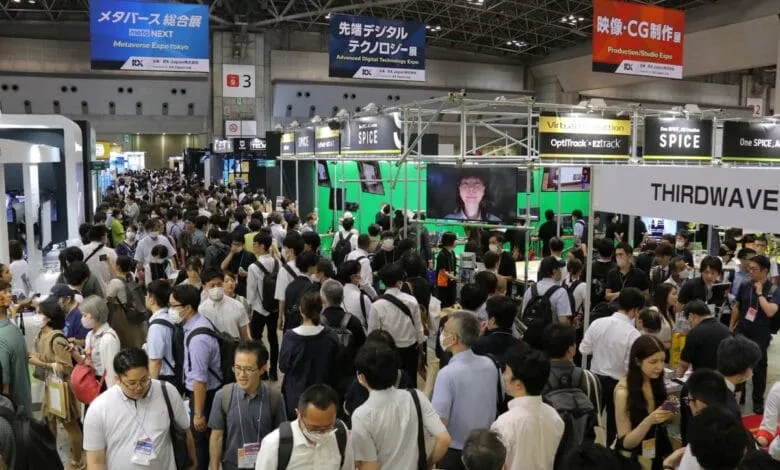
Tokyo’s XR & Metaverse Fair recently brought together innovators and industry leaders, yet the event revealed a surprising lack of confidence in the very technology it aimed to promote. Held at Tokyo Big Sight, the exhibition serves as Japan’s premier platform for AR, VR, and mixed reality advancements. While global giants like Meta and Apple dominate headlines, Japanese firms continue pushing boundaries, though this year’s showcase felt uneven, with flashes of brilliance overshadowed by uncertainty.
Major corporations like Sony, Nissan, and Universal Studios Japan have historically used the event to demonstrate practical applications, from theme park enhancements to industrial training. This year, however, smaller startups took center stage. Techfirm’s OneXR software, for instance, delivered an impressive firefighter simulation for group training, while Nikon stole the spotlight with a groundbreaking VR sports broadcasting demo. Their dual-lens system reconstructed baseball games in 3D, allowing viewers to experience plays from impossible angles, like standing beside the batter or deep in the outfield. The potential for live sports is undeniable, though the current tech relies on pre-recorded footage.
Yet for every breakthrough, there were puzzling missteps. A Korean startup’s AR book project felt outdated, barely surpassing early Nintendo 3DS capabilities. Meanwhile, metaverse-themed booths peddled virtual billboards and NFT games, concepts the public has largely moved past. Even VRChat, known for fostering creative communities, oddly pivoted to pitching VR offices instead of highlighting its existing successes.
The contrast was stark compared to adjacent events under the same roof. Lifestyle Week’s fashion and fan culture expos buzzed with energy, showcasing how industries adapt to shifting consumer habits. The Oshikatsu Expo, celebrating fan-driven merchandise and AR-enhanced tributes to celebrities, felt more innovative than much of the XR fair. This disconnect underscores a broader issue: while Japan’s XR sector excels in niche applications, like Nexco’s engineering visualization glasses or Capcom’s Monster Hunter VR exhibits, it struggles to articulate a compelling vision for mainstream adoption.
Asia remains a hotbed for XR innovation, as seen with Xreal’s One Pro glasses, which blend gaming and real-world interaction. Yet the industry’s reluctance to embrace bold, consumer-friendly ideas is palpable. Cluster, a Japanese metaverse app with real-world traction through VTuber collaborations, barely showcased these achievements, opting instead for a generic anniversary teaser.
The elephant in the room? The metaverse hype has faded, and even Apple’s Vision Pro hasn’t convinced the masses to ditch flat screens for headsets. Without a clear roadmap to win over everyday users, growth projections risk falling short. Nikon and Xreal prove the potential is there, but until the industry stops rehashing failed concepts and starts speaking to a wider audience, events like this may continue feeling more like a wake than a launchpad.
(Source: Upload VR)