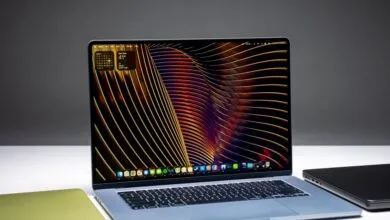
MacBook Air Redesign: What We Hope to See

▼ Summary
– Apple recently released the MacBook Neo, which the author argues disrupts the MacBook lineup by offering a compelling alternative to the MacBook Air for general use.
– The MacBook Air is rumored to gain an OLED display in 2028, a major upgrade that would distinguish it from the Neo, though touch support is unlikely.
– The author suggests the MacBook Air could also adopt a 120Hz refresh rate for its display without threatening MacBook Pro sales.
– To improve performance, the author proposes Apple enhance the MacBook Air’s passive cooling with better thermal management technology, like graphite sheets or a vapor chamber.
– The article concludes that Apple could make the MacBook Air design more radical, thinner, and portable, potentially reviving concepts like the 12-inch MacBook.
The recent introduction of the MacBook Neo has fundamentally reshaped Apple’s portable computing lineup. For many prospective buyers, especially those who previously gravitated toward the MacBook Air, the new model presents a compelling alternative unless substantial multitasking with 16GB of RAM is a strict requirement. In essence, the Neo offers a similar general-purpose experience but with a faster processor, a larger screen, and more memory. This shift leaves the current Air in a challenging position, seemingly lacking a distinct advantage. To reclaim its place, the MacBook Air needs meaningful upgrades in several key areas.
A superior display is the most anticipated and likely change. Industry reports suggest a switch to OLED technology is planned for 2028, following the MacBook Pro by two years. This move would bring the Air’s visual quality into a new tier, significantly elevating it above the Neo. However, this enhancement is not expected to include touchscreen functionality. According to reliable sources, Apple remains undecided on expanding touch support beyond the upcoming high-end MacBook Pro, making it improbable for the entry-level Air. One critical unanswered question is whether this new OLED panel will support a 120Hz refresh rate. Incorporating this feature seems like a logical step at the Air’s price point, offering a smoother user experience without directly threatening the Pro’s performance-focused market.
Beyond the screen, thermal management represents a major opportunity for improvement. The MacBook Air’s fanless design is a core part of its identity and should be preserved. Yet, Apple could adopt more advanced passive cooling solutions already in use elsewhere in its ecosystem. The iPad Pro employs graphite sheets and a copper heatsink, while the iPhone 17 Pro is rumored to utilize a vapor chamber system. Implementing similar technologies in the MacBook Air would allow for better sustained performance without compromising its silent operation, addressing a current weakness in how the laptop handles heat dissipation.
Finally, with the MacBook Neo now occupying the entry-level price position, the Air has room for a more ambitious and experimental design. Freed from the constraint of being Apple’s most affordable laptop, it could pursue new form factors that emphasize extreme portability. There is clear consumer nostalgia for devices like the 12-inch MacBook, and a redesigned Air starting at a higher price point could explore the limits of thinness and weight. This evolution would help the MacBook Air carve out a unique niche as a premium, ultra-portable machine rather than a compromised budget option.
(Source: 9to5Mac)