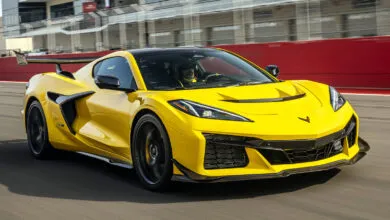
Corvette ZR1X Hybrid Outruns Million-Dollar Supercars
▼ Summary
– The article argues that pure electric sports cars have struggled in the market, with brands like Porsche and Lamborghini scaling back plans due to technical hurdles and weak consumer interest.
– It presents the hybrid Chevrolet Corvette ZR1X as evidence that electrification is revolutionizing high performance, but through hybrid systems rather than full electric powertrains.
– The Corvette ZR1X delivers extreme performance, with 1,250 horsepower and record-setting track times that rival or beat far more expensive hypercars and EVs.
– The car’s hybrid system provides significant advantages, including all-wheel-drive traction, torque vectoring, and a “push-to-pass” electric boost, making it more controllable and faster than its gasoline-only counterpart.
– Despite its advanced hybrid technology and supercar-rivaling performance, the ZR1X remains relatively accessible, starting at just over $200,000 and available through standard Chevrolet dealers.
The initial promise of electric vehicles suggested a swift end for gasoline-powered sports cars, but the reality has proven far more nuanced. While purely electric two-seaters have faced significant market resistance, electrification is revolutionizing peak performance through hybrid technology. This shift is evident everywhere from Formula 1 to the world’s most exclusive hypercars, where an electric boost is now a prerequisite for competition. The Corvette ZR1X hybrid stands as a stunning example, delivering supercar-shattering performance at a fraction of the cost, proving that the future of speed is a sophisticated partnership between combustion and electricity.
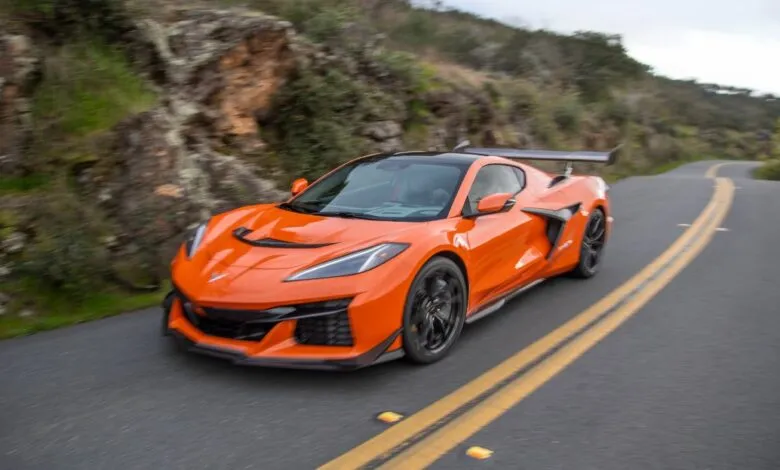
My experience with the ZR1X at Sonoma Raceway and on Napa Valley roads confirmed this new performance paradigm. The numbers are staggering: 1,250 hybrid horsepower and a 0–60 mph sprint of 1.67 seconds, placing it alongside multi-million dollar EVs. Its record-setting 6:49 Nürburgring lap not only established a new benchmark for American production cars but also soundly defeated a 3,000-horsepower Chinese EV by a massive ten-second margin. This victory highlights a crucial point: raw power is less important than decades of racing heritage and integrated engineering. The Corvette’s team, using its own engineers as development drivers, has created a machine that leverages hybrid tech for ultimate track dominance.
While top speed figures often serve as bragging rights, the ZR1X’s 233 mph capability still outruns hybrids costing ten times as much. The real story is accessibility. For a starting price of $207,395, this technological tour de force is available through a local Chevrolet dealer, bypassing the exclusive waiting lists and secret handshakes required for its European rivals. It represents an unprecedented value in the realm of extreme performance.
On Sonoma’s demanding circuit, the ZR1X’s acceleration and cornering forces are genuinely physical. The car’s Performance Data Recorder provided concrete proof, capturing video and telemetry that allowed for post-session analysis. The heart of the beast is a hand-built, 5.5-liter “Gemini” V8 producing 1,064 horsepower, visible through a transparent engine cover. The hybrid element comes from a front-mounted electric motor adding up to 186 horsepower, with no mechanical link to the rear engine. Sophisticated software orchestrates power delivery between the gasoline-driven rear wheels and the electrically driven front axle.
This setup enables a game-changing advantage: torque-vectoring control that provides incredible traction and stability when exiting corners. Compared to the rear-drive ZR1, the all-wheel-drive ZR1X feels more balanced and forgiving, inspiring greater driver confidence at the limit. As one engineer noted, there’s a welcome “tameness” that allows you to explore extreme speeds without constant fear.
The electric system provides bursts of power at speeds up to 160 mph, enhancing its drag-racing capability. On a prepared strip, the launch control system is remarkably adjustable, contributing to a quarter-mile time as low as 8.65 seconds. Energy comes from a compact 1.9-kWh lithium-ion battery pack, strategically mounted low in the chassis. Unlike a plug-in hybrid, it never requires charging; instead, it aggressively harvests energy under braking and redeploys it for acceleration.
Driving in Napa, the ZR1X averaged about 15.5 mpg, though track use plummets to nearly 4 mpg. A “Charge +” button on the steering wheel quickly replenishes the battery during normal driving. The car offers specialized energy management modes, including an Endurance setting for consistent power over a full fuel load and a Qualifying mode for maximum attack on a single lap.
Inside, the cabin is driver-focused with three high-resolution screens, including a new left-side display for performance functions. The sophisticated Performance Traction Management system offers a range of settings from Wet to a new PTM Pro mode, which disables stability control but retains brake-based energy recovery and torque-vectoring. Aerodynamics are critical, with an available rear wing generating up to 1,200 pounds of downforce.
The broader context is important. Many sports car enthusiasts remain skeptical of pure EVs due to weight, packaging, and sensory compromises. Performance hybrids like the ZR1X, alongside new models from Porsche, Lamborghini, and Ferrari, offer a compelling solution. They deliver relentless track capability, quick refueling, and the visceral engagement drivers crave.
For the ZR1X, the ultimate trick is an F1-style push-to-pass button that marshals every available watt for a concentrated power surge. It’s the perfect tool for a highway encounter or a final overtake. And when the driver of a far more expensive machine finally pulls alongside, the ZR1X owner can deliver the finishing blow: simply state the price paid.
(Source: The Verge)