Pokopia Redefines Pokémon’s High-Tech Future
▼ Summary
– The article’s author was surprised to find a 3D printer in the game *Pokopia*, as it represents a piece of current, non-mainstream technology not typically expected in the Pokémon world.
– In *Pokopia*, technology is fallible and often broken, requiring the player to rebuild power infrastructure for ordinary devices like lamps and vending machines to restore habitats.
– The game presents a unique mix of sci-fi fantasy (like PC storage for creatures) alongside outdated or ordinary human tech (like CDs and windmills), creating a world that feels “stuck out of time.”
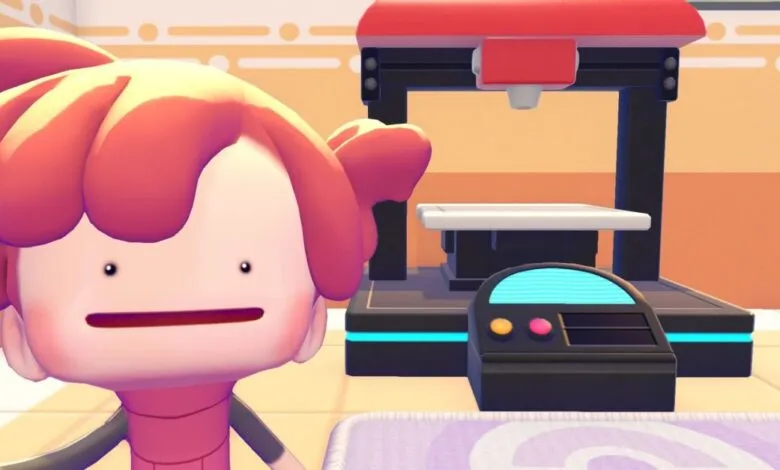
– The 3D printer in the game acts as a bridge between contemporary and futuristic tech, allowing the player to replicate objects using photos and materials, feeling almost within real-world reach.
– This contrast made the author realize the Pokémon world has always relied on a blend of the everyday and the fantastical, a fact highlighted by *Pokopia’s* post-apocalyptic setting where all technology must be actively maintained.
The world of Pokémon has always blended the mundane with the miraculous, but Pokopia presents this fusion in a startling new context. Here, amidst the ruins of a human-less world, the series’ familiar technology takes on a different weight. Discovering a functional 3D printer inside a restored Pokémon Center was an unexpected moment that reframed everything. It wasn’t the fantastical PCs capable of digitizing life that gave me pause, but a piece of tech that feels almost contemporary, highlighting how Pokopia reexamines the very infrastructure of the Pokémon universe.
In most Pokémon games, advanced technology is a given. We accept that creatures can be stored digitally, fossils resurrected, and time travel occasionally possible. Pokopia shatters that assumption. Climate change and environmental collapse have left systems failing. A collectible journal notes that the legendary PC storage network cannot function without maintenance, implying that the sudden reappearance of wild Pokémon is due to a catastrophic system failure. This vulnerability forces a closer look at every machine. Technology here isn’t a backdrop; it’s a fragile, failing legacy that must be actively restored.
While elements of sci-fi and fantasy remain, Pokopia grounds itself in tangible, often outdated human tech. Rebuilding isn’t just about planting gardens; it’s about restoring power grids. To create proper habitats, you must scavenge old vending machines, lamps, and arcade cabinets, then connect them to a network of utility poles and generators. Electric-type Pokémon alone can’t power this world; it requires planning and infrastructure. This creates a striking contrast: a narrative steeped in apocalyptic science fiction, where the solution involves building simple windmills to generate electricity.
This blend makes the timeline feel deliberately ambiguous. How long since humans vanished? Why use compact discs in an era of digitized life? The presence of a DJ Rotom that requires physical CDs to play music underscores this dissonance. It suggests not a lack of advancement, but a selective technological decay. Some innovations, like streaming networks, may not have survived the disaster, making older formats vital once more.
The 3D printer exists in a fascinating middle ground. It’s more advanced than our current reality, allowing you to photograph any object and print a copy with rare materials, yet it feels within near-future reach. This device stands apart from the series’ traditional tech evolution, which has historically mirrored handheld gadgets: the Pokédex as a 90s PDA, the Pokégear as a flip phone, the Pokétch as an early smartwatch. The printer isn’t a menu interface or communication tool; it’s a manufacturing device, representing a new layer of practical, world-building technology.
Finding that printer was the key to understanding Pokopia’s unique technological philosophy. It helped place this world on a rough timeline, not as a society that forgot how to stream music, but as one rebuilding from salvage. High-tech components and 3D printing resins are as precious as CDs and copper wiring here. Every piece, whether fantastical or ordinary, is a crucial resource for reconstruction. Pokopia strips the Pokémon world down to its studs, revealing that its heart has always beat to the rhythm of both everyday ingenuity and extraordinary possibility. It just took a broken world and a surprising printer to make that undeniable.
(Source: The Verge)