How ‘Ghost’ Photons Shape Superconductivity
▼ Summary
– The article’s focus is not on practical superconductivity but on using superconductivity as a test for strange quantum effects involving virtual photons.
– Researchers found that virtual photons, which transmit force but cannot be directly detected, can negatively influence a superconductor’s performance.
– According to quantum field theory, empty space contains fields, and particles like photons are excitations of these fields.
– Virtual photons can exist in locations with a strong electromagnetic field even when no real photons are present.
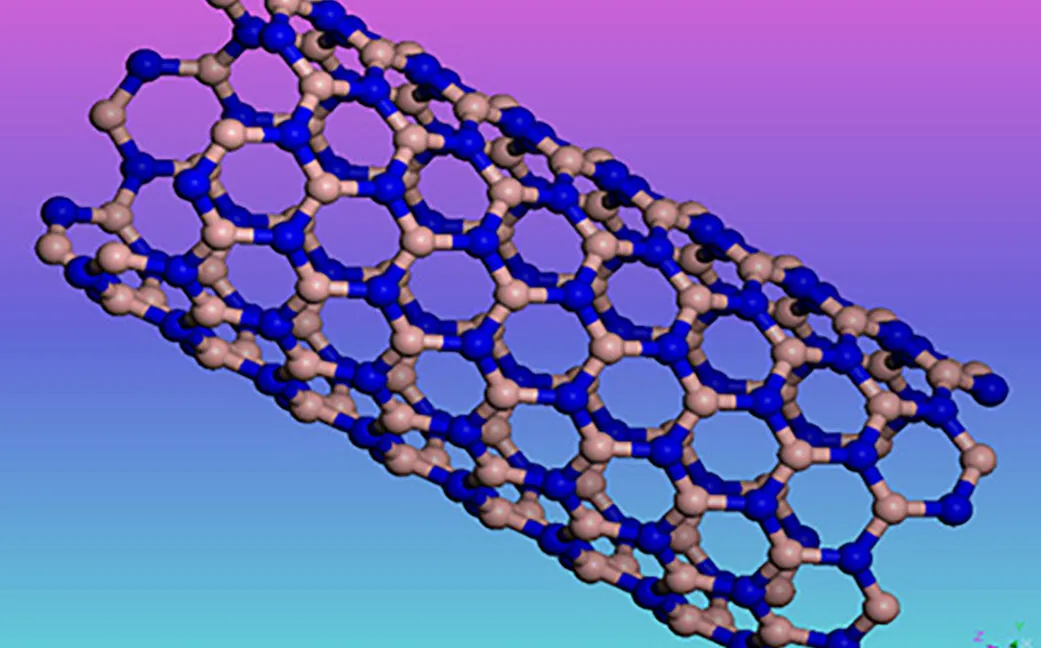
– Boron nitride, a material with layered hexagonal sheets, allows light to travel between its atomic layers when oriented correctly.
The study of superconductivity often reveals surprising insights into the fundamental rules of quantum mechanics. A recent experiment has demonstrated how virtual photons, often called ‘ghost’ particles, can be manipulated to alter the properties of a superconducting material. While this research doesn’t directly advance the quest for room-temperature superconductors, it provides a fascinating testbed for observing quantum effects in action, using superconductivity as an exceptionally sensitive detector.
The foundation of this work lies in quantum field theory. In this framework, what we perceive as empty space is actually permeated by underlying fields. Particles, such as photons of light, are understood as excitations or energetic states of these fields. While some particles are ‘real’ and can be directly measured, like a laser beam hitting a sensor, others are ‘virtual.’ These virtual photons are fleeting intermediaries that carry forces, like electromagnetism, between particles. We cannot detect them directly, but their influence on matter is unmistakable.
A particularly odd outcome is that areas with intense electromagnetic fields can be saturated with these virtual photons, even in the complete absence of any real light. This concept is central to the new research, which utilizes a material called boron nitride. Similar in structure to graphene, boron nitride forms atom-thin sheets composed of interconnected hexagonal rings. The bulk material consists of many of these sheets stacked in layers. This layered architecture has a unique effect on light. Light traveling perpendicular to the sheets will typically be absorbed or reflected. However, when oriented along the plane of the sheets, light can propagate through the gaps between the boron and nitrogen atoms.
(Source: Ars Technica)