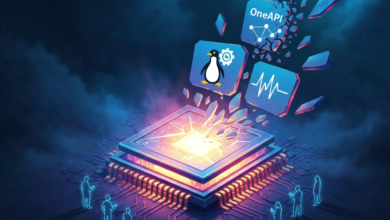
Linux 7.0-rc1 Arrives Packed With New Features

▼ Summary
– Michael Larabel is the founder and principal author of Phoronix.com, a site launched in 2004 focused on the Linux hardware experience.
– He has authored over 20,000 articles on topics including Linux hardware support, performance, and graphics drivers.
– Larabel is the lead developer of the Phoronix Test Suite, Phoromatic, and OpenBenchmarking.org automated benchmarking software.
– His professional profiles and contact information are available on Twitter, LinkedIn, and his personal website, MichaelLarabel.com.
– The site and his work are centrally dedicated to benchmarking and improving the Linux hardware ecosystem.
The initial release candidate for the Linux kernel 7.0 has officially landed, bringing with it a substantial collection of new features and improvements. This milestone marks the beginning of the final testing phase before the stable kernel release, offering developers and enthusiasts a first look at the upcoming changes. The update includes significant enhancements across hardware support, file systems, and core performance, setting the stage for the next major iteration of the world’s most prominent open-source kernel.
A major focus of this release is on expanding and refining hardware compatibility. New and updated drivers form a critical part of the update, providing better support for a wide array of components. This includes advancements for AMD and Intel graphics, various network controllers, and numerous other peripherals. These improvements aim to ensure that the latest hardware runs smoothly and efficiently on Linux systems, reducing compatibility headaches for users.
Beyond hardware, the kernel introduces meaningful updates to its file system capabilities. Performance optimizations and new features for established file systems like Btrfs and EXT4 are included, which can lead to faster data access and improved reliability for both desktop and server environments. These under-the-hood enhancements are crucial for maintaining robust data management as storage technologies continue to evolve.
The networking stack also receives attention in this release. Developers have integrated code for better throughput and lower latency, addressing the demands of modern high-speed networks and real-time applications. These refinements help ensure that Linux remains a competitive and capable platform for networking-intensive tasks, from web servers to scientific computing clusters.
Security remains a perpetual priority, and this kernel iteration incorporates several patches and mitigations for recently discovered vulnerabilities. By proactively integrating these fixes, the development community strengthens the overall security posture of systems that will eventually run this kernel, protecting against potential exploits.
For developers working directly with the kernel, there are numerous internal changes and API updates. These modifications can affect how kernel modules are written and how the system manages resources. While these adjustments may require some adaptation from developers maintaining custom drivers or embedded systems, they are designed to create a more stable and efficient foundation for future development.
The release of 7.0-rc1 kicks off a period of intensive testing and bug hunting. The community is encouraged to download, compile, and test the new kernel on various hardware configurations. Reporting any issues encountered is vital for the development team to identify and resolve problems before the final, stable version is published. This collaborative effort is a hallmark of the open-source development model, ensuring the resulting software is as reliable as possible.
Looking ahead, the typical release cycle suggests several more release candidates will follow over the coming weeks. Each subsequent version will incorporate fixes and fine-tuning based on feedback from testers. The final, production-ready Linux kernel 7.0 is expected to arrive in the near future, at which point it will begin its journey into distributions and end-user systems worldwide.
(Source: Phoronix)