Unveiling the Mystery: The Sculpture at Porter Explained
▼ Summary
– The “Gift of the Wind” is a 46-foot-tall, rotating red sculpture at the Porter Square T stop, designed by Japanese artist Susumu Shingu.
– It was installed in the 1980s as part of the MBTA’s “Arts on the Line” program, the first and largest transit-based public art initiative in the United States.
– The sculpture’s installation required a nighttime crane operation on a closed Mass. Ave., with initial technical issues that were resolved by the afternoon.
– The MBTA, which owns the sculpture, reports no recent maintenance and no current funding for its restoration, though it continues to spin.
– The sculpture is a longstanding and iconic visual marker in the Cambridge/Somerville landscape, described as looking futuristic, post-industrial, and changing in appearance with weather and light.
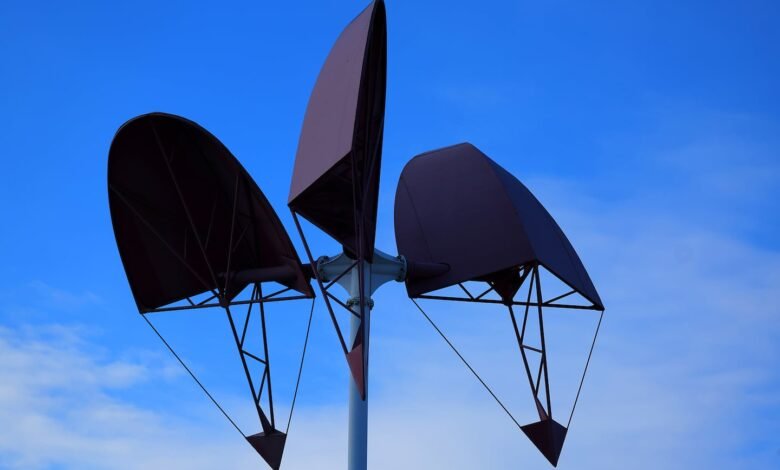
If you’ve ever shopped at the Target in Porter Square, your gaze has likely been drawn upward by a massive, rust-red sculpture that seems to dance with the breeze. This iconic landmark, known as “Gift of the Wind,” has been a defining feature of the Cambridge and Somerville skyline for decades, serving as a rotating beacon above the bustling transit hub. Its presence is so ingrained in the local landscape that many pass by without considering its rich history or the story behind its perpetual motion.
The sculpture stands an impressive 46 feet tall and is the work of renowned Japanese artist Susumu Shingu. Its installation was part of a groundbreaking initiative called Arts on the Line, a pioneering Massachusetts Bay Transportation Authority program from the 1980s. As the Red Line extended northwest, this ambitious project integrated public art into the new Porter, Davis, and Alewife stations, as well as the renovated Harvard Station. Modeled after successful transit art programs in European cities like Paris and Stockholm, Arts on the Line was the first and largest undertaking of its kind in the United States, transforming the daily commute into an engaging cultural experience.
Despite being over forty years old, “Gift of the Wind” continues its silent rotations through every season. However, its enduring movement raises questions about maintenance. The MBTA, which owns the sculpture, has stated there are no current plans or dedicated funding for its restoration, and officials are not aware of any recent maintenance work performed on the massive kinetic piece. This leaves the future preservation of this public artwork uncertain, even as it remains a beloved visual anchor for the community.
To truly understand the sculpture’s significance, one must look beyond its physical form. During its installation, the process was a feat of coordination and engineering. The work was directed by Pallas Lombardi, who led the Arts on the Line program in the 1980s. Now 80 and retired in North Carolina, Lombardi vividly recalls the dramatic night “Gift of the Wind” was raised into place. Massachusetts Avenue was closed, and a crane carefully hoisted the structure under cover of darkness. By dawn, it stood tall, but the moment of truth came when workers released the restraining ropes to set its fins in motion.
The initial result was stunning, but quickly followed by the faint, concerning sound of metal on metal. The sculpture had to be halted—a significant challenge—so adjustments could be made. Through collaborative problem-solving, the team perfected its balance by that same afternoon. Lombardi remembers the profound relief and joy she felt seeing it spin freely, a feeling rekindled upon learning that, all these years later, its wings still turn.
Observing the sculpture from different vantage points reveals its changing character. From a distance on Massachusetts Avenue, it can resemble a cluster of futuristic parachutes or a grand beacon. Up close, its post-industrial aesthetic and weathered patina become apparent. At sunset, golden light transforms its faded red hues, and under a blanket of snow, parts of it seem to vanish with each graceful rotation. It’s difficult now to imagine Porter Square without this dynamic sentinel, a testament to a visionary program that successfully wove art into the fabric of urban transit and community identity.
(Source: Boston Globe)