Cloud Gaming on TVs: The ‘No Console’ Future Arrives in 2026
▼ Summary
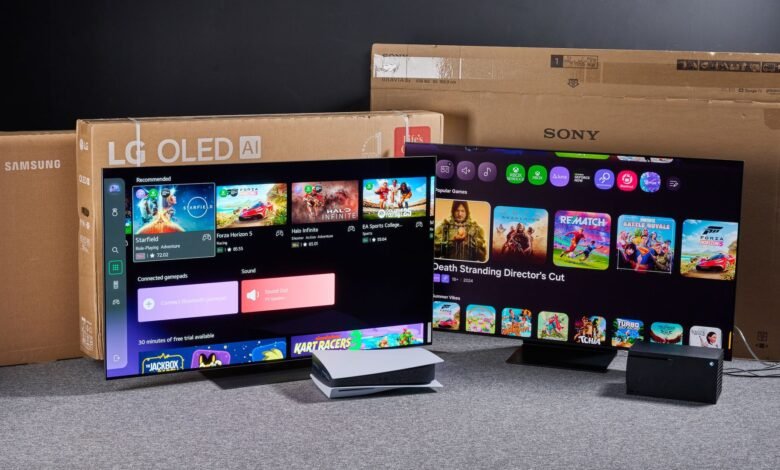
– Cloud gaming on TVs is shifting from a novelty to a core, premium feature, with LG’s 2026 OLED Evo range being the first to offer built-in 4K 120Hz gaming via Nvidia GeForce Now.
– Rising hardware and memory costs, driven by the AI boom, are making cloud gaming a more sensible and attractive alternative to expensive consoles and PC components.
– The ecosystem is maturing, with accessories like the Razer Wolverine V3 controller being specifically designed for TV gaming portals to reduce friction and improve the experience.
– TV operating systems like webOS, Fire TV, and Google TV are evolving to function more like gaming storefronts, prioritizing easy game discovery and seamless access.
– While consoles still offer the most consistent and caveat-free experience, the “no console” route is becoming a more plausible and less compromised choice for big-screen gaming.
The landscape of big-screen entertainment is shifting, with cloud gaming poised to become a central feature of high-end televisions by 2026. What was once a niche, often-forgotten app is now being positioned as a premium capability, rivaling traditional consoles. This evolution is being driven by major manufacturers who are integrating powerful streaming services directly into their hardware, fundamentally changing how we access games in the living room.
A significant milestone was the announcement of the world’s first TVs supporting 4K 120Hz cloud gaming. This isn’t just a technical specification for marketing materials. In practical terms, the higher refresh rate dramatically improves the feel of streamed gameplay, making fast-paced action titles feel more responsive and immediate. The real takeaway is that cloud performance is now being marketed alongside panel technology and HDR as a core reason to purchase a television, signaling a major shift in industry priorities.
Rising hardware costs are accelerating this trend, making the cloud proposition increasingly attractive. With prices for critical components like GPUs and memory soaring due to high demand from data centers, the economics of gaming are changing. Console manufacturers face these same pressures, leading to price increases. In this climate, renting performance via a subscription service begins to look like a savvy alternative to a large upfront investment in dedicated hardware that may quickly become outdated.
The ecosystem is maturing rapidly to support this TV-first approach. We are seeing the development of controllers specifically certified for smart TV gaming portals, designed with lower-latency Bluetooth technology to minimize input lag. This focus on dedicated accessories shows a commitment to smoothing out the user experience, moving cloud gaming closer to the plug-and-play simplicity of a console. It transforms a TV’s gaming portal from a simple app into a more cohesive platform.
Television operating systems are also adapting to become more effective gaming hubs. Recent interface refreshes emphasize content discovery and streamlined navigation, making it quicker to find and launch games. Manufacturers are framing their cloud gaming features as integral parts of the TV’s software, complete with dedicated portals and optimized settings. The goal is to make jumping into a game as effortless as starting a movie on a streaming service.
The path to a credible “no console” setup is becoming more accessible. You no longer necessarily need the latest premium television; a popular streaming stick paired with a compatible controller can deliver a solid cloud gaming experience. Furthermore, the growing availability of services like Xbox Cloud Gaming via Game Pass on TV platforms creates a direct bridge from the traditional console ecosystem to the cloud, offering familiar libraries without the box.
This does not mean dedicated consoles are disappearing overnight. For many players, they remain the most reliable path to consistent performance, offline play, and a guaranteed experience free from internet-related variables like latency or packet loss. The more likely outcome is a broader spectrum of choices. Cloud gaming on your main TV offers an instant, low-commitment on-ramp, perfect for casual play or trying new titles. For those where absolute consistency is paramount, a console still holds value.
The convergence of rising hardware costs, maturing cloud technology, and focused ecosystem development makes 2026 a pivotal moment. The decision between a traditional console and a cloud-centric setup is becoming less about compromise and more about selecting the model that best fits your budget, play style, and existing home entertainment system.
(Source: TechRadar)