Fusion Startup Secures $450M From Bessemer, Alphabet’s GV
▼ Summary
– Inertia Enterprises raised $450 million to build a powerful laser, aiming to start construction on a grid-scale fusion power plant by 2030.
– The startup’s technology is based on the inertial confinement fusion designs from Lawrence Livermore National Laboratory’s National Ignition Facility (NIF).
– A key technical challenge is building a laser capable of delivering 10 kilojoules of energy ten times per second to enable a commercial reactor.
– Inertia plans to use 1,000 mass-produced, low-cost lasers and targets, a major scaling and cost-reduction effort compared to NIF’s 192-laser, handcrafted system.
– This funding is part of a broader trend, as fusion startups have collectively attracted over $10 billion in investments, with several raising large rounds recently.
A fusion energy startup has secured a landmark $450 million investment to develop a groundbreaking laser system, aiming to construct a commercial power plant by the end of the decade. Inertia Enterprises plans to use this substantial Series A funding, led by Bessemer Venture Partners with participation from GV (Alphabet’s venture arm), Modern Capital, and Threshold Ventures, to build one of the planet’s most powerful lasers. This technology will form the core of a grid-scale fusion power facility, with construction targeted to begin in 2030.
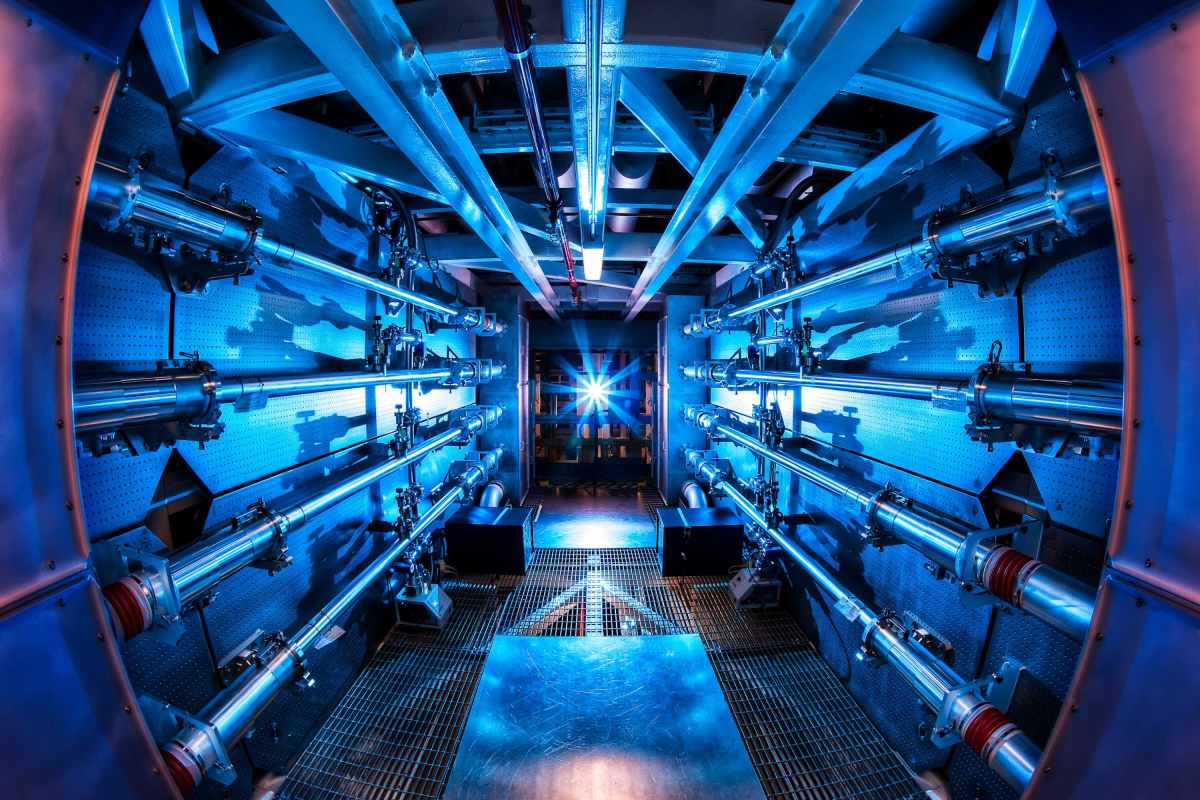
The company’s approach is directly derived from pioneering work conducted at the Lawrence Livermore National Laboratory’s National Ignition Facility (NIF). This government lab achieved the historic milestone of scientific breakeven, where a fusion reaction releases more energy than the laser energy used to initiate it. Inertia is commercializing this proven inertial confinement fusion method, where lasers bombard a tiny fuel target, compressing it until atoms fuse and release tremendous energy.
A key challenge lies in translating a monumental scientific achievement into a practical, economical power source. The NIF’s system is immense and its targets are expensive, handcrafted components. Inertia’s strategy involves a dramatic scaling and simplification for commercial viability. Their design calls for 1,000 lasers firing ten times per second at mass-produced fuel targets costing less than one dollar each. This stands in stark contrast to NIF’s 192 lasers and meticulously manufactured targets.
The founding team blends deep scientific expertise with seasoned entrepreneurial leadership. It includes Annie Kircher, who led the successful breakeven experiments at NIF; Mike Dunne, a Stanford professor who helped develop a power plant design based on NIF technology; and Jeff Lawson, the co-founder and former CEO of cloud communications giant Twilio. Kircher continues her role at Lawrence Livermore while contributing to the startup.
This massive funding round is part of a significant wave of investment flowing into the fusion sector. In recent months alone, fusion startups have collectively attracted over $10 billion in private capital, with at least a dozen companies securing more than $100 million each. For instance, Commonwealth Fusion Systems raised $863 million last summer, and companies like Type One Energy and Avalanche have also announced major raises. The sector is also seeing increased activity in public markets, with companies like General Fusion and TAE Technologies announcing plans to go public through mergers with special purpose acquisition companies.
The path from laboratory validation to a functioning power plant remains formidable, requiring major advances in laser repetition rate, target manufacturing, and materials science. However, Inertia’s substantial funding and its direct lineage from the only facility to achieve scientific breakeven position it as a serious contender in the race to develop a limitless, clean energy source.
(Source: TechCrunch)