Romeo Is A Dead Man Parodies the Multiverse Before Playing It Straight
▼ Summary
– The article criticizes the overuse of the multiverse concept in pop culture for flattening originality and serving as safe corporate fan service.
– The video game *Romeo Is A Dead Man* is self-aware and uses its multiverse premise to embrace absurdity and humor, contradicting its own logic.
– The game’s chaotic introduction establishes protagonist Romeo Stargazer, who is transformed into the hero Deadman after a monster attack and a time-traveling rescue.
– The plot quickly becomes convoluted, involving a destroyed reality, a lost love named Juliet, and Romeo joining the FBI Space-Time Police to hunt variants.
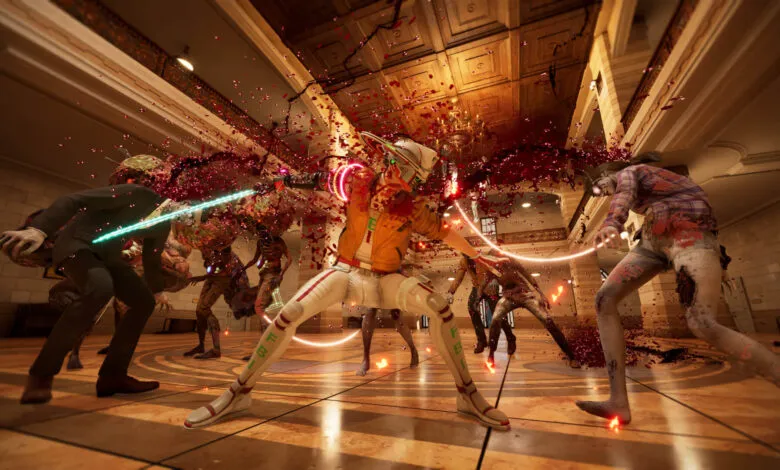
– The game’s presentation is deliberately chaotic, constantly switching visual styles and mediums to parody confusing interdimensional storytelling.
The concept of the multiverse, while a long-standing pillar of speculative fiction, has increasingly become a narrative crutch in modern pop culture. This trend often sacrifices genuine originality for familiar fan service, presenting slight variations of established stories rather than bold new ideas. Romeo Is A Dead Man, the latest creation from SUDA51 and Grasshopper Manufacture, begins by gleefully skewering this very tendency. Instead of being constrained by its reality-hopping premise, the game dives headfirst into deliberate absurdity, using chaotic humor as the perfect antidote to cosmic convolution.
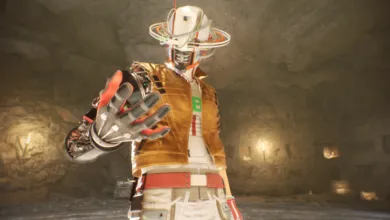
This self-aware, tongue-in-cheek approach defines the game’s breakneck opening. Players are introduced to Romeo Stargazer, a conspiracy theorist and sheriff’s deputy in the sleepy town of Deadford. His mundane existence shatters when a pale monster savagely attacks him, tearing off an arm and half his face. Seemingly left for dead, he is miraculously saved by his grandfather, a dead ringer for Doc Brown, who arrives on a time-traveling motorcycle and injects him with a mysterious substance. After a surreal hand-drawn animated sequence, Romeo transforms into Deadman, a henshin hero-style crime fighter.
Just as this setup starts to make a twisted kind of sense, the narrative folds in on itself. The events described might have been a dream, or perhaps they weren’t. A comic-book-style “Previously On” recap clarifies that Romeo is in love with a woman named Juliet, a harbinger of doom whose appearance shattered reality into fragments scattered across the cosmos. Meanwhile, Romeo’s grandfather, Professor Benjamin, has died off-screen and now exists as a talking decal on the back of Romeo’s jacket. The protagonist joins the FBI Space-Time Police to hunt for his girlfriend’s variants across broken timelines, all while seeking the “real” Juliet from before reality fractured.
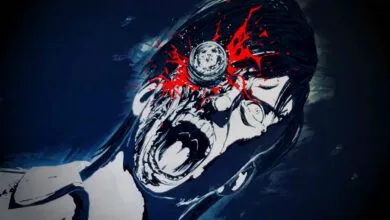
The sheer density of these first fifteen minutes feels like a deliberate parody of convoluted interdimensional storytelling. To sell this disorienting, reality-hopping vibe, the game constantly shifts its visual language. The introduction cycles through live-action diorama footage, in-game cutscenes, 2D animation, and comic book panels. Even the Game Over screen is a memorable stop-motion nightmare that evokes a certain face-melting cinematic moment. Returning to the Space-Time Police mothership shifts the aesthetic entirely to pixel art, a stark contrast to the main game’s 3D visuals. This base also houses an unconventional leveling system where players guide a small creature through a maze to earn permanent upgrades, essentially replacing traditional skill trees with a retro arcade homage.
All these elements swirl together in an orchestrated chaos, punctuated by optional dialogues with crew members who have wildly varying relevance to the plot. This embrace of nonsensical logic is not a one-off joke but the foundation of a weirdly cohesive whole. The game’s world proudly mixes high art and pulp curiosities, referencing Edward Hopper and Shakespeare with the same enthusiasm it brings to professional wrestling finishers and classic punk rock.
(Source: AV Club)