LG UltraFine 6K Evo Review: A 21-Million-Pixel Powerhouse
▼ Summary
– The LG UltraFine 6K Evo monitor delivers an exceptionally sharp image with its 6K resolution, offering a very high pixel density of 224 PPI on a 32-inch screen.
– It features excellent connectivity, including dual Thunderbolt 5 ports, DisplayPort 2.1, HDMI 2.1, and multiple USB-C ports, supporting single-cable laptop use and daisy-chaining.
– The monitor has significant drawbacks, including a low 60Hz refresh rate, poor contrast and black levels for its price, and limited HDR performance due to its DisplayHDR 600 certification.
– Its design is minimalist and aimed at Mac users, but its build quality and external power brick are less premium than comparable Apple monitors.
– While it offers a productivity boost with its high resolution, its value is questionable given its high price and the availability of superior 4K OLED alternatives with better contrast and speed.
For professionals and creatives seeking the ultimate in desktop clarity, the LG UltraFine 6K Evo 32U990A delivers an uncompromising visual experience with its native 6K resolution. Packing over 21 million pixels into a 32-inch frame, this monitor achieves a remarkable 224 pixels per inch, making text and images appear exceptionally sharp. While it boasts excellent connectivity with dual Thunderbolt 5 ports, its 60Hz refresh rate and limited HDR capabilities position it as a specialized tool rather than a universally cutting-edge display.
The sheer pixel density is this monitor’s defining characteristic. Moving from a standard 32-inch 4K screen to this 6K model is a dramatic leap, offering significantly more screen real estate for complex workflows. You can view 4K content at its native resolution in a window and still have ample room for editing panels, toolbars, and other applications. The visual fidelity is stunning for detail-oriented tasks, with fonts rendering with a crispness that standard monitors simply cannot match.
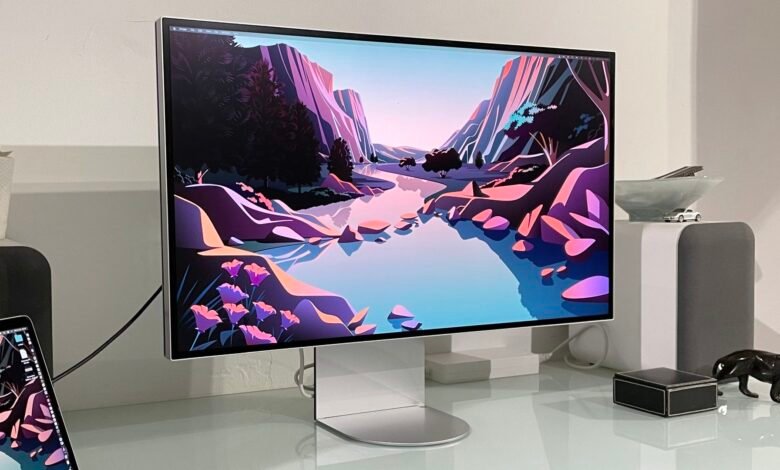
Design and build quality present a mixed impression. The aesthetic is clean and minimalist, with slim bezels that will appeal to users with a preference for sleek, modern gear, particularly those in the Apple ecosystem. The stand provides a good range of height, tilt, and swivel adjustments. However, the construction uses a combination of plastics and metals that doesn’t feel as premium as some competitors in this price range. A notable distraction is the large external power brick, which feels like a concession not typically found on flagship displays.
Where this monitor truly excels is in its comprehensive port selection. The inclusion of two Thunderbolt 5 ports with 96W of power delivery enables robust single-cable connectivity for laptops. It is further equipped with DisplayPort 2.1, HDMI 2.1, and multiple additional USB-C ports, supporting advanced setups like daisy-chaining multiple 6K displays. This makes it a incredibly flexible hub for a professional workstation.
Performance, however, is a tale of two extremes. The incredible sharpness is constantly evident, but the underlying IPS Black panel technology shows its limitations. Color accuracy is strong out of the box, covering 98% of the DCI-P3 gamut with true 10-bit color support. Yet, contrast and black levels are merely adequate, appearing washed out when compared to modern OLED alternatives. The monitor’s VESA DisplayHDR 600 certification confirms it uses basic edge-lit backlighting without full-array local dimming, so it cannot deliver a genuine high dynamic range experience.
The 60Hz refresh rate feels like a legacy specification in today’s market, even for a productivity-focused device. While not intended for gaming, higher refresh rates have become appreciated for making all on-screen motion, from scrolling to window dragging, feel smoother and more responsive. This, combined with the panel’s modest pixel response time, contributes to a sensation that the hardware is lagging behind current display trends.
Evaluating its value requires careful consideration of your needs. For users who prioritize pixel density above all else, such as video editors, graphic designers, and coders who manage multiple applications, the screen space and clarity can be a transformative productivity boost. Yet, at its premium price point, you are making significant trade-offs. The investment buys unparalleled sharpness and fantastic connectivity, but sacrifices the superior contrast, perfect blacks, and faster response times offered by high-end 4K OLED monitors available for similar or lower cost.
Ultimately, the LG UltraFine 6K Evo is a powerhouse for a specific user. It is not the best all-around high-end monitor, but rather a specialized tool that makes sense if your work directly benefits from its massive pixel count and expansive desktop. For everyone else, the compromises in panel technology and motion performance are difficult to overlook given the substantial financial outlay.
(Source: TechRadar)


