Avalanche: Why Fusion Power Needs to Think Smaller
▼ Summary
– Avalanche Energy is developing a small, desktop-sized nuclear fusion reactor using high-voltage electric currents to orbit and compress plasma, differing from larger magnet or laser-based approaches.
– The company’s small-scale design enables rapid iteration and testing, sometimes twice a week, adopting an agile “new space” development philosophy inspired by Langtry’s experience at Blue Origin.
– Avalanche has raised $80 million in total funding, including a recent $29 million round, which is relatively modest compared to the billions raised by some competitors in the fusion industry.
– The company plans to scale its reactor from 9cm to 25cm, aiming to produce about 1 megawatt and improve plasma confinement to approach the critical goal of achieving a net energy gain (Q>1).
– Avalanche operates a shared testing facility, FusionWERX, and anticipates significant industry progress between 2027 and 2029, aligning its timeline with major competitors like Commonwealth Fusion Systems and Helion.
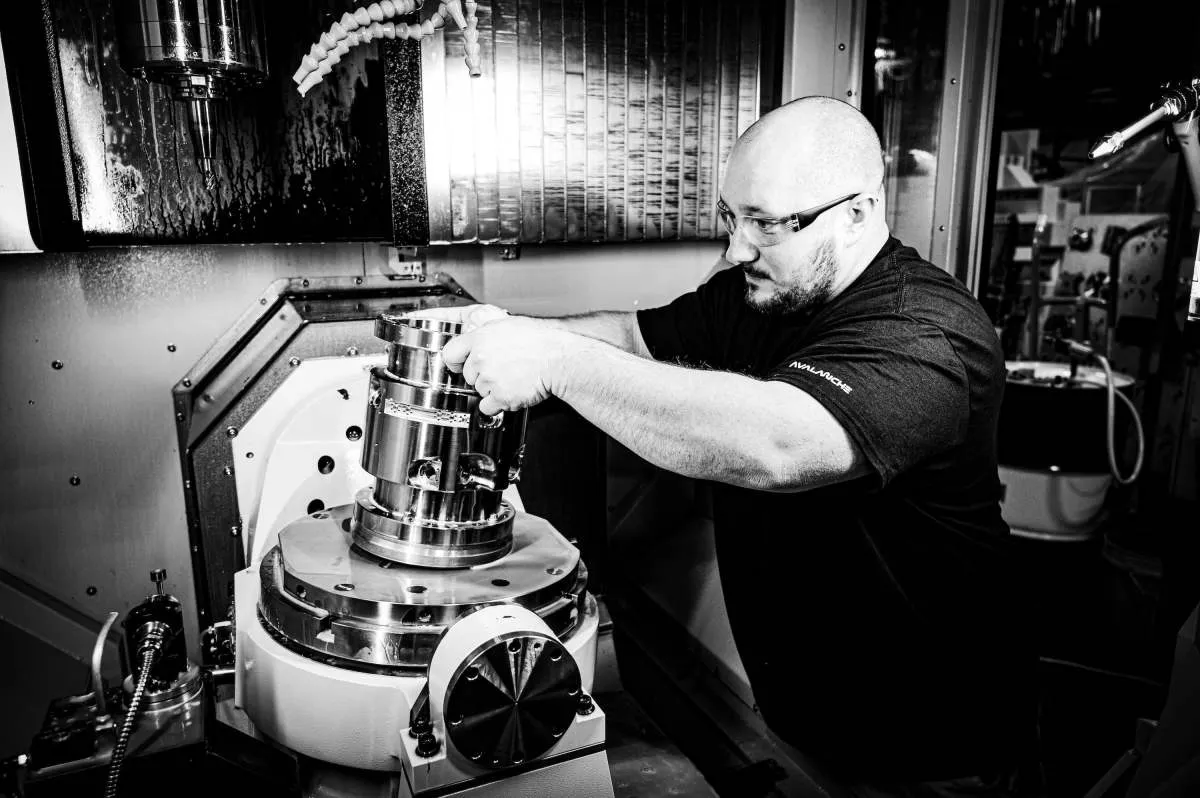
The quest for commercial fusion energy often focuses on massive, complex machines, but one startup is betting that a radically different, smaller-scale approach could unlock progress faster. Avalanche Energy, led by CEO Robin Langtry, is developing what amounts to a desktop fusion device, leveraging high-voltage electricity rather than enormous magnets or laser arrays. This strategy prioritizes rapid iteration and learning, a philosophy borrowed from the “new space” industry, to tackle the profound physics and engineering challenges that have long defined the fusion field.
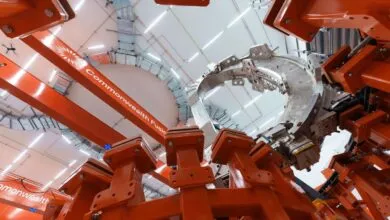
Fusion power aims to replicate the sun’s energy-producing process here on Earth, offering a potential source of vast, clean power. The core challenge is heating and compressing a plasma, a superheated state of matter, so that atomic nuclei fuse together, releasing energy. This endeavor demands extreme precision, advanced materials, and, traditionally, enormous scale and power, which makes experimentation slow and costly. Companies like Commonwealth Fusion Systems employ large superconducting magnets in tokamak reactors, while others use powerful lasers to implode fuel pellets. Avalanche’s method uses a strong electric field to accelerate plasma particles into a tight orbit around a central electrode, with supplementary magnets for stability. As the particles spiral inward at increasing speeds, they collide with enough force to trigger fusion reactions.
This compact, agile approach has attracted investor interest. The company recently secured an additional $29 million in a funding round led by R.A. Capital Management, bringing its total raised to approximately $80 million. While this sum is modest compared to the hundreds of millions or even billions raised by some fusion peers, it supports Avalanche’s lean operational model. The inspiration for this model stems from Langtry’s background at Blue Origin, where he worked with co-founder Brian Riordan. They apply a principle common in modern aerospace: build, test, learn, and iterate quickly. With a reactor currently just nine centimeters in diameter, Avalanche can test design changes as often as twice a week, a pace impossible with a building-sized machine.
The company plans to scale up its prototype to a 25-centimeter version, which is projected to produce around one megawatt. This increase in size is critical for improving plasma confinement time, a key factor in achieving a Q greater than 1, the point where a fusion reactor outputs more energy than it consumes. Testing will occur at the company’s own facility, FusionWERX, which is also available for use by other companies. By 2027, this site is slated to be licensed to handle tritium, a radioactive hydrogen isotope essential for many fusion power plans.
While Langtry avoids setting a firm date for reaching the breakeven milestone, he believes Avalanche is on a comparable timeline to other prominent startups like Commonwealth Fusion Systems and Helion. He anticipates a period of significant breakthroughs industry-wide between 2027 and 2029. The fundamental bet is that by thinking smaller and moving faster, Avalanche can navigate the formidable path to practical fusion energy in a uniquely efficient way.
(Source: TechCrunch)