Oldest Wooden Tools Unearthed in Greece
▼ Summary
– Two wooden artifacts found in Greece are the oldest known wooden tools, dating back approximately 430,000 years.
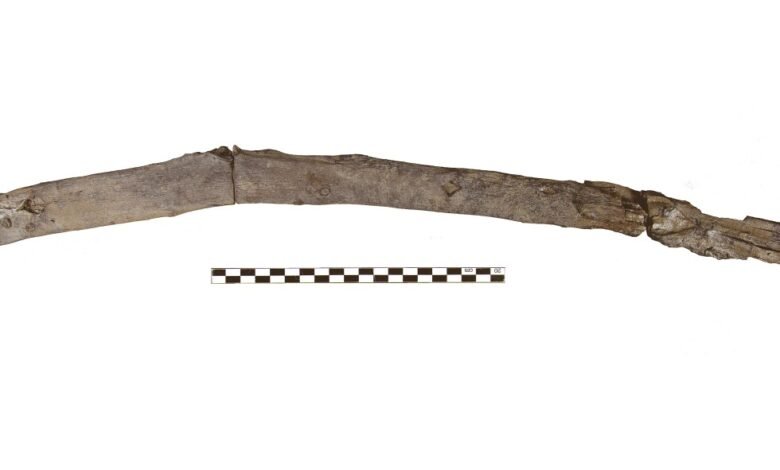
– One tool is a long stick possibly used for digging, while the other is a smaller piece of wood that may have shaped stone tools.
– Wooden tools are rarely preserved due to decay, surviving only in specific environments like the wet sediment that protected these.
– The identity of the toolmakers is unknown, as no human remains have been found at the site, leaving Neanderthals or other early humans as possibilities.
– This discovery provides a rare glimpse into the diverse toolkits and technological capabilities of early human ancestors.
A remarkable discovery in Greece has pushed back the known timeline for human woodworking by hundreds of thousands of years. Two ancient wooden artifacts, found preserved at a lakeshore site, have been identified as the oldest wooden tools ever discovered, dating back approximately 430,000 years. This extraordinary find offers a rare window into the technological capabilities of our early ancestors, whose tools made from organic materials rarely survive the ravages of time.
One of the artifacts is a slender stick, measuring roughly two and a half feet long, which researchers suggest may have served as a digging implement. The second object is a smaller, handheld piece of wood from a willow or poplar tree; its purpose remains more enigmatic, though it might have been used in shaping stone tools. The research detailing these objects was published in the Proceedings of the National Academy of Sciences.
Wooden tools are an exceptionally rare find in the archaeological record because organic material decomposes quickly. Preservation typically requires very specific conditions, such as those found in permafrost, dry caves, or waterlogged sediments. These particular tools were unearthed in Greece’s Megalopolis basin, where they were likely buried rapidly under sediment and kept in a consistently wet environment, halting the decay process. The site itself, dated to around 430,000 years ago, has previously yielded other significant finds, including stone tools and elephant bones bearing cut marks.
“I’ve always just been thrilled to be able to touch these objects,” remarked study author Annemieke Milks of the University of Reading, highlighting the personal connection researchers feel with such ancient artifacts.
While the tools provide clear evidence of sophisticated craftsmanship, the identity of their makers remains a mystery. No human remains have been found at the site, leaving open the possibility that the users were Neanderthals, another early human ancestor, or a different hominin species altogether. The site is believed to hold further archaeological treasures waiting to be uncovered.
The unassuming appearance of the two wooden pieces, however, presents a challenge for interpretation. As archaeologist Jarod Hutson of the Smithsonian National Museum of Natural History noted, their ordinary look makes their specific functions difficult to decipher. Hutson, who was not involved in the study, observed, “It’s difficult to get excited about these because they don’t strike you immediately as wooden tools. And we don’t know what they were used for.”
This discovery joins a small but growing list of ancient wooden implements, such as a set of spears found in Germany and 300,000-year-old digging sticks from China that were likely used for foraging. Each find helps piece together a more complete picture of early human ingenuity. According to study author Katerina Harvati from the University of Tübingen, the Greek tools provide a precious glimpse into a “little known aspect of the technology of early humans,” showcasing the diverse toolkit our ancestors employed to adapt and survive in their environments.
(Source: AP NEWS)