Ancient Battery? Scientists Probe 2,000-Year-Old Artifact
▼ Summary
– The “Baghdad Battery” is a 2,000-year-old artifact from Iraq, consisting of a clay jar with a copper vessel and iron rod, which some argue could have functioned as a primitive galvanic cell.
– A new study suggests a reconstruction could output about 1.4 volts, similar to a modern AA battery, by using the jar’s porous exterior as part of an electrical series.
– The researcher proposes it may have been used to ritually corrode written prayers as visual evidence of divine influence, not for practical tasks like electroplating.
– A skeptical archaeologist argues it was likely a sacred jar for storing magical prayers, noting similar ritual items found nearby, with the iron components being ritual nails.
– The artifact’s original is lost, and its true purpose remains debated between interpretations as an ancient battery or a religious object.
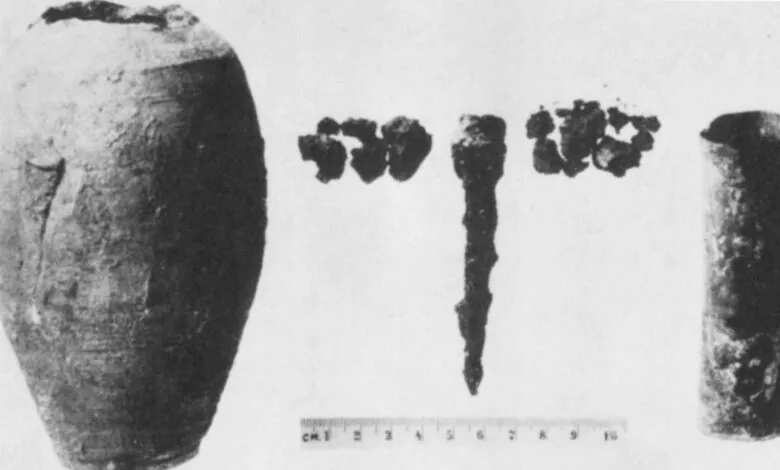
For nearly a century, a mysterious artifact unearthed in Iraq has sparked intense debate among archaeologists and historians. Known as the Baghdad battery, this object consists of a clay jar that once held a copper cylinder and an iron rod. Its peculiar construction has led some to propose it functioned as an ancient galvanic cell, predating Alessandro Volta’s invention by over a millennium. The original artifact, however, was lost following the 2003 invasion of Iraq, forcing researchers to rely on reconstructions and historical records to understand its true purpose.
A recent study highlighted in Chemistry World presents a compelling new perspective. Independent researcher Alexander Bazes conducted experiments with a reconstructed model, suggesting the device could generate more power than previously thought. His findings indicate that the porous clay jar might have acted as a separator between an electrolyte, such as lye, and the air. This setup, combined with the copper vessel and iron rod, could have created an electrical series producing around 1.4 volts, comparable to a modern AA battery. Bazes argues this demonstrates the most effective way the artifact could have been utilized if it were indeed a battery.
Skeptics have long contended that any power output would have been too minimal for practical use. Bazes counters this by proposing a ritualistic rather than industrial application. He suggests the battery might have been used to ritually corrode prayers written on paper. Witnessing the corrosion process could have provided visual confirmation that an energetic influence had passed through the supplication, serving a spiritual or magical function. This theory moves away from earlier fringe ideas, such as using the device for electroplating jewelry.
Not everyone is convinced by the battery hypothesis. University of Pennsylvania archaeologist William Hafford, who has extensively studied the artifact, offers an alternative explanation. He believes the object was likely a sacred container for storing scrolls of prayers, part of a well-documented magical tradition from the region. Other similar items found nearby, including a jar with multiple copper vessels, support this interpretation. The iron components, often described as electrodes, were probably just nails used in ritual sealing. Hafford explains that these jars were typically sealed with bitumen and buried, intended as offerings to chthonic, or underworld, deities.
The debate continues as researchers piece together clues from a lost original. Whether an ingenious ancient power source or a vessel for spiritual communion, the Baghdad battery remains a captivating enigma that challenges our understanding of technological history. It underscores how modern interpretations can reshape our view of the past, blending the lines between science, ritual, and artifact.
(Source: Futurism)