AMD’s RDNA 3.5 iGPUs to Power Mainstream APUs Through 2029, Premium Gets RDNA 5
▼ Summary
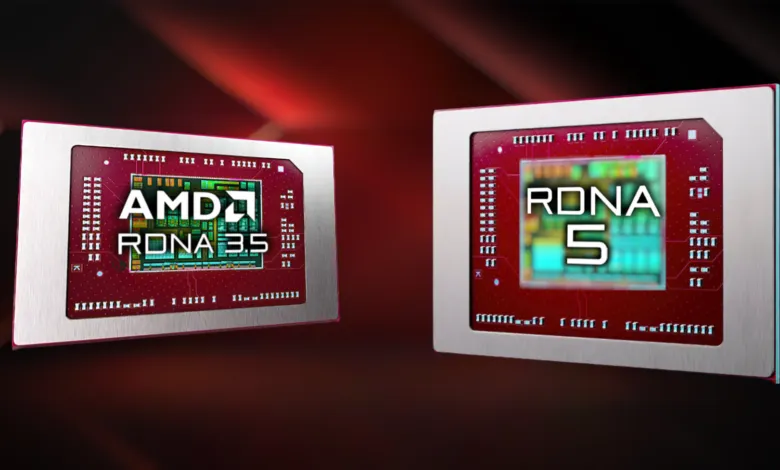
– AMD’s RDNA 3.5 graphics architecture will be used in mainstream and entry-level APUs until at least 2029.
– Premium APU models, starting with the future “Medusa” family, will instead feature the newer RDNA 5 iGPU architecture.
– AMD is skipping the RDNA 4 architecture for its APUs entirely, moving directly from RDNA 3.5 to RDNA 5.
– Current APUs like the Ryzen AI 400 series use RDNA 3.5, with high-end “Halo” models offering up to 40 compute units for greater performance.
– This segmentation strategy aims to keep mainstream APUs competitive while reserving advanced features and performance for premium products.
AMD is charting a clear and long-term path for its integrated graphics, with the RDNA 3.5 architecture set to power mainstream Accelerated Processing Units (APUs) for years to come, while premium models will leapfrog to the future RDNA 5 design. This strategic division, revealed through industry insights, suggests a focus on cost-effective performance for volume segments and cutting-edge technology for high-end devices.
Recent APU releases, including the Ryzen AI 400 series, continue to utilize refined versions of the RDNA 3.5 architecture. This design will reportedly remain in use through 2029, but primarily for entry-level and mainstream product lines. The upcoming Ryzen AI 500 “Medusa Point” family is anticipated to be the final major series employing RDNA 3.5 for its integrated graphics. Following this generation, AMD’s roadmap indicates a direct jump to RDNA 5, completely bypassing the RDNA 4 architecture used in current discrete graphics cards.
The new RDNA 5 iGPUs are reserved for what AMD categorizes as “Premium” offerings. This includes expected variants like Medusa Premium and Medusa Halo. These premium chips are projected to utilize distinct GPU dies, separate from the main compute tile, marking a significant architectural shift. In contrast, the monolithic Medusa Point design will maintain the older graphics technology.
This bifurcated strategy appears to be a calculated response to market demands and competitive pressures. For office laptops or systems paired with powerful discrete GPUs, a capable but cost-optimized iGPU like RDNA 3.5 suffices. However, the premium segment is heating up with Intel’s recent launch of its Xe3 graphics and the promised performance leap of the upcoming Xe3P “Celestial” architecture. By introducing RDNA 5 specifically in its high-end APUs, AMD aims to deliver a substantial performance and feature boost to remain competitive in this space.
Looking at the broader competitive landscape, Intel continues to advance its own roadmap with plans for Xe4 and beyond. Furthermore, its collaboration with NVIDIA to create x86 SoCs featuring RTX-class graphics introduces another dynamic, though Intel states this does not alter its internal graphics development. The integrated graphics sector is poised for significant evolution, with AMD’s long-term commitment to RDNA 3.5 for mainstream users and a focused premium push with RDNA 5 shaping its part of that future.
(Source: wccftech)