Did Thomas Edison Accidentally Create Graphene in 1879?
▼ Summary
– Graphene is an atom-thin carbon material with a hexagonal structure, giving it unique properties useful for many applications like batteries and solar cells.
– The 2010 Nobel Prize in Physics was awarded for graphene’s first lab synthesis, but new research suggests Thomas Edison may have accidentally produced it over a century earlier.
– Edison’s experiments with carbonized bamboo filaments created durable light bulbs, and these high-temperature conditions could have generated graphene as a byproduct.
– A modern researcher, inspired by Edison’s work, explored using simple, affordable equipment like early light bulbs to mass-produce graphene through flash Joule heating.
– Revisiting historical experiments like Edison’s with modern knowledge can uncover overlooked discoveries and inspire new scientific questions.
The possibility that Thomas Edison may have inadvertently created graphene during his pioneering work on the light bulb offers a fascinating glimpse into how modern science can uncover hidden secrets in historical innovation. Graphene, a single layer of carbon atoms in a hexagonal lattice, is celebrated for its extraordinary strength and conductivity, with applications ranging from advanced batteries to next-generation electronics. While the material was formally isolated and studied in 2004, leading to a Nobel Prize, recent research suggests Edison’s experiments in the late 19th century could have produced it as an accidental byproduct.
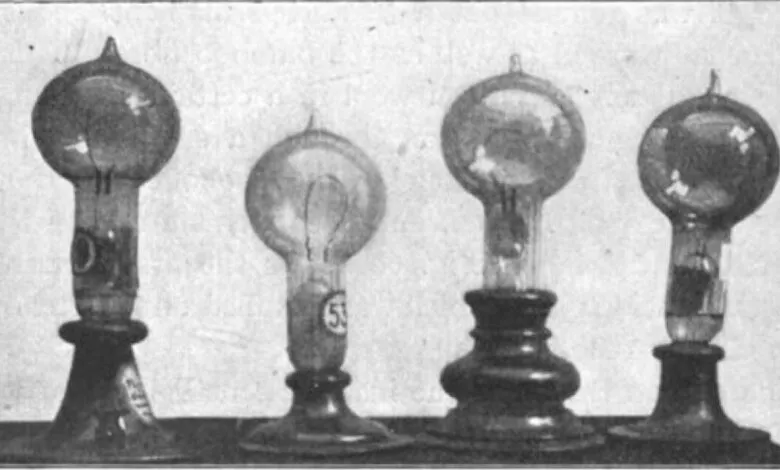
A study published in the journal ACS Nano revisits Edison’s relentless quest to develop a practical, long-lasting incandescent bulb. His goal was not scientific discovery for its own sake but large-scale commercialization of electric lighting. Early versions of bulbs burned out too quickly or required impractical amounts of power. Edison tested countless materials for the filament, the delicate wire that glows when heated by an electric current. He started with carbonized cardboard and compressed lampblack, then moved through various organic materials like grasses, hemp, and palmetto. These all failed prematurely. His breakthrough came with carbonized bamboo, which proved remarkably durable, lasting over 1200 hours.
This historical process caught the attention of researchers at Rice University. Graduate student Lucas Eddy was exploring simple, low-cost methods to mass-produce graphene. He considered and dismissed ideas like using arc welders or even simulating lightning strikes. His focus then turned to Edison’s bulb. Unlike other early designs, Edison’s successful bamboo filament setup was capable of reaching extremely high temperatures, around 2000 degrees Celsius. This is the critical threshold for a process known as flash Joule heating, which is an effective modern technique for creating a specific type of graphene called turbostratic graphene.
The team, led by chemist James Tour, decided to replicate Edison’s methods with contemporary tools. “To reproduce what Thomas Edison did, with the tools and knowledge we have now, is very exciting,” Tour said. Their analysis indicates that the intense, controlled heating of a carbon-based bamboo filament in a vacuum, the core of Edison’s design, likely generated graphene flakes as a side effect. While Edison was meticulously measuring bulb longevity, he was unaware of the revolutionary nanomaterial possibly forming inside his glass enclosures.
This discovery does more than add a curious footnote to history. It highlights how revisiting historical experiments with modern technology can yield unexpected insights. It prompts us to wonder what other breakthroughs are concealed within the notebooks and prototypes of past inventors. What questions would pioneers like Edison ask if they could step into a modern laboratory? By looking backward with new tools, scientists can sometimes find clear paths forward, uncovering materials and principles that were there all along, waiting to be seen.
(Source: Ars Technica)