NASA managers vigilant for “launch fever” ahead of Moon mission
▼ Summary
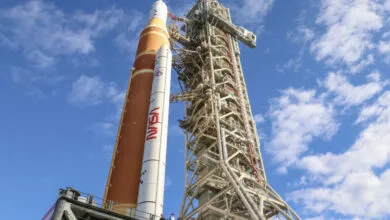
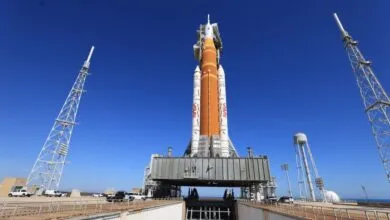
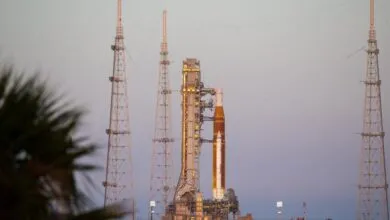
– NASA’s Space Launch System rocket will be moved from its assembly building to the launch pad at Kennedy Space Center early Saturday, a process expected to take 8-10 hours.
– This rollout is a major step for the Artemis II mission, which will be the first human flight to the Moon’s vicinity since the Apollo program ended in 1972.
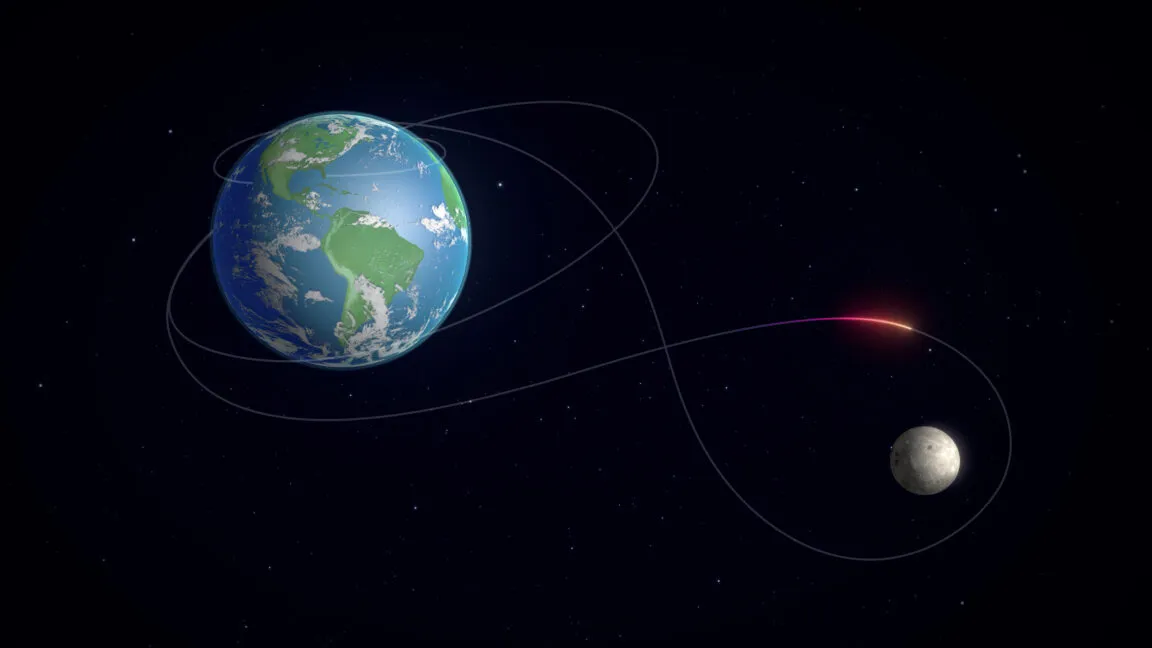
– The Artemis II mission will not land on the Moon but will carry four astronauts on a loop around its far side, setting a new record for the farthest humans have traveled from Earth.
– The crew will achieve the fastest speed ever for humans during their high-speed reentry into Earth’s atmosphere, surpassing a record set during the Apollo era.
– The crawler-transporter moving the rocket is over 60 years old, originally built for the Saturn V rockets and now being reused for its original purpose of launching Moon missions.
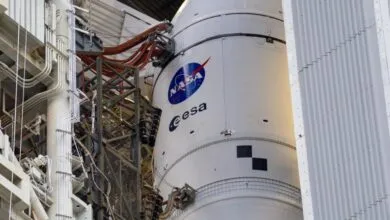
The rollout of NASA’s colossal Space Launch System rocket marks a pivotal moment for the Artemis II mission, setting the stage for humanity’s return to lunar exploration. This weekend, the fully assembled vehicle will begin its slow, deliberate journey from the Vehicle Assembly Building at Kennedy Space Center to its seaside launch pad. Riding atop a massive diesel-powered crawler-transporter, the rocket will traverse the four-mile route in roughly eight to ten hours, a spectacle that underscores the monumental scale of the endeavor.
This event represents a critical step toward launching the first human crew to the Moon’s vicinity in over fifty years. The Artemis II mission will not land on the lunar surface but will instead carry four astronauts on a trajectory around the far side of the Moon. This path will take the crew several thousand miles from Earth, breaking the long-standing record for the farthest distance humans have ever traveled from our home planet. The flight will conclude with a blisteringly fast reentry into Earth’s atmosphere over the Pacific Ocean.
The crew, consisting of NASA astronauts Reid Wiseman, Victor Glover, Christina Koch, and Canadian Space Agency astronaut Jeremy Hansen, will achieve a historic velocity during their return. Their Orion spacecraft is expected to reach speeds of approximately 25,000 miles per hour, making them the fastest humans in history and surpassing a record set during the Apollo program.
The journey from the assembly hangar to the launch complex is a carefully choreographed operation. The 11-million-pound structure will move at a crawling pace of less than one mile per hour, slowing even further for turns and the final ascent up the ramp to Pad 39B. The crawler-transporter itself is a piece of living history, originally constructed six decades ago to move the mighty Saturn V rockets and later used during the Space Shuttle era. Its return to lunar duty is a symbolic full circle for NASA’s deep space ambitions.
For the teams who have spent years preparing, the rollout is a moment of immense pride and anticipation. “These are the kinds of days that we live for when you do the kind of work that we do,” said John Honeycutt, chair of the Artemis II Mission Management Team. He emphasized that seeing the integrated rocket and spacecraft ready for their journey to the pad is a career highlight, noting, “It really doesn’t get much better than this, and we’re making history.”
Artemis II serves as the inaugural crewed flight of the broader Artemis program, named for Apollo’s twin sister in Greek mythology. While NASA formally announced the program’s name in 2019, many of its core technologies, including the Orion spacecraft, have been in development for nearly two decades. This mission is a crucial test of the entire system’s readiness to safely carry humans into deep space and back, paving the way for future lunar landings and sustained exploration.
(Source: Ars Technica)